
Choosing the right kind of pool that fits your lifestyle and budget is a crucial step in ensuring that you build a pool that perfectly fits your vision for your backyard. Installation time, durability, maintenance needs, upfront vs long-term costs, and design flexibility will all play a part in deciding whether a Latham fiberglass or vinyl liner pool is right for you.
What Is The Best Type of Pool for You?
At Latham, we’ve specialized in bringing quality craftsmanship in fiberglass and vinyl liner pools to homeowners across the nation for more than 70 years. You can rely on our expertise to help you choose the perfect pool to realize your backyard vision. Whether you’re looking to use your pool to entertain guests, start your day by swimming some morning laps, or enjoy a moonlight soak after a busy day, a Latham fiberglass or vinyl liner pool is designed to suit a variety of needs and provide years of enjoyment.
In this guide, we’ll weigh the advantages of fiberglass and vinyl liner pools, and also highlight their unique features to help you make the best choice for your budget and lifestyle. We’ll discuss factors including installation time, maintenance, durability, and design flexibility to help you confidently choose a pool that complements your vision.
Installation Time
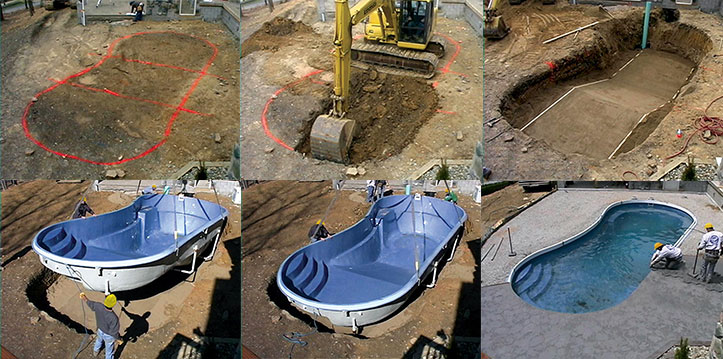
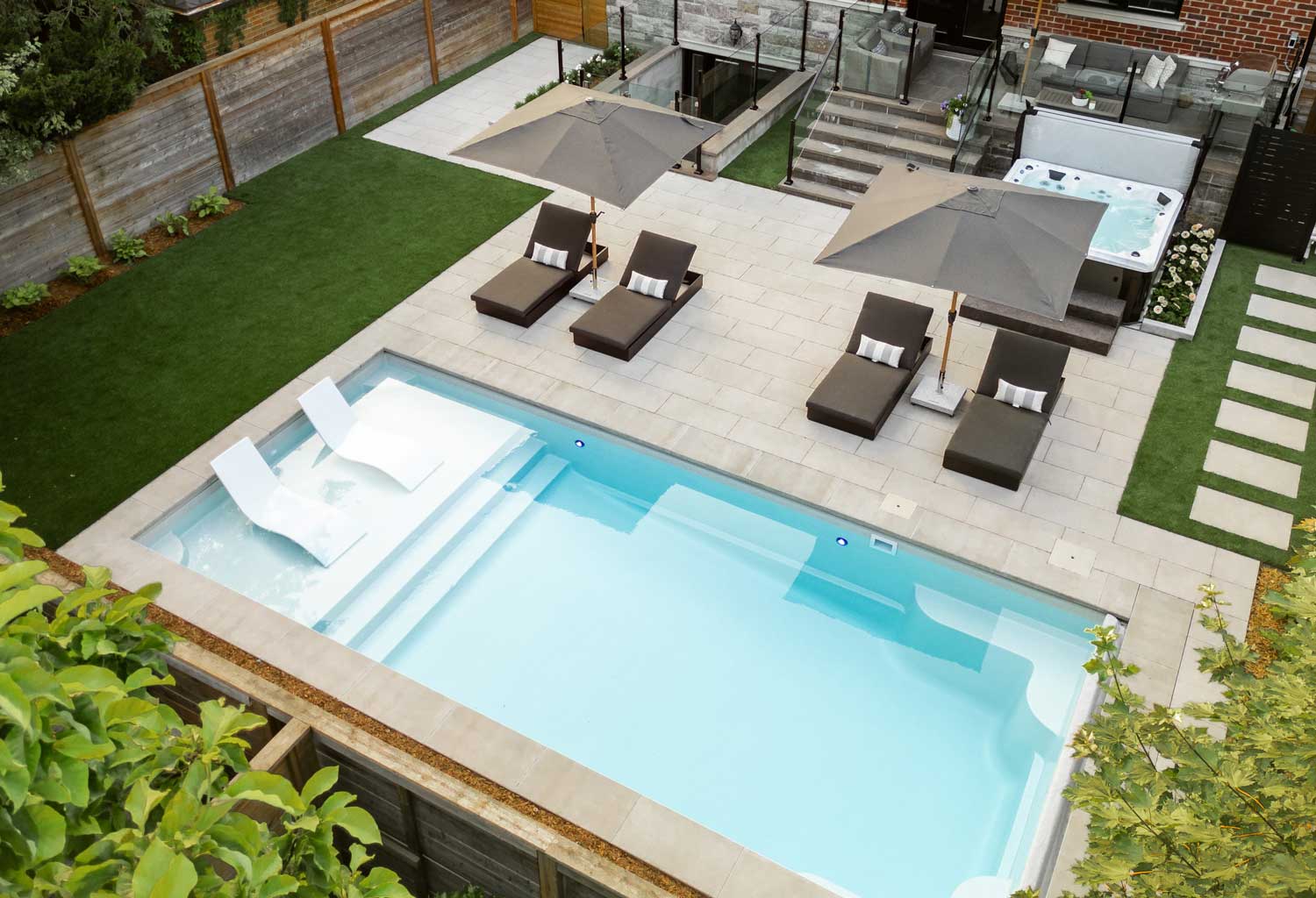
If you want your pool built quickly, opt for a fiberglass or vinyl liner model. Fiberglass pools are hand-crafted according to your custom size and design and you can enjoy your pool as soon as three days after delivery. Vinyl liner pools use factory-made components and may take a little longer to build and install. However, you can still have a ready-to-use pool in a matter of just a few weeks.
Cost Comparison
Both fiberglass and vinyl liner pools typically start around $50,000 with total costs ultimately being influenced by size, add-on features, and the extent to which your contractor will need to prep the site before beginning construction. Vinyl liner pools typically have lower up-front costs, but you’ll need to keep long-term maintenance differences in mind. Unlike fiberglass, vinyl liners will require liner replacements once every 10 years, ranging from $4,500 to $7,000.
Both of these options bring a wealth of benefits in terms of durability and longevity. Ultimately, the cost of a fiberglass pool vs a vinyl liner pool will be a trade-off between higher upfront vs. lifetime cost, especially when it comes to maintenance.
Maintenance Needs
Regular maintenance is essential for keeping your pool clear and maintaining its striking appearance. However, the amount needed will be determined by your pool type.
Fiberglass pools have a smooth, algae- resistant surface that helps minimize maintenance and gives your pool an eye-catching look. This smooth finish also makes fiberglass resistant to cracks and stains, eliminating the need for costly resurfacing.
Vinyl liner pools are also recognized for their ease of maintenance, although they require just a little more. However, in addition to regularly balancing your pool’s water chemistry and pH, you’ll want to devote time each week to gently scrub your liner with a soft-bristled brush to keep your liner looking its best. This can help remove any dirt that can contribute to stains on your liner at the waterline and keep algae at bay. Algae can make the sides and steps of your pool a slip hazard, damage pool equipment, and harbor dangerous bacteria if left unchecked. With proper care and maintenance, your liner can last approximately 10 years before it needs to be replaced.

Comfort, Durability & Water System Considerations
Comfort and water system compatibility are factors that can easily go overlooked when shopping for pools, but they’re important to consider when you’re thinking about what you want out of ownership. A fiberglass pool’s smooth surface creates a pleasant surface for you to wade in that won’t scratch or pull bathing suits, and their highly durable structure means you can enjoy that comfort for years to come.
Fiberglass pools offer a wealth of built-in features that are ready to enjoy, depending on the model you choose. Some feature soothing spillover spas that turn your pool into relaxing retreat, while others offer spacious tanning ledges made for soaking up sun – and that can double as a shallow play area for kids
Vinyl liner pools also provide soft-to-the-touch comfort with the bonus of a highly-customizable finish at a lower cost during installation. However, because these liners will need to eventually be replaced, you’ll want to consider the lower upfront cost against long-term maintenance. However, if you might want to switch up the look of your pool every so often, replacing a vinyl liner can give you greater flexibility of design through the years.
If you’re planning to swap out your liner, it’s also the perfect opportunity to time your vinyl liner replacement alongside more invasive renovations. For instance, if you want to add or remove custom features, you can plan them alongside replacing your liner.
Both fiberglass and vinyl liner pools are compatible with saltwater systems. There are often metal components to a vinyl liner pool, such as steel or aluminium wall panels, that can be particularly vulnerable to salt damage. However, Latham vinyl liner pools are made with non-corrosive steel or polymer walls, eliminating many of the typical concerns pool owners have about saltwater systems potentially compromising the structural integrity of their pool. Fiberglass pools, however, are ideal for saltwater systems because of their nonporous shell, which isn’t susceptible to corrosion.
Customization & Design Flexibility
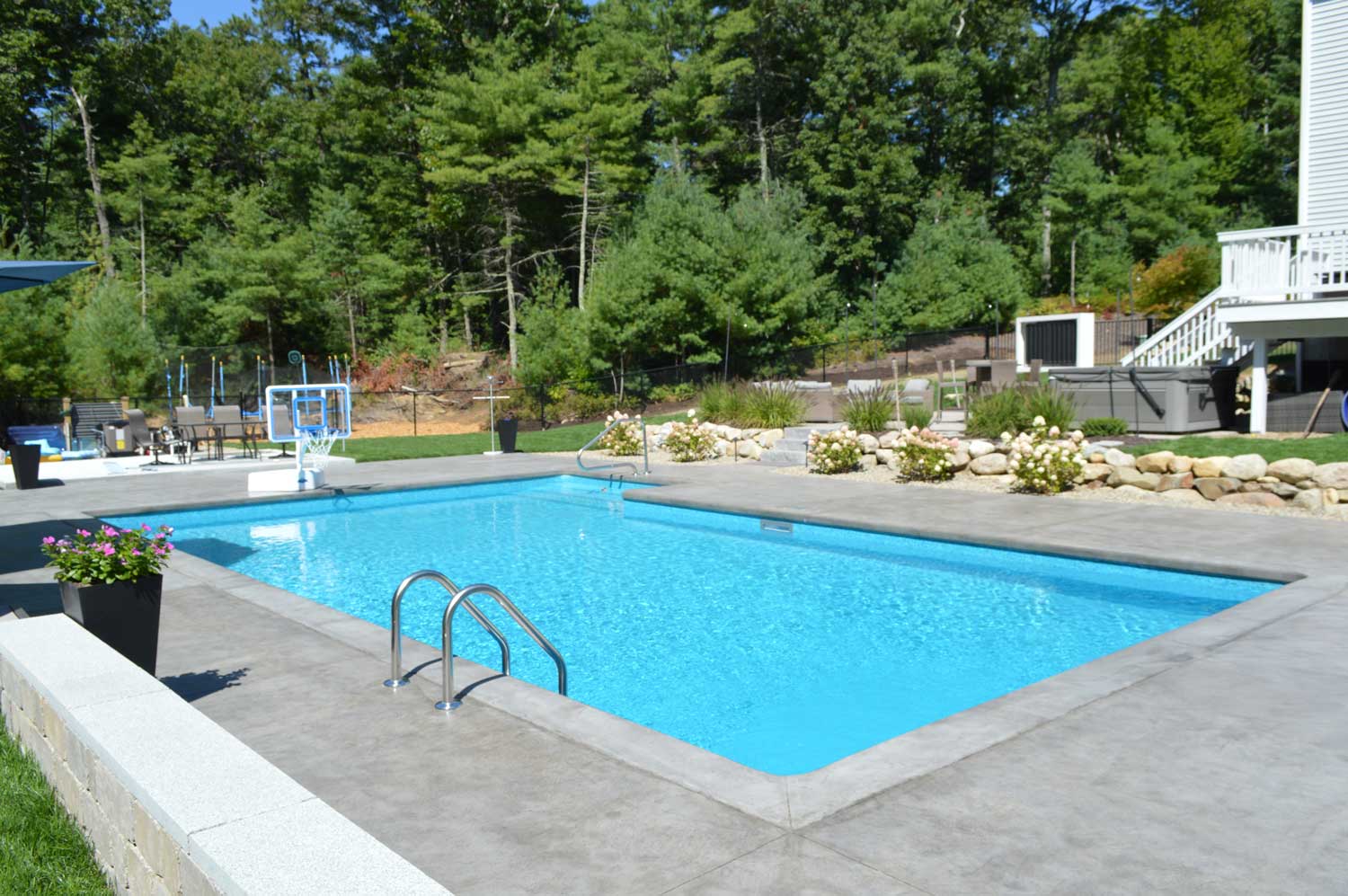
Vinyl liner pools are an excellent choice if you have a need or desire to fully customize the size and layout of your pool. Perhaps you need a custom shape to fit a unique backyard structure, or you have an exact vision for the aesthetic of your pool and surrounding space. With a vinyl liner pool, you can enjoy complete design freedom and flexibility to create the perfect addition to your home down to the color of the liner.
If you want to enjoy the most popular features of a bespoke pool, but don’t need the full creative control that a vinyl liner pool provides, a fiberglass pool can give you the best of both worlds. You’ll be able to choose from a wide variety of hand-crafted shapes that come fully equipped with built-in features like tanning ledges, LED lighting, and inlaid tile.
Advantages of Fiberglass Pools
Fiberglass pools have a number of advantages when it comes to durability, design options, and freedom from tedious maintenance.
Quick Fiberglass Pool Installation
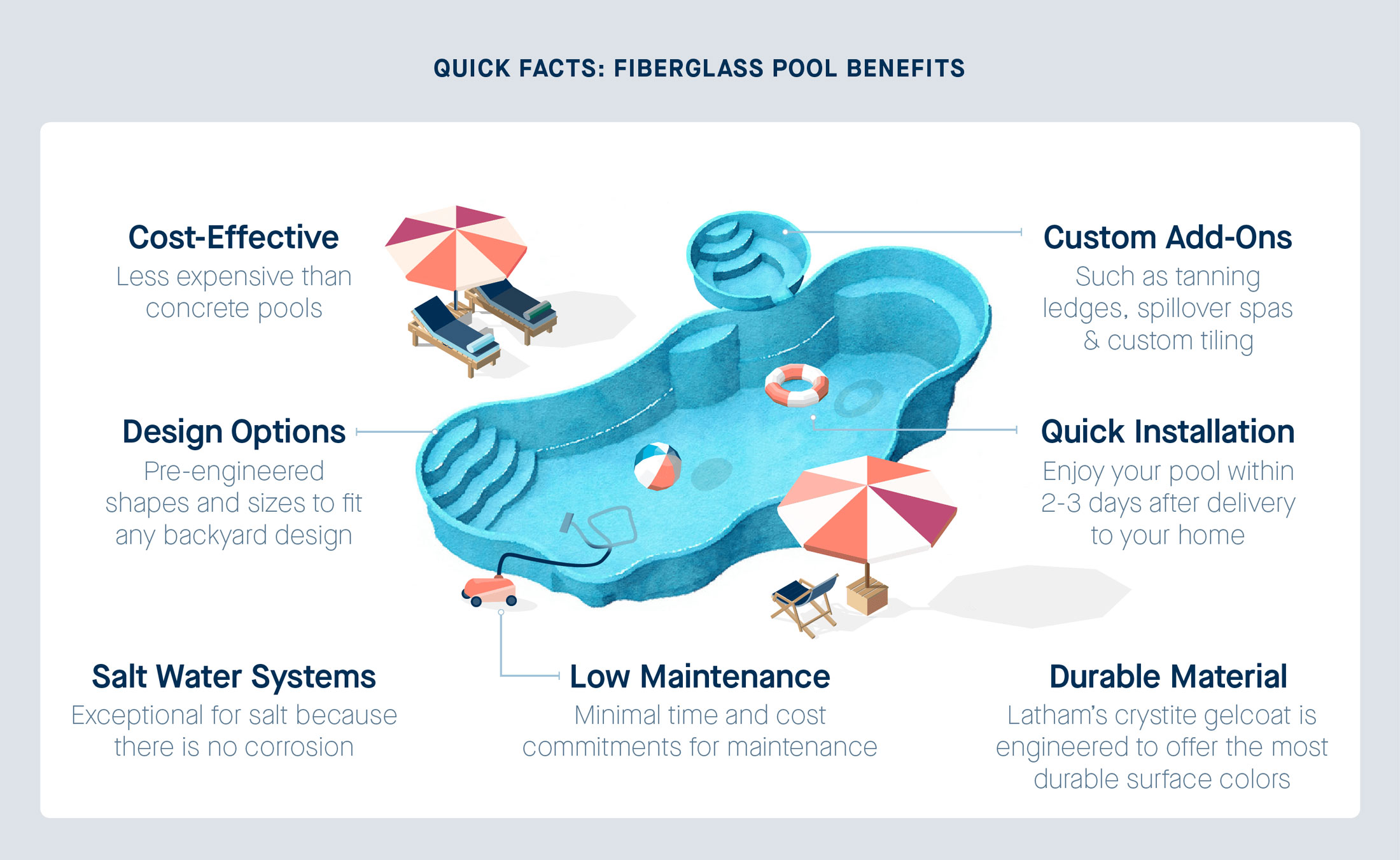
Fiberglass pools are highly durable and very efficient to install. Because they’re hand-crafted in a number of pre-designed shapes the entire installation process can be completed extremely quickly, without major disruptions to your backyard. Once your fiberglass pool is delivered to your home and installed, you can start enjoying your new pool in as little as three days.
Fiberglass Pools: Size, Shape and Customizations
Fiberglass offers homeowners a wide variety of hand-crafted options that are perfect for any backyard need or aesthetic, including:
- Customizable Add-Ons: Can add features to customize, including tanning ledges, bubblers, LED lights and inlaid tiles.
- Sizes: Available in a wide variety of sizes, comparable to options for vinyl liner pools:
- Small pools: 12 x 25 feet
- Medium pools: 14 x 30 feet
- Large pools: 16 x 35 feet
- Shape Options: Available in a variety of shapes, including:
- Rectangular
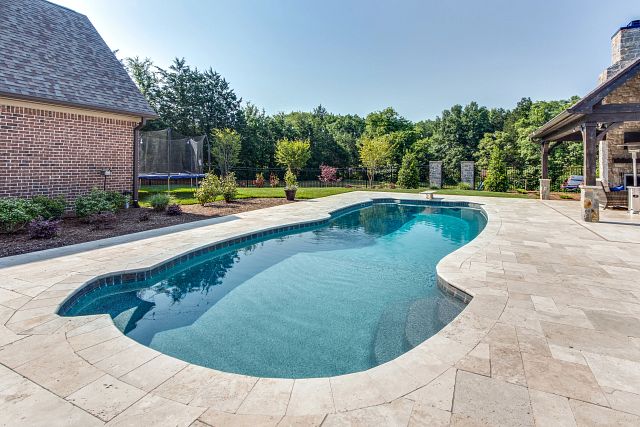
- Kidney-shaped
- Free form
- Salt Water Compatible: Fiberglass pools are exceptional for salt water systems because there is no corrosion to worry about, compared to porous concrete pools.
Cost of a Fiberglass Pool
The initial cost of a fiberglass pool can typically start at $50,000, with considerations like size and shape determining their final cost. Although fiberglass has higher up-front costs than vinyl liner pools, it can offer lower overall maintenance costs overall. We get into more detail on pricing including installation factors and maintenance costs in our fiberglass pool pricing guide.
How Long Do Fiberglass Pools Last?
Latham is the industry leader in innovation across its fiberglass pools with technically superior shells and finishes that are built to last. The sturdy, factory-controlled quality of construction makes fiberglass pools exceptionally durable, so you can enjoy your investment for many years to come.
- Durable: Fiberglass pools can last the lifetime of the home it’s installed in. To put things in perspective, there are fiberglass pools still in the ground that were put in during the 60’s! Latham’s carbon-infused technologies have superior compressive strength and an eight-element building process that provides industry-leading thickness and durability.
- Low-Maintenance: Enjoy minimal time commitment for maintenance. Latham’s Crystite gelcoat is engineered and built for fade, offering the most durable surface colors. The smooth, finish also makes fiberglass easier to clean and control algae growth.
- Low Cost-of-Maintenance: No costly upkeep expenses, such as the acid washing and resurfacing. Fiberglass pools also require 30% less chlorine than other pool types to keep clean.
- Warranty: Latham fiberglass pools are backed by some of the best warranties in the pool industry when you buy from an established pool dealer.
Advantages of Vinyl Liner Pools
From virtually endless customization options to affordability, vinyl liner pools have a number of advantages.
Quick Vinyl Liner Pool Installation
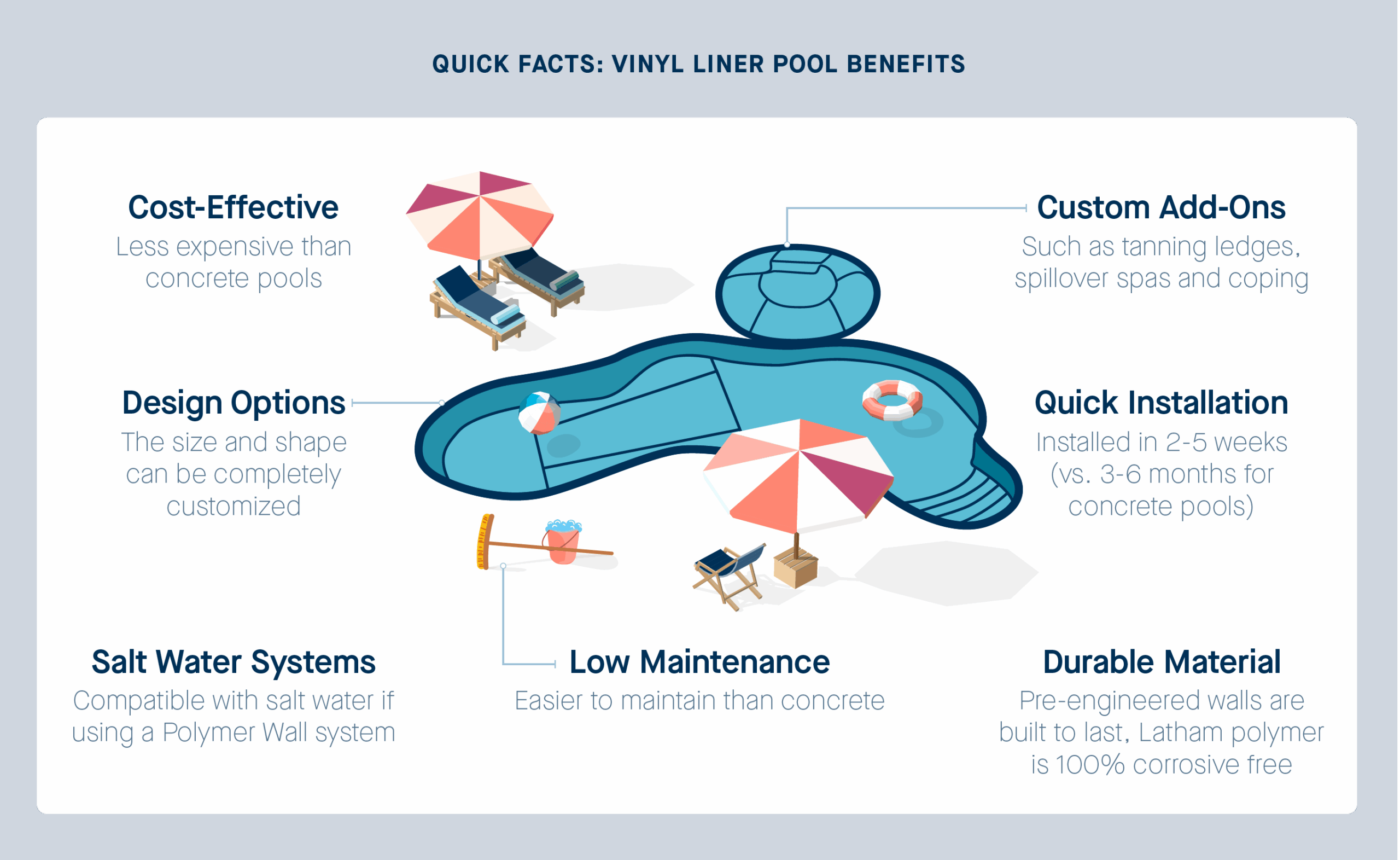
Vinyl liner pools take a close second to fiberglass when it comes to installation time. Because these pools feature modular components that are hand-crafted from non-corrosive materials, they typically only take a few weeks to install. This greatly accelerates installation time, especially when compared to concrete pools that must be poured on-site in your backyard and take weeks for the concrete to cure before it can be filled and enjoyed. Vinyl liner pools are designed to give you access to the benefits of pool ownership quickly after your project starts, allowing you to enjoy it without wasting the first few months of swim season waiting for construction to finish.
Vinyl Liner Pools: Size, Shape and Customizations
In terms of size and shape, inground vinyl liner pools give homeowners plenty of options to choose from. From more traditional rectangular shapes, to intriguing curved free-form shapes like the Taormina or Mountain Lake II models, vinyl liner pools come in a variety of styles.
Vinyl liner pools are highly customizable and offer homeowners an abundance of options to choose from to create the pool of their dreams. Vinyl liners are also soft to the touch and a great option for those who value overall comfort in their design.
- Customizable Style: Vinyl liners come in a variety of colors and patterns, from solid hues to prints that mimic the look of an elaborate mosaic, tile or seaglass. Replacing your vinyl liner can give your pool an entirely new and refreshed look.
- Customizable Add-Ons: You can also choose to enhance your vinyl liner pools with a number of add-ons, including tanning ledges and coping and decking.
- Sizes: Available in a wide variety of sizes and dimensions, comparable to prefab sizes for fiberglass pools, including:
- 14 x 28 feet
- 16 x 32 feet
- 16 x 36 feet
- 18 x 36 feet
- 20 x 40 feet
- Shape Options: Available in a variety of shapes, including:
- Rectangular
- Kidney-shaped
- L-Shaped
- Free form
- Salt Water Compatible: Works well with salt water systems and polymer wall systems.
Cost of a Vinyl Liner Pool
The average initial cost of an inground vinyl liner pool can start around $50,000. However, the total cost of your pool can depend on a number of factors, including its size, add-ons and level of customization.
How Long Do Vinyl Liner Pools Last?
All Latham branded liners are backed by our standard industry leading 20-year limited warranty and only use the finest raw materials available. The longevity of a vinyl liner, especially when it comes to the cosmetic appearance, almost always is dependent on maintaining proper water chemistry. Therefore, for best results we recommend working with your local pool builder and testing water on a regular basis.
- Relatively Low-Maintenance: Vinyl liner pools are easy to maintain, but require regular scrubbing with a soft brush or sponge to keep dirt and debris at bay.
- Durable: Vinyl Liner pools have wall systems that can last a lifetime with routine liner changes.
Fiberglass and Vinyl Liner Pool Takeaways: Which Is Better For You?
A pool can give you many years of enjoyment from the comfort of your own backyard. Choosing the type of pool that’s best for you depends on what matters most to you with your backyard pool experience. Comparing the pros and cons can help you find the best pool material to increase the recreation—and relaxation—you’ll get from your pool in the long run.
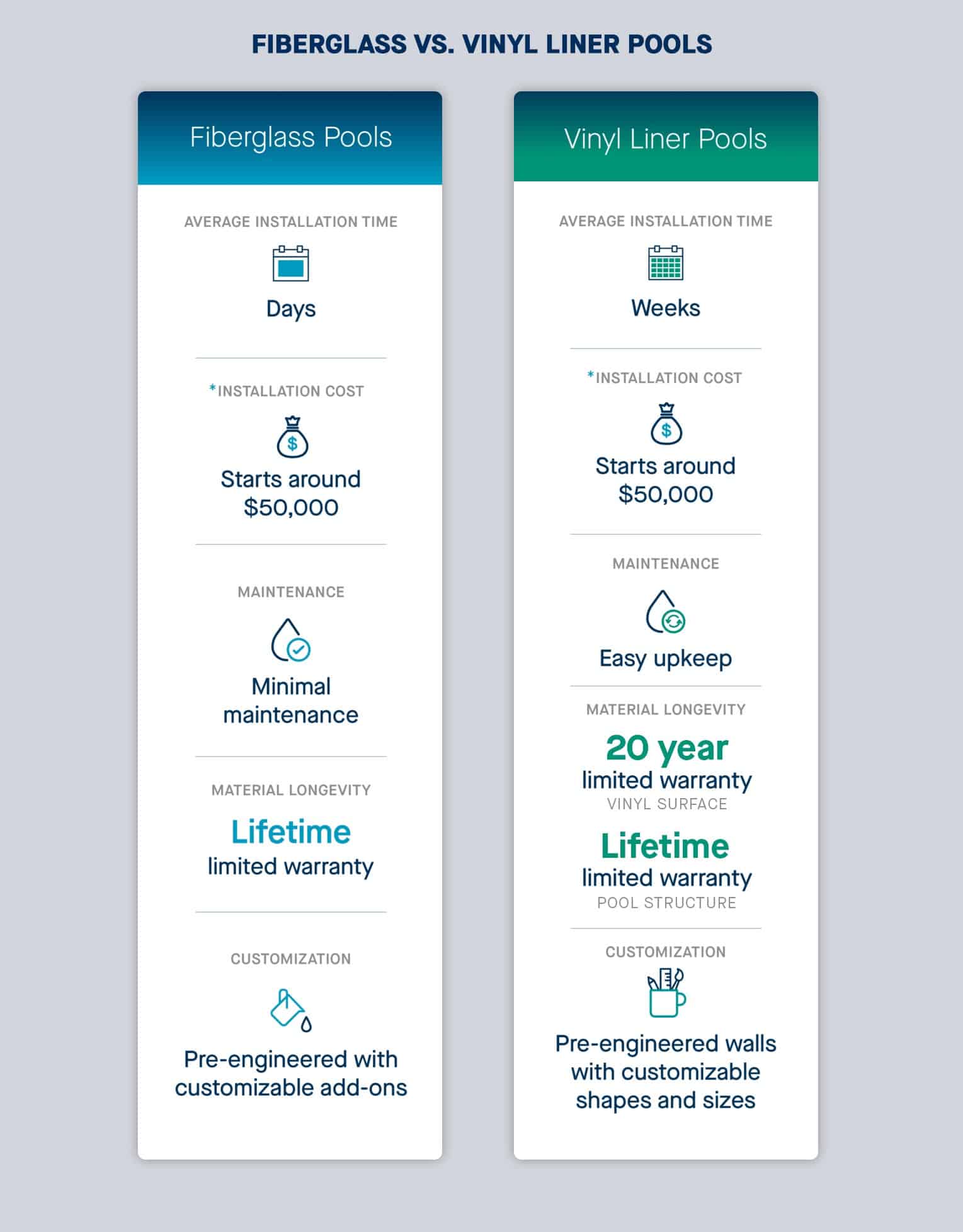
*Installation costs based on national average selling and installation pricing. Actual costs depend on various factors, including location of service, pool model and options selected. Please consult with a Latham Independent Builder for a customized estimate.
Find Your Dream Pool
Now that you understand a little more about the pros and cons of each pool type, from installation time and maintenance to comfort and durability, you’ll be better prepared to make a decision that’s right for you.
Start shopping for your fiberglass or vinyl liner pool with Latham. Get in touch with our team of friendly, knowledgeable experts who can help you determine which options are the best for your tastes, budget and lifestyle.