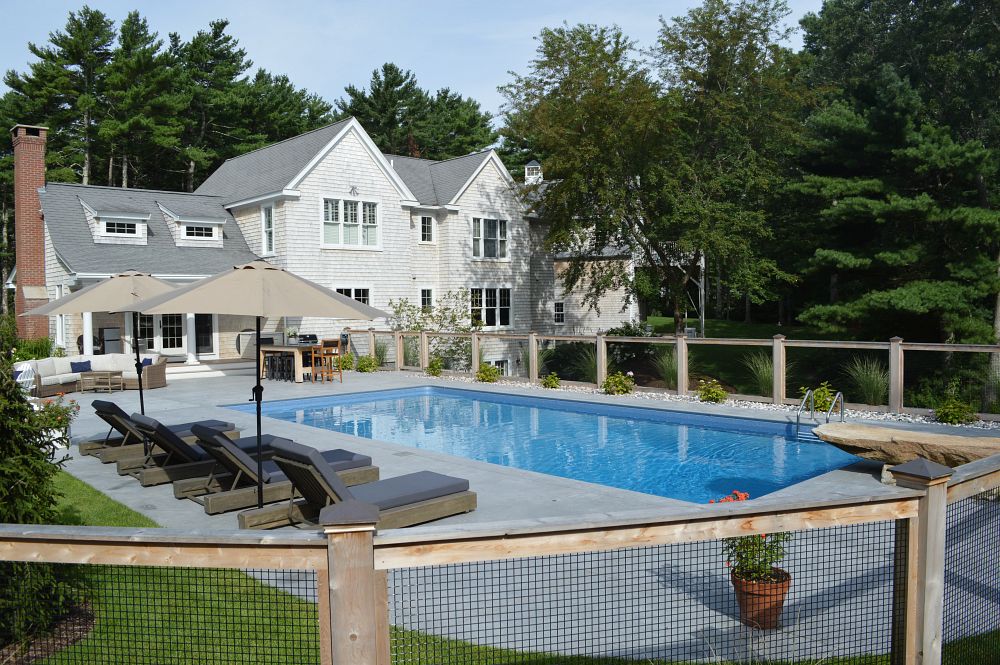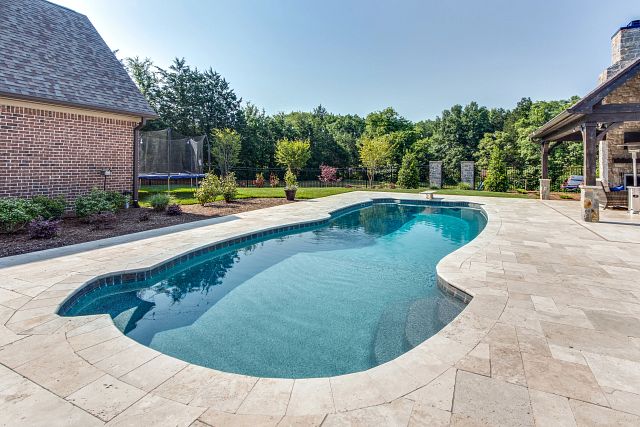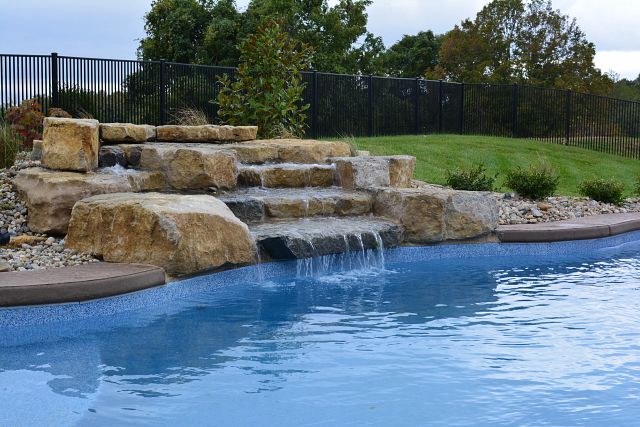

A pool can be the catalyst for an entire lifestyle shift that starts right in your backyard. Where today there might be just grass, tomorrow, it can become an exquisitely designed space made for entertaining with an outdoor grilling station and a swim-up bar. Or maybe your vision includes a pool that doubles as a gym where you can sweat off the day with rounds of laps, followed by a dip in the attached hot spa to soothe tired muscles.
No matter what you want to get out of owning a pool, financing is an accessible option to making your vision a reality. It’s a common misconception that financing a pool is a complicated process. In reality, however, it’s similar to getting a standard car or home improvement loan. We’re here to demystify pool financing options and give you a complete guide for how to finance a pool, including loan types, credit considerations, estimating budgets, and more.
How Much Does It Cost to Finance a Swimming Pool?
Much like financing other large purchases, such as a new car, you don’t have to pay the entire cost of a new pool up-front. Instead, think of it in terms of monthly payments that will help you pay it off in installments while you’re busy enjoying it. The total cost of your pool will be affected by a few different factors, like what kind of pool you choose, amenities you want to include, and the overall size, shape, and location of the pool. Learning more about what’s involved with the different types can help you better plan your new pool.
One of the biggest advantages of Latham fiberglass and vinyl liner pools is that they offer faster, expert installation, which can result in more predictable project timelines and costs. Here’s a look at what you might expect to spend on different pool types:
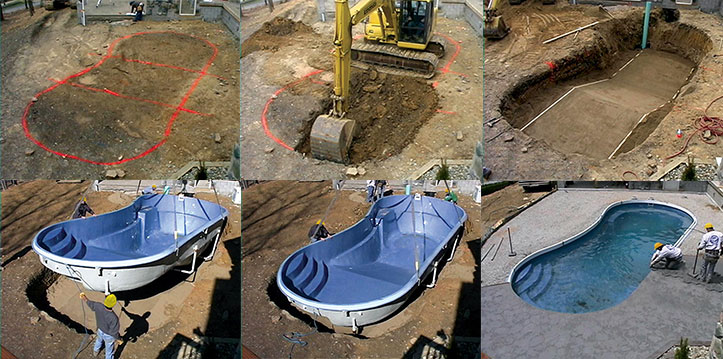
- Fiberglass pools: Prized for their beauty and ease of maintenance, fiberglass pools may cost more upfront than vinyl liner options, but their lower overall maintenance costs pay off with greater long-term value. Fiberglass pools are the fastest pools to install due to the array of hand-drafted models to choose from, each with different built-in features that are ready to enjoy.
- Vinyl Liner Pools: These pools offer the ultimate in customization, giving you flexibility in both the design and cost of your pool. While these pools are comparable in price to fiberglass, they’re a blank canvas for features you hand-select and only require just a little more maintenance than their fiberglass cousins. Over time, you’ll want to reserve some budget for a liner replacement every 10 years.
- Concrete (Gunite) Pools: A more expensive option, the starting cost of a concrete pool is higher than both fiberglass or vinyl liner pools. They typically take longer to install than fiberglass or vinyl liner options, and require greater regular upkeep. While these pools are fully customizable, you’ll need to budget for periodic acid washing and resurfacing to keep a concrete pool in good condition. This can add up to thousands in additional costs over 10 years.
You can begin to explore what a realistic monthly payment would look like using our Pool Cost Estimator.
Are You Financially Ready for a Pool?
During the planning stages, an easy way to determine if you’re financially ready for a pool is to use the same criteria lenders will use to assess applicants. Because it relies on multiple factors, like having a stable income, credit score, debt-to-income ratio (DTI), and savings, financing is a more practical bridge to pool ownership vs. asking you to have the full cost of the pool ready to go in your account before building starts.
Instead of thinking about it purely in terms of financial cost, think about building your new pool as an investment in your property and long-term lifestyle goals. Use budgeting tools to see how a pool loan will fit in your monthly expenses to be sure it’s the right choice for you.
Pool Financing Options: Types of Loans Available
Your pool dealer will have financing partners they can recommend to help you feel confident when financing a pool. At Latham, we trust Lyon Financial and LightStream Pool Loans to give customers access to premier lenders with the experience and expertise they deserve from a pool dealer. Here’s a little about each one:
- Lyon Financial Pool Loans: Specializing in pool loans since 1979, Lyon Financial has the expertise to guide you through the end-to-end process of securing your loan. They offer loans up to $200,000 with no consulting fees.
- LightStream Pool Loans: LightStream is an excellent lender option for homeowners with excellent credit looking to finance terms from $5,000 to $100,000 completely online. They offer fixed-rate home improvement loans with no hidden fees or home equity requirements.
How Long Can You Finance a Pool?
How long it takes to finance a pool will depend on the type of loan you decide to get. Different loan types, secured through different kinds of lenders, will have specific conditions for qualifying, making payments, and accumulating interest. For example, personal loans typically have term ranges of 1-7 years, are based largely on your credit history, and don’t require any property to be used as collateral. A home equity loan allows for much longer terms, up to 30 years, and borrows against the value of your home.
No matter the length of your term, you’ll pay off your loan in the same way though regular, scheduled payments over time. These payments will include both the principal, the amount you originally borrowed, and the interest. This means you can spread paying for your pool over its lifetime instead of having to come up with the full cost at the time you’re building it. However, there’s never any penalty for paying off your loan early.
Here are a few things to consider before getting a pool loan:
- Short vs. Long-Term Tradeoffs: Financing a pool creates a realistic path to pool ownership for people across the nation. However, it’s important that you closely look at the different loan types and choose one that is sustainable for your budget and lifestyle. For example, if you choose a home equity loan to finance your pool and later decide to sell your home, you’ll have to pay the remainder of the balance, using cash or sale proceeds, before you can close.
- Total Interest Impact: The different loan types will have pros and cons when it comes to interest rates. HELOC loans, for example, have rates that are typically variable rather than fixed, making it more difficult to predict what you’ll owe.
Use our Pool Cost Estimator to help determine a budget that feels right for your goals.
The Pool Loan Application Process: Step-by-Step
Applying for a loan can feel intimidating, but it’s actually a fairly straightforward process. You can also take intentional steps to increase your likelihood of loan approval, such as working to reduce your overall debt prior to applying. New credit activity like applying for new lines of credit or opening/closing accounts can affect the average age and utilization of your accounts, so it’s best to avoid these actions until you’ve finalized your loan.
Here are the steps you can expect to take when applying for your new pool loan:
- Gather Your Financial Documents: These will generally include documents for identity verification (social security number, drivers license, etc.), income verification (pay stubs, tax returns, bank statements, etc.), and information on your assets (stocks and bonds, real estate, retirement and investment accounts, etc.). Because you’ll likely be sending these to multiple lenders, it’s usually a good idea to make multiple copies once you’ve gathered them.
- Check Your Credit and Debt-to-Income (DTI) Ratio: You can calculate your DTI ratio by adding up your monthly debt payments (rent, mortgage, car loans, student loans, credit card minimum payments, etc.) and then dividing that number by your monthly income before taxes. Multiply that number by 100 to get your DTI percentage.
- Research and Compare Lenders: There are many different types of lenders, from online vendors and banks to those who deal exclusively in pool loans. Carefully research interest rates, term amounts, and the requirements for each one to determine which is the best fit for your budget.
- Apply and Get Pre-Approved: Pre-approval is a different, more formal step of the application process than prequalification. While prequalification uses self-reported information about your finances and credit history, pre-approval is the result of your lender verifying this information and involves a “hard” credit check. While getting pre-approved doesn’t guarantee that your loan will be finalized, it is a necessary step and shows that you are serious about your financial commitment.
- Finalize the Loan and Begin Your Project: Once you’re approved, re-check the Annual Percentage Rate (APR) of your loan to ensure all interest rates, fees, and monthly payments are within your budget before you finalize the loan and begin your project.
Budgeting for the Total Cost of Pool Ownership
After you’ve looked into financing options for a new inground swimming pool, creating a project budget will be your next step towards pool ownership. You’ll need to account for both the upfront and long-term costs. During the construction process, this includes securing necessary permits, excavation, landscaping for both the area immediately around your pool and the rest of your backyard, and safety features like slip-resistent decking and pool fencing.
You’ll also need to account for ongoing maintenance costs associated with your pool type. Some energy-efficient features can effectively reduce long-term expenses. For example, Latham automatic pool covers can prevent debris from setting in the pool, keep sunlight from fostering algae growth, and lower utility costs.
It’s always a good idea to pad your budget with an extra 10-15% to create a buffer for additional expenses or timeline delays. That way, when surprises do come up, you can concentrate on the excitement you have for your new pool instead of feeling financial stress.
Realistic Examples of Pool Financing Scenarios
Everyone’s personal finances are a little different. Luckily, there are many different loan types, and scenarios for applying for those loans, to help every situation. Let’s go over some common pool financing scenarios to help you feel prepared when deciding what kind of financing best fits your lifestyle.
- First-Time Buyer Using A Personal Loan: If you’ve just bought your first home, you likely won’t have equity to use as collateral. While you likely won’t be able to apply for a home equity loan, you can take out a personal loan instead. This is called an unsecured loan, and lenders will likely determine your eligibility based on your creditworthiness. However, be prepared to likely have a higher interest rate.
- Home Equity For Long-Term Owner: A home equity loan allows you to put your house up as collateral to borrow a lump sum that can be paid off over time. These loans generally have lower interest rates than personal loans, but you’ll need to be careful about making payments in-full and on-time, as your house can be at risk if you default on the loan.
- HELOC For Phased Custom Install: HELOC loans allow you to borrow funds as you need them, making them great for those who want to draw funds as the project unfolds instead of in one lump sum. These loans often have flexible terms and lower interest rates, but like home equity loans, your home is at risk of foreclosure if you go into default.
- Cash + Small Loan Hybrid: If you have savings put aside for additions like a pool, using cash for a down payment and taking out a smaller loan to cover other expenses can be a great financing compromise. By putting down cash upfront, your loan will be smaller, making your monthly payments lower and financial responsibility more sustainable.
What’s the Return on Investment for a Pool?
There are many benefits of pool ownership beyond just the resale value of your home. Think of your pool as an investment in yourself. A pool is the epicenter of your backyard, a space that can shift in function to whatever you need emotionally, mentally, and physically.
Are you feeling run down from day-to-day life, like you’re close to burn out without the vacation time to get away and recalibrate? A pool can act as an oasis on your open property where you can relax and spend quality time with friends and family on your regular schedule. Maybe you’ll spend a weekend afternoon lounging in the sun or have friends over for poolside dinner and cocktails. You could also use your pool as a private gym, with swimming being one of the best low-impact, high-reward workouts across ages and body types.
Common Mistakes to Avoid When Financing a Pool
Financing is a path that can lead many people to their dream of owning a pool, but you’ll need to be diligent about making financially-sound decisions and building within your budget. Here are a few common mistakes you should try to avoid when financing a pool:
- Underestimating Cost: The cost of fiberglass and vinyl liner pools are heavily influenced by factors such as the size, design, and additional features you choose, as well as site location. You should review plans carefully with your contractor before they begin excavation to ensure that your pool plan matches your estimated budget.
- Not Comparing Lenders: You’re probably eager to start the building process, but letting that excitement rush the financing process could be a mistake. Review all of your lending options carefully to be certain you’ve chosen the one that best aligns with your needs.
- Choosing The Wrong Loan Type: Choosing the wrong loan type for your needs can result in serious financial consequences including a lower credit score, default, and even foreclosure of your home. Be certain of which loan type you’re choosing for financing and that it’s compatible with your lifestyle.
- Ignoring Long-Term Costs: Long-terms costs like ongoing maintenance, chemical balancing, and equipment replacement are crucial to keeping your investment clean, safe, and ready-to-use. You’ll need to factor these costs into both your upfront pool budget and your long-term financial plan.
- Overborrowing: Borrowing more money than you need, especially at a high interest rate, can result in your payments becoming unmanageable down the road. These can then snowball and cause you to default on your loan. Double check with your contractor and your lender that the amount you’re borrowing is only what you need to complete your project.
Final Tips for Getting a Pool Loan Approved
Getting your loan approved is the last step towards financing your pool. While it might seem like this is out of your hands, there are actually several actions you can take to help ensure that your loan goes through, such as checking and internationally improving your credit, lowering your DTI ratio, and avoiding other major purchases that would also require financing. You can also consider shopping with lenders like Lyon Financial or LightStream who specialize in home improvement and pool loans.
Exploring your financing options early gives you the time to make an educated decision instead of rushing into a loan to the first lender you find. We also have Latham-authorized pool dealers who can help when you’re ready to begin planning.
Get Started with Latham Today
Here at Latham, we have decades of expertise installing fiberglass and vinyl liner pools, and we’re here to help you through the entire process, from financing to installation. Our pool dealers work with trusted financing partners to give you the utmost in financial flexibility and streamline the loan process. Use our Pool Cost Estimator to get started turning your dreams of owning a pool into reality.
Whether you’re just starting to plan your pool or you’re ready to move forward today, we’re here to provide the tools and support to guide your journey to pool ownership. Contact us today to get started.
FAQ: Pool Financing Questions Answered
Financing a pool can be a gateway to pool ownership that gives you more flexibility with your finances. Look through our frequently asked questions to see answers to common questions about financing a pool.
Can I finance a pool with bad credit?
Credit is only one factor lenders look at when deciding to approve your loan for a new pool. It’s absolutely possible to still get approved for your loan with bad credit, especially if you have a lower debt-to-income ratio, put down a larger down payment, or get a co-signer.
Can I roll pool financing into my mortgage?
You can roll pool financing into your mortgage, but it will likely require you to refinance your existing mortgage. You can also choose to take out a home equity or HELOC loan.
Can I get pre-approved for a pool loan before choosing a builder?
You can get pre-approved for a pool loan before choosing a builder. In fact, we recommend it! Knowing your exact loan amount can help you budget for your project and show potential builders that you’re ready to begin your project quickly after signing a contract.
Is pool financing available for new construction homes?
Yes, pool financing is available for new construction homes. You’ll likely need to add the cost to your existing mortgage or get a specialized construction loan.
Will financing a pool impact my ability to refinance my home later?
Yes, financing a pool will affect your ability to refinance your home later because it will increase your debt-to-income ratio, which could affect your ability to qualify for future loans.