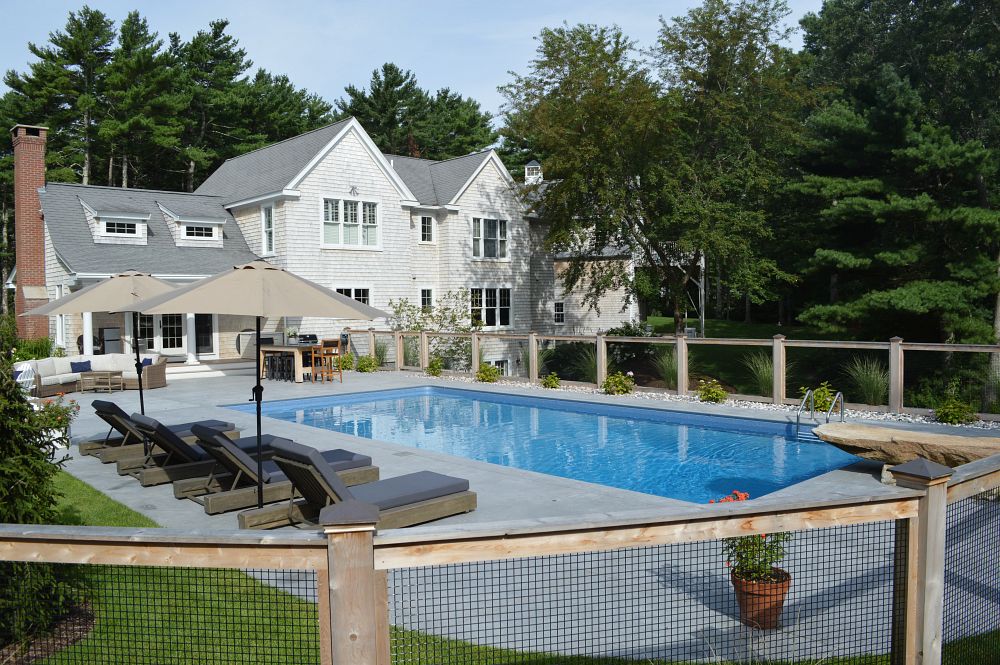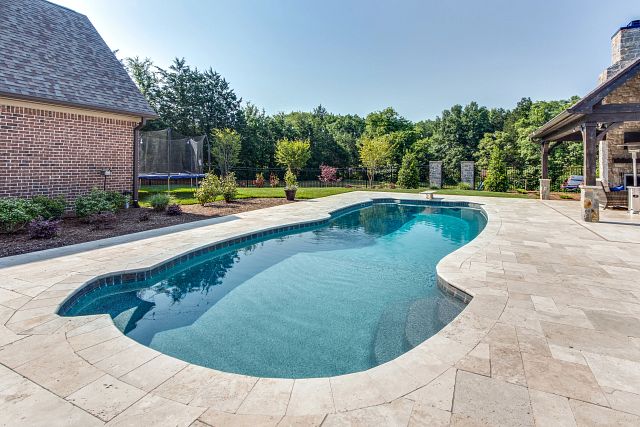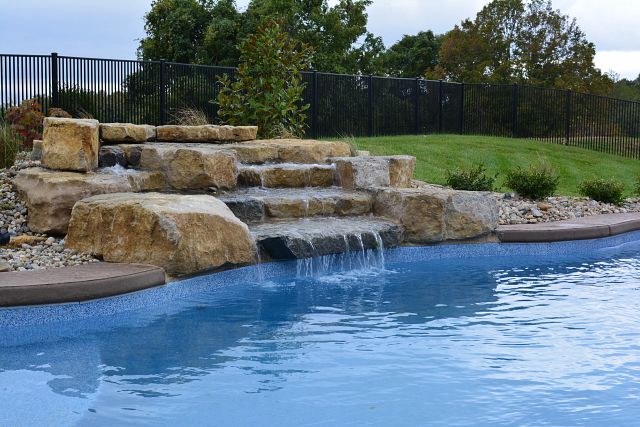
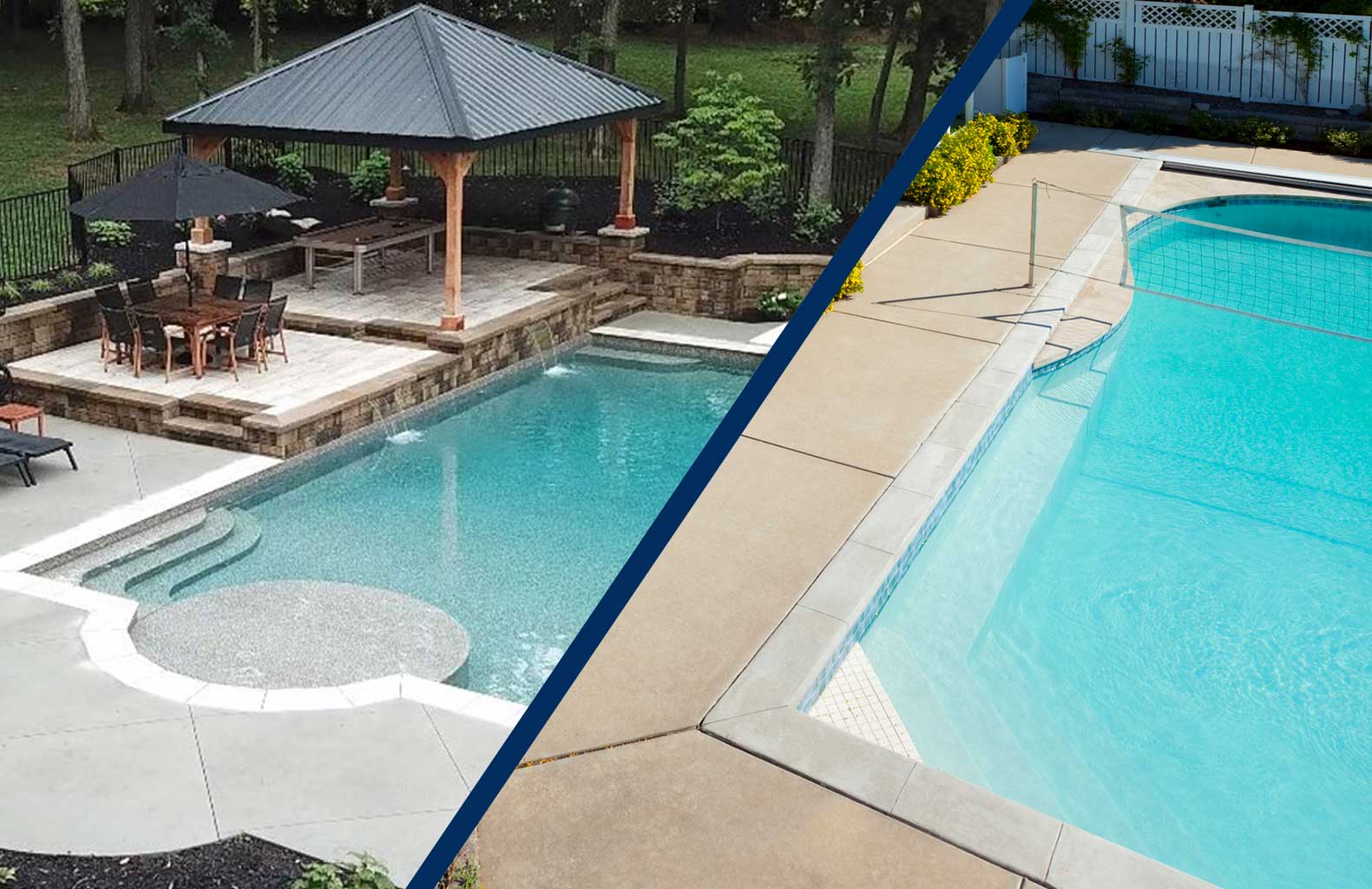
Planning your dream pool and choosing the right pool materials that work for your lifestyle and aesthetic sensibilities is the first step in building a backyard oasis where you can relax, entertain, and escape everyday.
Concrete and vinyl liner pools are two of the most popular options available today. To help you choose the best type of swimming pool for you, we’ll look at factors like installation time, style and customization, pool cost, durability and maintenance needs to help you understand the differences between Latham vinyl liner pools vs. concrete (also referred to as gunite or shotcrete) pools.
What Is The Best Type of Pool for You?
Vinyl liner and concrete are two popular types of pools that offer flexibility of design and customization. So how do you know which one is right for you? Here’s a look at some of the practical differences between vinyl liner and concrete pools:
- Vinyl Liner Pools: These pools are extremely customizable and can be installed in weeks vs the months it takes to complete a concrete pool. They’re also easier to maintain because they don’t demand as much upkeep as concrete pools, which require more chemicals to balance water pH, as well as periodic acid washing or resurfacing. By contrast, vinyl liner pools only require a liner replacement approximately once every 10 years, which costs far less than concrete resurfacing.
- Concrete Pools: These pools are very durable and can be a good option for those who want to customize their pool’s size and shape. However, they require frequent chemical balancing to stay looking their best. They will also need to be acid washed and resurfaced every 10 years, which can be expensive depending on the size of the pool.
If you’re building a new pool, a vinyl liner can give you the same benefits in longevity and customization for a more cost effective price than concrete.
Installation Time
If you want your pool built quickly, opt for vinyl liner. Many concrete pools are built using the gunite process and can take approximately three to six months to install, from the permit process to finishing touches like fence installation. With a vinyl liner pool, you can have a ready-to-use pool in a matter of weeks vs. the arduous months-long process required for concrete pools, allowing you more time in your pool for the season and less time building.
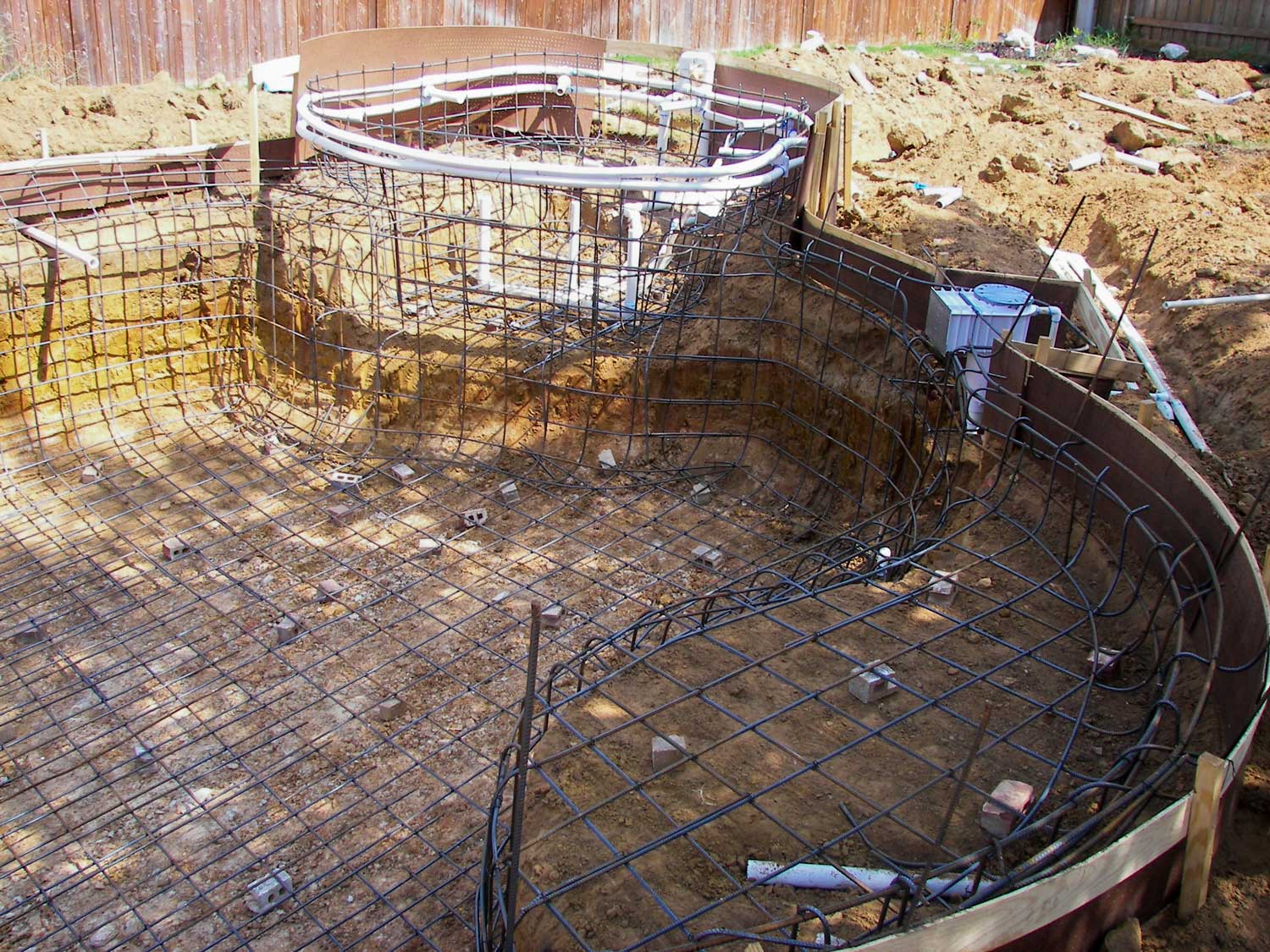
Concrete pools are commonly constructed using a gunite method, which involves excavating the yard and forming the pool structure on site. Because the pool is built directly in place, installation takes longer and typically causes extended disruption to the surrounding landscape. The concrete itself also needs several weeks to properly cure, contributing to an overall build timeline that can span three to six months, from permitting through final site details.
Cost Comparison
Vinyl liner pools start at around $50,000 for new builds, with design choices around size and shape having an impact on total price. However, these pools require less overall maintenance because their nonporous surface makes them less prone to algae growth, which can severely compromise your water chemistry. A well-maintained vinyl liner can last for more than 10 years. Periodically replacing your liner can also give you an opportunity to inexpensively transform the look of your pool. New liners are significantly cheaper than the resurfacing needed for concrete with an average cost of around $4,000.
Building a concrete pool generally starts at around $60,000+, and its total price will also be affected by the size, shape, and premium add-ons you choose in the design phase. These pools require extensive maintenance including more frequent chemical and water balancing, as well as acid washing and resurfacing about every 10 years. These costs can total to about $10,000 to $27,000 over the course of a decade.
Remember to keep both up-front construction costs and day-to-day upkeep in mind when deciding which type of pool is best for you. Visit our pricing calculator to get insight into how much you should budget when designing the pool of your dreams.
Maintenance Needs
How much you should budget for regular and seasonal maintenance will depend largely on the type of pool you choose. Take a quick look at how vinyl liner and concrete pools compare:
- Vinyl Liner Pools: These pools require light cleaning to keep dirt and debris from accumulating on your liner’s waterline. You’ll also need to balance your water chemistry weekly to keep your vinyl liner pool looking fresh. However, vinyl liner pools use fewer chemicals than their concrete counterparts, which keeps your maintenance costs low in the long-term. These liners will also need to eventually be replaced, bringing overall costs to around $7,000 over 10 years.
- Concrete Pools: These pools need more frequent scrubbing and chemical balancing because their porous surface is more prone to algae growth, which can create an unsanitary, unswimmable environment if left untreated. Concrete pools also need acid treatments every 5-7 years, as well as resurfacing every decade. This brings their long-term costs to around $15,000 to $27,000 over a 10-year period.
Comfort, Durability & Water System Considerations
Both concrete and vinyl liner pools are extremely durable and will give you many years of enjoyment with proper maintenance. However, there are considerations you’ll need to keep in mind when it comes to overall comfort and their compatibility with certain water systems, especially saltwater.
Vinyl liner pools are great options if you value comfort and strong compatibility with saltwater systems. Concrete often comes with rougher finishes that can feel harsh underfoot and snag bathing suits, while vinyl liners create a softer, more comfortable surface inside the pool.
Many people opt for saltwater systems because they provide a more gentle environment and require fewer chemicals. However, because salt is corrosive, not all pools will be compatible. Concrete is less suitable for saltwater systems because the salt can corrode the pool’s finish, while vinyl liner pools have a nonporous surface that protects them from damage.
Customization & Design Flexibility
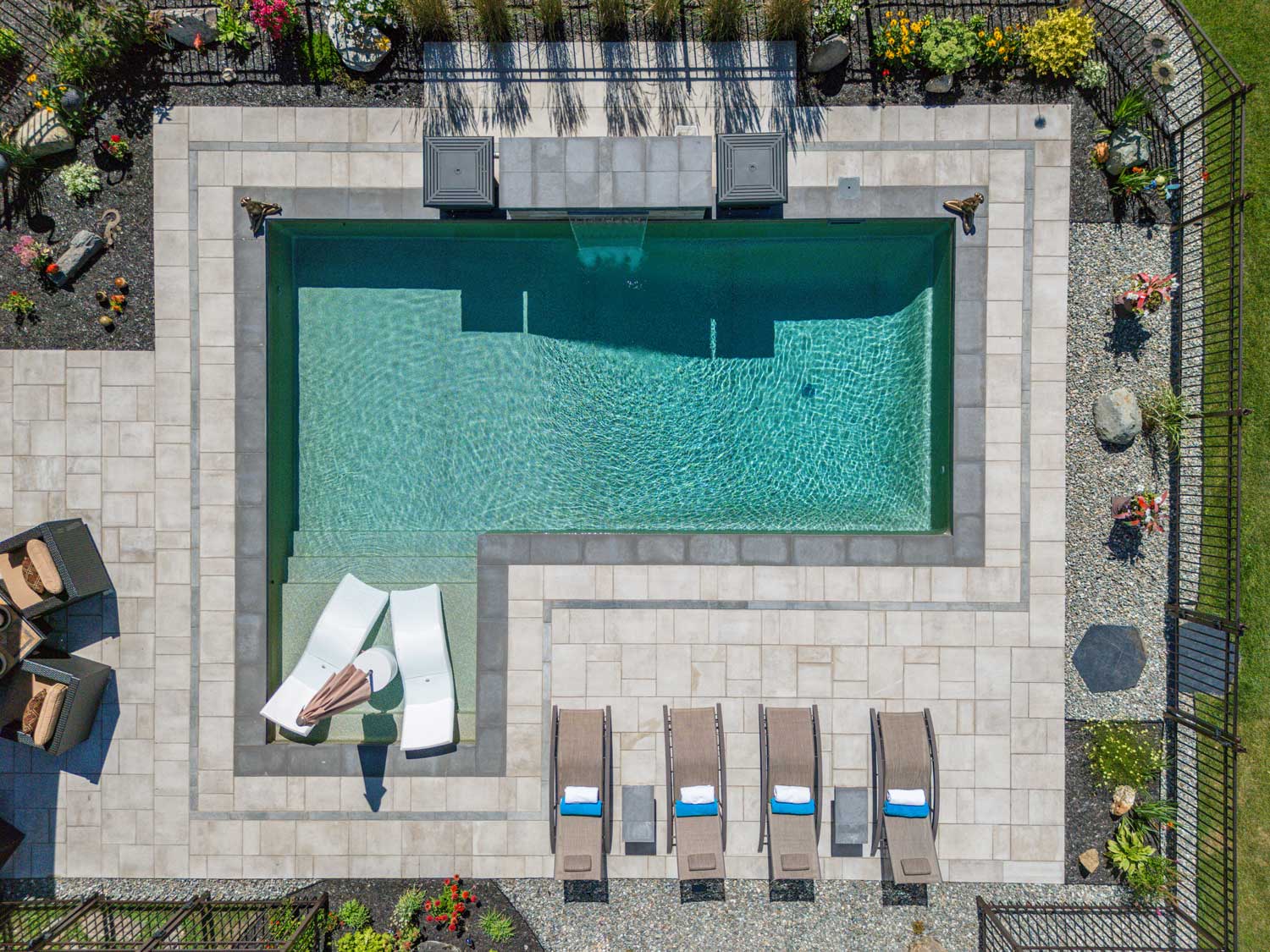
Concrete pools are known for offering complete freedom when it comes to customization. They can be designed for nearly any shape, size, and depth and it’s easy to add premium features like tanning ledges and waterfalls to their plans. This makes them ideal for complex projects and backyard layouts that might be outside of the norm.
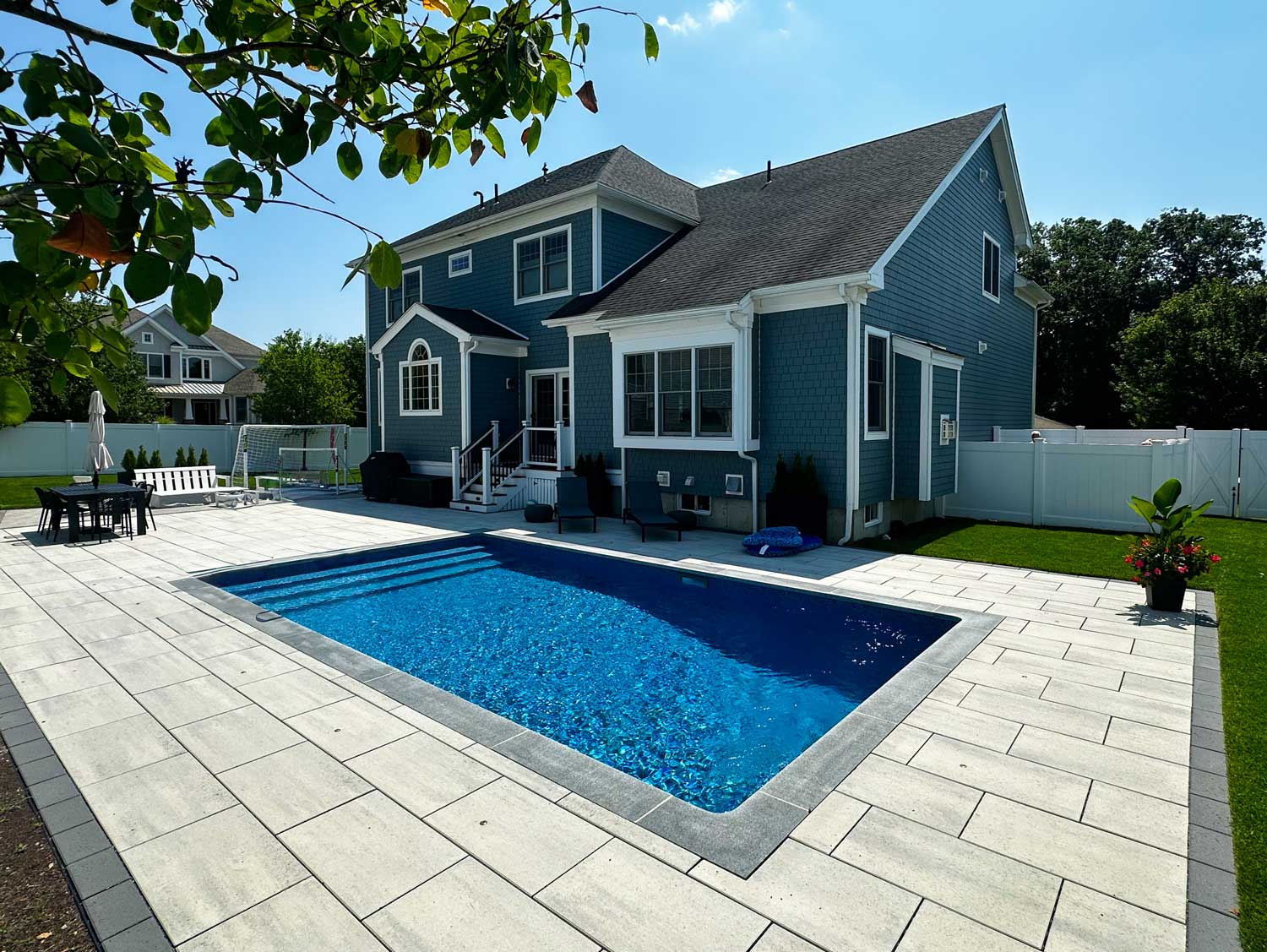
Vinyl liner pools offer just as much customization potential, but with the added benefits of less upkeep, more comfort, and a more luxurious look thanks to a range of vinyl liner colors and patterns. Vinyl liner pools come in a variety of sizes and shapes, making them a flexible choice for any size backyard. In addition, a vinyl liner pool stands as a blank canvas for you to personalize with features that create a breathtaking aesthetic that suits your personal taste without the high price tag of concrete. Vinyl liner pools allow you to add custom features like tanning ledges, a spillover spa, embedded pool lights, or even a water slide.
Advantages of Vinyl Liner Pools
From virtually endless customization options to affordability, vinyl liner pools have a number of advantages.
Vinyl Liner Pools Are Quicker to Install
When it comes to installation time, vinyl liner pools enable you to have a ready-to-use pool in a matter of weeks vs. the arduous months-long process required for concrete pools.
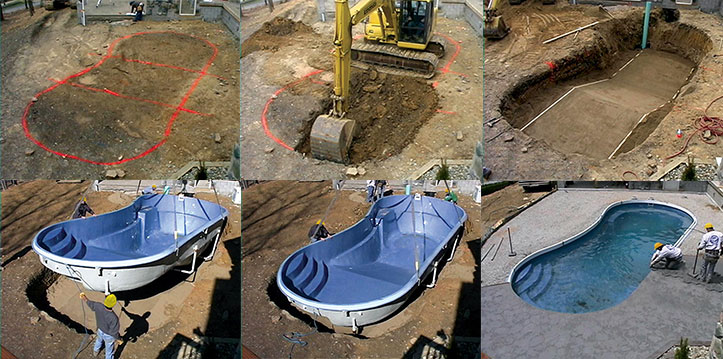
Sturdy, factory-controlled parts are designed to fit together. Vinyl liner pools are made from a series of non-corrosive steel or polymer panels that can be transported to your backyard and expertly assembled by professional builders once space has been excavated. Modular construction makes vinyl liner pools faster to install than concrete pools, which need to be poured directly on-site and require time to cure before they can be filled and enjoyed. This means you have more time to enjoy your vinyl liner pool once it’s been installed!
Vinyl Liner Pools: Size, Shape and Customizations
In terms of size and shape, inground vinyl liner pools give homeowners plenty of options to choose from. From more traditional rectangular shapes, to intriguing curved free-form shapes like the Taormina or Mountain Lake II models, vinyl liner pools come in a variety of styles.
Vinyl liner pools are highly customizable and offer homeowners an abundance of options to choose from to create the pool of their dreams. Vinyl liners are also soft to the touch and a more comfortable option than the rough texture of a concrete pool.
- Customizable Style: Vinyl liners come in a variety of colors and patterns, from solid hues to prints that mimic the look of an elaborate mosaic, tile or seaglass. Replacing your vinyl liner can give your pool an entirely new and refreshed look.
- Customizable Add-Ons: You can also choose to enhance your vinyl liner pools with a number of add-ons, including tanning ledges and coping and decking.
- Sizes: Available in a wide variety of sizes and dimensions, comparable to prefab sizes for fiberglass pools, including:
- 14 x 28 feet
- 16 x 32 feet
- 16 x 36 feet
- 18 x 36 feet
- 20 x 40 feet
- Shape Options: Available in a variety of shapes, including:
- Rectangular
- Kidney-shaped
- L-Shaped
- Free form
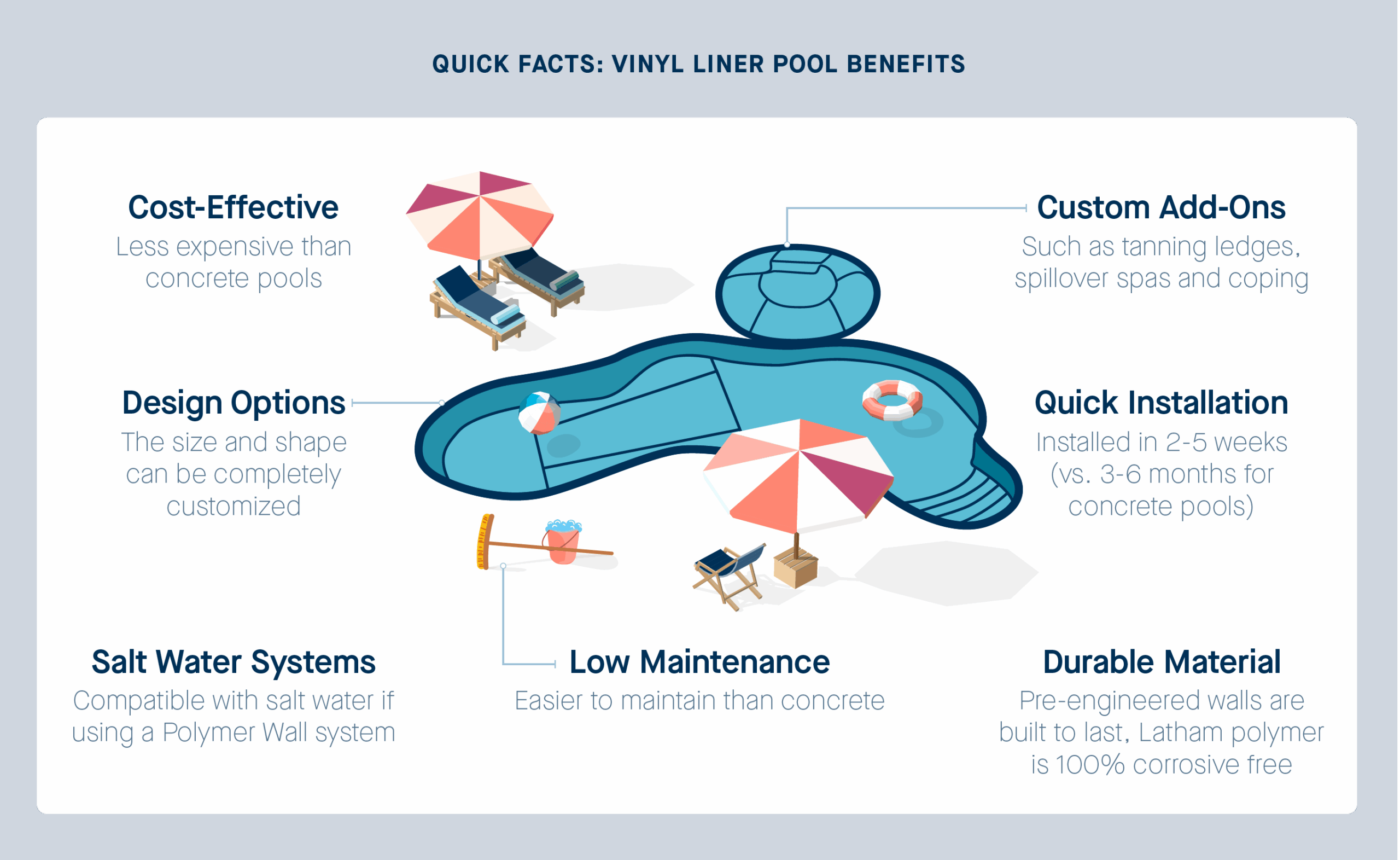
- Salt Water Compatible: Works well with salt water systems and polymer wall systems.
Cost of a Vinyl Liner Pool
The average initial cost of an inground vinyl liner pool can start around $50,000. Vinyl liner pools are less expensive than concrete pools in terms of initial cost, with concrete installation costs starting around $60,000.
However, the total cost of your pool can depend on a number of factors, including its size, add-ons and level of customization.
How Long Do Vinyl Liner Pools Last?
All Latham branded liners are backed by our standard industry leading 20 year limited warranty and only use the finest raw materials available. The longevity of a vinyl liner, especially when it comes to the cosmetic appearance, almost always is dependent on maintaining proper water chemistry. Therefore, for best results we recommend working with your local pool builder and testing water on a regular basis.
- Relatively Low-Maintenance: Vinyl liner pools are easy to maintain, but require regular scrubbing with a soft brush or sponge to keep dirt and debris at bay. Concrete pools, in comparison, require an intensive degree of care (including periodic acid washing and resurfacing) as these pools are more susceptible to algae growth due to their porous nature.
- Durable: Vinyl Liner pools wall systems can last a lifetime with routine liner changes. In comparison, a well-maintained concrete or gunite pool can last for decades, but needs to be routinely resurfaced and acid washed approximately every 10 years.
These pools are extremely durable when maintained carefully and correctly. If you’re looking for a pool that can fit the exact vision you have for your backyard, and will last the lifetime of your home, a vinyl liner pool is an investment that will provide a backdrop for many backyard memories for years to come.
Analyzing Concrete Pools (Gunite Pools)
Concrete pools are sometimes referred to as gunite pools. While their ability to be highly customized is one of the most attractive features of a concrete pool, they can take longer to install.
Building a concrete pool is done in stages, with your pool installation team digging and preparing the ground, then adding concrete to the space. It can take roughly 28 to 30 days for a concrete pool to cure before it can be filled and used. From end-to-end, the entire installation process for a concrete pool can take anywhere from three to six months.
Concrete Pools: Size, Shape and Customization
Concrete or gunite pools offer a range of customization options since their size and shape can be tailored to fit your design aesthetic, as well as conform to the size of your backyard. Due to their highly customizable nature and the labor involved, concrete pools are often the most expensive of pool types, starting at $50,000 and climbing higher depending on the degree of customization.
Some of the most common shapes, sizes, and custom add-ons for concrete pools include:
- Customizable Add-Ons: Common add-ons for a concrete pool include tanning ledges, decking, lighting, or water features.
- Sizes: Concrete pools can be customized to fit any size backyard. However, some of the most commonly requested dimensions are:
- 10 x 20 feet
- 12 x 25 feet
- 14 x 28 feet
- 14 x 30 feet
- 15 x 30 feet
- 16 x 32 feet
- 16 x 36 feet
- 16 x 35 feet
- 18 x 36 feet
- 20 x 40 feet
- Shape Options: Concrete pools are available in a variety of shapes, including:
- Rectangular or linear
- Freeform
- Kidney-shaped
- L-shaped
- Not Salt Water Compatible: Concrete pools are not suited for use with salt water systems. Salt water can be corrosive to the finish of your pool and impact its longevity. If you have your heart set on a salt water system, vinyl liner pools are a safer bet.
How Long Do Concrete Pools Last?
Concrete pools can last a long time, but can be more expensive than a fiberglass or vinyl liner pool to maintain.
- Durable: Concrete pools have an average lifetime of roughly 30 years or more, if they are well-maintained. However, they do need to be resurfaced roughly every 10 years.
- Higher cost of maintenance: Resurfacing and maintenance of a concrete pool can be more expensive compared to the upkeep required of a vinyl liner pool. On average, the 10-year maintenance cost for a concrete pool can run between $15,000 and $27,000. This is substantially higher compared to the $7,000 10-year maintenance cost for a vinyl liner pool over a decade.
- More frequent maintenance: Concrete pools require regular upkeep, including weekly scrubbings and sweepings to keep algae at bay due to its more porous surface.
Should I Be Worried About Concrete Cancer (Alkali-Silica Reaction)?
“Concrete cancer”, also known as alkali-silica reaction (ASR), is a real risk with concrete pools.
When concrete is exposed to moisture, chemicals or other factors, it can develop a chemical reaction known as alkali-silica reaction (ASR), in which the concrete expands and cracks. This reaction starts in one place, then spreads across the entire concrete structure over time, breaking down the strength and integrity of the concrete.
Concrete pools, which are filled with water and chemicals continuously, are especially susceptible to concrete cancer, which would require a complete replacement of your pool structure.
Since vinyl liner pools use no concrete in their structures, this expensive replacement is only needed for concrete pools.
Vinyl Liner and Concrete Pool Takeaways: Which Is Better For You?
A pool can give you many years of enjoyment from the comfort of your own backyard. Choosing the type of pool that’s best for you depends on what matters most to you with your backyard pool experience. Comparing the pros and cons can help you find the best pool material to increase the recreation—and relaxation—you’ll get from your pool in the long run.
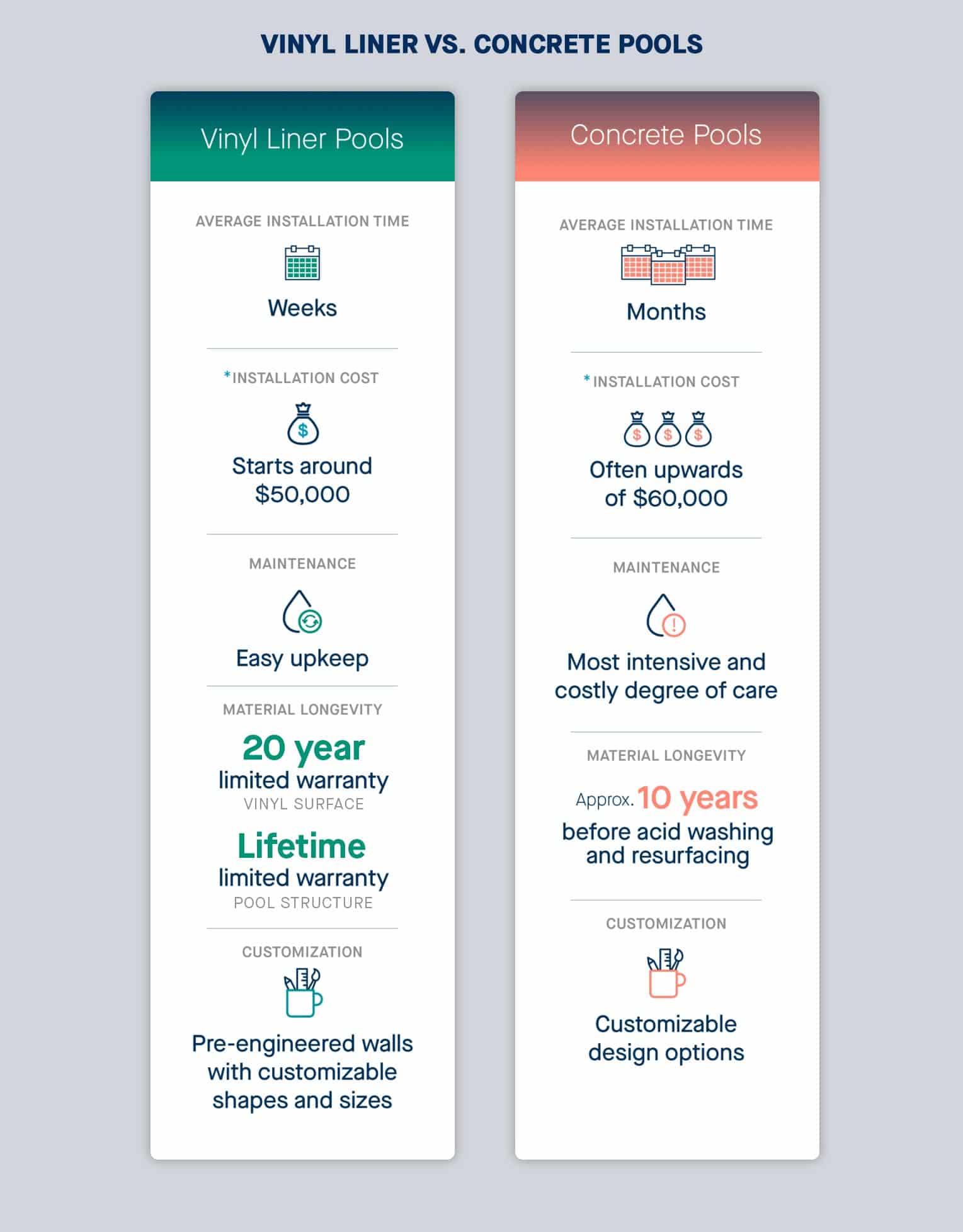
*Installation costs based on national average selling and installation pricing. Actual costs depend on various factors, including location of service, pool model and options selected. Please consult with a Latham Independent Builder for a customized estimate.
Find Your Dream Pool
Now that you understand a little more about the pros and cons of vinyl liner and concrete pools, you’ll be better prepared to make a decision that’s right for you.
Start shopping for your vinyl liner pool with Latham. With over 60 years of expertise in pool innovation, our team of friendly, knowledgeable experts can help you determine which options are the best for your tastes, budget and lifestyle.