

Building a breathtaking new backyard pool takes a little planning ahead. From thinking about how a pool will complement your lifestyle to the logistics of when to build, doing your homework beforehand can make pool ownership all the more rewarding. Thanks to modern construction technology, swimming pools can be built and installed at any time of year.
That said, there are factors that make certain seasons better for building than others. Where you live, geographic characteristics, weather considerations, and more can play a role in determining when is the best time to break ground on a new pool. For instance, in northern parts of the country, winter weather can freeze the ground and slow down pool construction, resulting in a longer and more expensive building process. By determining the best time of year to build a pool in your region, you can save money while ensuring your new pool is ready on time.
Keep reading to learn about the best time to build a pool based on your location, budget, and when you want your personal pool season to kick off.
What Affects the Best Time to Build a Pool?
There are multiple factors that influence what time of year is best for building a pool. Some examples include your region’s climate and weather, your target date for opening the pool, seasonal contractor availability and pricing, and your pool construction budget. From an aesthetic standpoint, giving your lawn time to recover from excavation and construction is also an important factor for many homeowners.
Every season has its own unique pros and cons for building. We’ll compare each of them later in this guide. But first, let’s take a closer look at how the time of year impacts building costs, construction timelines, and post-construction yard recovery.
Budget and Costs
Pool installation costs fluctuate with consumer demand, which peaks in spring and summer before dropping again in fall and winter. That means it’s usually cheaper to build a pool between September and February, and costlier between March and August. Suppliers typically raise prices during springtime, with costs falling again during autumn and winter, when builders offer seasonal discounts.
No matter what time of year you start building, there are a variety of loans and financing options to help you manage the costs of building a beautiful new pool. Learn more about pool financing, or use Latham’s pool cost estimator to start calculating your budget.
Weather and Climate
It’s important to consider how weather might affect your project. Conditions like heavy rain, extreme heat, or frozen ground can all cause delays. On the flipside, mild weather and a lack of precipitation can pave a faster, smoother path to construction. Depending on which part of the United States you live in, it may be a good strategy to avoid building in winter and aim for late summer or early fall, when conditions tend to be driest with the lowest risk of a ground freeze.
While weather can impact timelines and costs, it won’t affect the quality of your completed inground pool. As long as you work with a trusted and experienced builder, you can expect a stunning finished result all year-round.
Landscaping and Yard Recovery
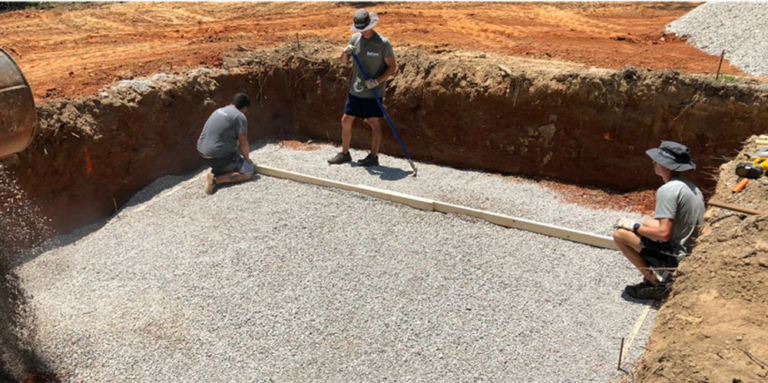
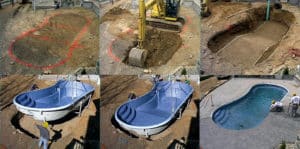
To install an inground pool, it’s necessary to dig out and excavate parts of your yard. That means your lawn and garden will temporarily be disrupted. Building your pool during fall or winter gives your lawn the maximum amount of time to recover and start regrowing before summer weather returns in full swing. If the appearance of your landscaping is a top priority for you, off-season construction might be the most satisfying approach to installing a pool.
Pros and Cons by Season
Every season has its own advantages and drawbacks to building a pool. Here are a few at-a-glance points to consider when determining what time of year to start your project:
- Winter — Winter is typically the cheapest time of year to build a pool, plus the easiest time of year to schedule a contractor due to lack of seasonal demand. However, if you live in a cold climate, ice, snow, or freezing temperatures could interfere with construction.
- Spring — Spring typically brings favorable weather for construction, but contractors tend to be busy and charge higher prices at this time of year, since spring is also the lead-up to peak pool season.
- Summer — Prices peak in summer and contractors are already heavily booked, but the long days and clear weather support fast construction.
- Fall — Fall is an affordable time of year to build, and also gives your landscaping time to recover. However, your project could be delayed by early frosts and cold, hard ground depending on your location.
Building a Pool in Fall
Fall is an ideal time of year to build a pool, especially toward the middle or beginning of the season before the risk of an early freeze becomes too great. Demand for pool construction dips during autumn, which means contractors charge lower rates and have more scheduling flexibility, creating a win-win situation for homeowners. As an added bonus, fall construction gives your landscaping ample time to recover before summer swim season.
Building a Pool in Spring
While not without some potential drawbacks, spring is generally considered a good time of year to install a pool. Building during spring allows enough time to get your new pool ready by summer, especially since mild spring weather typically favors speedy construction. The disadvantage is that contractors’ schedules tend to fill up quickly as clients rush to book builders ahead of summer. This high demand also makes spring an expensive time to build. Another location-dependent drawback is that some regions, like Texas, receive heavy spring rains that can slow down construction.
Building a Pool in Summer
Like other seasons, summer has pros and cons when it comes to building a pool. Depending where you live, summer often brings dry weather patterns that create just the right conditions for faster, more efficient construction. On the other hand, extreme summer heat can have the opposite effect, slowing down construction by making labor impossible. Another drawback is that summer is peak building season, which means pool contractors often have longer wait times, less flexible schedules, and higher prices at this time of year. Breaking ground on your pool in the summer also means that you have less time to enjoy your pool for the full duration of swim season. Starting before summer means that your pool will be swim-ready the moment the hottest days of the year set in.
Building a Pool in Winter
In states with warm climates, like Georgia and Arizona, winter is often the fastest and cheapest time of year to build a pool. However, that doesn’t apply to other regions of the U.S. In states that have cold winters, like New York or Illinois. In colder parts of the Midwest and Northeast, low temperatures can freeze the ground and lead to costly delays, defeating the purpose of building in winter in order to save money.
Why Fall and Spring Are the Best (and Cheapest) Times to Build a Pool
Depending on your location, spring and fall are typically the best seasons for pool construction. The advantage of building in spring is that it typically brings mild weather and dry ground, which allows construction to proceed with minimal hiccups. Additionally, you’ll avoid the summer rush by starting in spring.
Building in fall also has major benefits. Like winter, fall is the cheapest time of year to build a pool. But unlike winter, fall doesn’t put you at high risk of freeze-related delays. Plus, your lawn will have extra time to recover and reach its full bloom before warm weather returns.
There’s also another advantage to building during fall or spring: along with saving money and speeding up construction, it also ensures that your pool will be ready to use and enjoy by summer.
Save Money on Materials and Labor
Consumer demand for pool construction peaks in summer and spring, then declines again during the fall-winter off-season. To attract more business during this slower period, many builders offer discounted rates in fall and winter, which means you can potentially get the same services for less money. In particular, building before the new year can help you lock in lower costs ahead of supplier price increases.
Faster Construction Timelines
Pool contractors have fewer clients to juggle during the off-season. That means construction crews have more time and resources to focus on your project, resulting in greater efficiency and faster pool building timelines. During this time of year, there are also shorter wait times for city inspections and permits, which means you can check off legal requirements quickly. Weather-related delays can potentially slow down construction progress, but are less likely to occur during spring and fall compared to other times of year, like winter (which can bring freezes) or summer (which can bring extreme heat).
Flexible Scheduling
Even in climates that stay warm year-round, summertime is still the peak season for swimming. That means demand is greater, contractors are busier, and — arguably the biggest drawback — prices are higher. If you start construction during the fall or winter off-season when builders have better availability, you’ll have more freedom and flexibility to schedule construction at a time that’s convenient for your family.
Ready-to-Swim by Summer
One of the key advantages to building in the off-season is that it ensures your new pool will be ready to open when warm summer weather arrives. That means you can start enjoying your new pool immediately, instead of waiting around for summer construction to wrap up. Not only does getting an early headstart enable your pool to open for summer, the off-season also tends to be the cheapest time of year to build. Plus, an off-season start gives you plenty of time to handle permits and inspections while avoiding the summer rush.
How Climate and Location Affect the Best Time to Build a Pool
In southern states with hot climates, such as Florida and Texas, there’s little risk of encountering snowstorms or freezing winter weather. Winter is also outside of the pocket of storm-season that typically hits the Southern and Southwestern portions of the U.S., too. Fall and winter are normally the most affordable times of year to build, which is due to a combination of decreased consumer demand and seasonal contractor discounts.
In central and northern regions of the United States, like New England or the Pacific Northwest, frigid winter temperatures can slow or halt construction as soil freezes, ice accumulates, and snow packs into excavation areas. To avoid these potential roadblocks, it’s typically more practical — and less expensive — to build during spring or autumn instead of winter. From a weather perspective, summer can also be a good time for construction in cold climates — but on the other hand, is an expensive and busy season.
No matter where you live, it’s a good idea to research how your local climate and geography might impact pool construction. You may want to look into issues like sandy vs. clay-heavy soil, seasonal heavy rains or flooding, and how high the water table is in your area.
Planning Ahead for Your Pool Project
Even off-season construction projects require months of planning. To make sure your project is completed on schedule, it’s critical to get an early start. By starting to plan your pool at least 6 months before your target pool opening date, you’ll give yourself plenty of time to contact a builder, put together a budget, finalize your pool design, and obtain the proper permits to break ground on your new pool.
Starting early also creates a time cushion in the event that your project runs into weather-related delays, such as flooding, freezing, or wildfires. Depending on factors like how large the excavation site is, what materials you choose, and how long it takes to obtain the required permits and inspections, the pool installation process can take anywhere from several weeks to over 6 months.
So, When Is the Best Time to Build a Pool?
From a financial standpoint, fall and winter are typically the cheapest times of year to build a pool. However, the best time of year to build a pool depends not only on your budget, but also the climate and weather where you live. In most parts of the United States, spring and early-to-mid-autumn are considered ideal pool building seasons due to contractor availability and low risk of extreme weather. Ultimately, no matter when you build, the best strategy is to start planning early and book your contractor months in advance. Taking a proactive approach will help ensure that your new swimming pool is ready to enjoy by summer.
It’s equally important to choose a properly licensed, highly rated pool builder. At Latham, we have over 70 years of experience designing and installing custom pools throughout the United States, making us one of the nation’s most trusted and well-established industry leaders. Contact us today to connect with a local Latham builder near you.
Frequently Asked Questions About Building a Pool
Researching the pool construction process is the best way to ensure that your project proceeds smoothly. Below, you’ll find quick answers to some of the most frequently asked questions about building residential pools, including when to book a contractor, what financing options are available, and whether there are drawbacks to building in the off-season.
When you work with a licensed, experienced pool builder like the independent professionals at Latham, you can expect top quality craftsmanship — no matter what time of year construction begins. That said, there are some unique challenges to building a pool in the off-season, which could impact the timeline and cost of your project. For example, in some regions freezing winter temperatures could slow down or postpone construction, while also preventing pool materials like concrete from setting properly.
It’s generally recommended to book a pool contractor at least 3 to 6 months in advance. However, booking a contractor is only one step of the pool planning process, which you should ideally begin at least 6 to 12 months in advance. This allows adequate time for other critical steps, such as finalizing the pool design, excavating your property, installing electrical systems, and securing the necessary building permits, which can vary in terms of timing, depending on your location.
Yes! No matter what time of year you decide to start building a pool, you can explore a variety of loans and financing methods to make owning a pool a reality. Depending on your credit history and other financial factors, types of pool financing options that you can qualify for year-round include personal loans, home equity loans, and home equity lines of credit (HELOCs).
Summertime is peak pool season, but also has some drawbacks and hidden costs that can make it a less than ideal time to begin construction. Due to high demand during summer, pool contractors typically charge more and have less availability compared to other times of year. Regardless of the climate or season, hidden costs can also arise before, during, or after construction, such as dirt or debris removal, retaining wall construction, and the installation of child safety fencing, which is required by state law in most U.S. locations.
Request More Information
Learn more about Latham inground pools.