
When you begin planning for a new pool, the soil in your backyard likely isn’t the first thought on your mind. However, it’s a major factor for pool installation, especially when it comes to excavation, drainage, and creating a stable foundation for your pool’s structure. Some areas, like parts of the Southeast and Midwest, are known for having expansive clay soil, which expands and contracts when it interacts with different moisture levels.
While clay soil is often considered challenging to build on, we’re here to reassure you that your dream pool can be successfully built with the right preparation. In this guide, we’ll cover everything you need to know to plan for construction on clay soil, from how to prepare a site for construction, best practices for installation, and how to properly care for your finished pool.
What Makes Clay Soil Challenging for Pools?
Here are five main soil types you might encounter in your yard: gravel, silt, loam, clay, and sand. Clay is uniquely pliable because it retains water well. It expands when wet and contracts when dry, responding attentively to the flow of moisture in its surroundings. This is what makes it an excellent resource for a potter in an art studio, but a challenging material for contractors.
However, this shouldn’t discourage you from planning a pool if your backyard is made up of clay soil. Contractors and engineers have been using innovative foundation strategies to successfully construct houses, commercial buildings, paved roads, and pools on clay soil for many years. Let’s look at some of the challenges that can come with clay soil, and some of the unique solutions experts have created for them.
Expansive Properties
Clay is rich in minerals like smectites, which causes the soil to expand when wet and shrink when dry. In fact, smectite rich soils can undergo as much as a 30% volume change due to wetting and drying. This makes this soil type extremely responsive to fluctuating moisture content, which is common in states that experience high humidity and extreme wet and dry seasons, like Georgia and Texas.
But why does this matter for building a pool? This constant swelling and shrinking can cause your pool’s foundation to shift as the earth around it moves to accommodate more and less moisture. Over time, this can lead to cracks in the foundation, which can cause a ripple effect of structural damage to both your pool and your surrounding decking and patio. To counter this, contractors can add stabilizers to the soil in your backyard, as well as install specialized control joints and support systems during construction to protect your pool’s foundation.
Drainage Issues
Clay is made up of small particles that are tightly packed and have a larger surface area than other soil types. Water molecules are also drawn to the minerals that make up clay soil. The very small space between the soil particles, the natural attraction between clay’s minerals and water, and a larger area for water molecules to cling to creates a perfect storm of conditions for water retention in your yard.
When water can’t drain off properly, it can cause a variety of problems for your pool. Excess water can erode the soil surrounding your pool and deck, destabilizing the foundation. It can even cause pollutants and sewage to run off into your pool. Standing water can create conditions where it’s more likely for you to slip, encourage dangerous mold growth, and attract pests like mosquitos.
To combat drainage issues, you can plan to install advanced drainage features, like special drains and water pumps. Your contractor might also regrade your yard, making water run away from your pool instead of towards it. As another option, they might aerate your soil with organic matter to create more space between the clay particles.
Impact on Pools
Excess water can damage your pool and the surrounding area. When water seeps into the structure of the pool, it can cause damage like cracks in the foundation, deterioration and warping of your deck, mold growth, and even contaminated water.
The constant expansion and contraction of the soil can put uneven pressure on the pool walls, liner, plumbing, and foundation. This can cause your pool to settle unevenly, leading to costly repairs down the road.
Can You Build a Pool in Clay Soil?
It is absolutely possible to build a pool in expansive clay soil without compromising the features you want most. Hiring a reputable contractor with experience building on clay soil can help ensure that challenges around drainage and settling are proactively addressed. Here’s a look at some of the solutions they might recommend:
- Soil Stabilization: Injecting stabilizing agents directly into the soil can alter its molecular structure to resist shrinking and swelling due to changes in water retention.
- Drainage and Backfill: Once excavation is complete, backfilling the area with sand or gravel around your pool can help keep your pool from shifting underground. They might also install a French drain to divert accumulating water away from your pool.
- Structural Changes: When a structure is firmly fixed in place, such as the foundation for a concrete pool, its rigidity doesn’t allow any give to accommodate changes in the surrounding earth. Structural design changes like expansion joints can give your pool more flexibility during soil shifting.
Preparing Your Yard for a Pool in Clay Soil
Getting your yard evaluated by a professional pool dealer is a crucial first step for planning your pool when you have clay soil. A geotechnical soil test can provide a 360-degree assessment of the soil in your yard, illustrating in more detail what challenges you might face with excavation, backfilling, and maintaining your pool.
By proactively taking a step to understand the specific soil make up of your backyard, your contractor can better strategize solutions for how to move forward with construction that aligns practicality with the custom design you’ve envisioned for your space. Let’s take a look at some examples of what you can do to prepare your yard for a pool if you have an abundance of clay soil.
Soil Testing & Inspection
The first step in preparing your yard for a pool is to have your soil tested. When you hire a professional to inspect your property, they can collect soil samples that will undergo geotechnical testing. These samples provide critical information about the plasticity, water retention, bearing capacity, and density of the soil, as well as predict how well it will be able to support your pool’s foundation. A professional will also be able to quickly identify visual warning signs of expansive soil, such as cracks in your home’s foundation, walls, or sidewalk.
Site Preparation
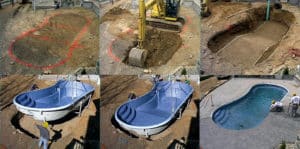
Once your soil has been thoroughly tested, your pool builder can begin preparing your yard for construction. They will likely need to over-excavate the site where your pool will be installed. This provides more room to back-fill the area with materials that help stabilize the pool from any surrounding clay soil that might expand and contract with moisture changes. They might also mix stabilizing agents like quicklime or lime kiln dust (LKD) into the soil to create a stronger foundation for your pool.
Solutions & Best Practices for Pool Installation in Clay Soil
Although clay soil can present unique challenges for construction projects, there are many solutions and best practices already established to make the process easier. Backfilling with specialized materials, innovative drainage systems and moisture management strategies, and creative foundation design can all help stabilize clay soil and give your pool the durability to last for decades of enjoyment.
Backfilling with Sand or Gravel
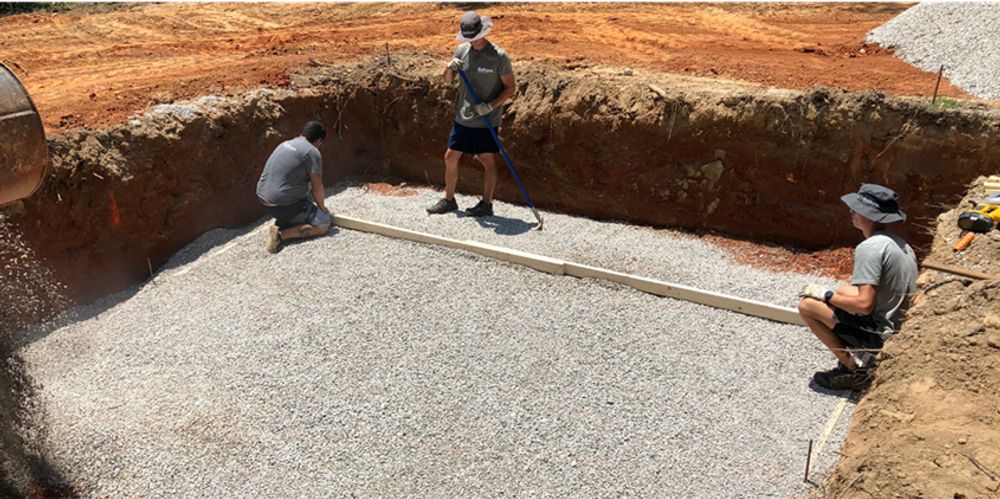
When the site for your pool is initially excavated, your contractor might choose to backfill the area with a material with better stability than clay, such as sand or gravel. Sand has long been used to backfill pools, as it’s a particularly easy material to work with and can act as a natural insulator for your pool. However, gravel is increasingly popular as an option for backfilling because of its excellent drainage abilities. It can also be compacted in layers to create an extremely sturdy foundation for your pool’s shell with less likelihood of settling.
Drainage Systems
Because clay soil retains water so well, you’ll likely need some specialized solutions to encourage drainage. French drains are a popular choice for keeping water from pooling around decks and patio foundations. These drains consist of a gravel-lined trench that diverts water from where it would normally collect underground, funneling it away from the pool.
Slope grading is another common solution for drainage issues around a pool. This is where your contractor will excavate to change the slope of your yard, using gravity to divert excess water from your pool. This keeps standing water from seeping into your foundation, possibly causing costly structural damage, or from running off into the pool itself.
Moisture Management
Proactively maintaining consistent moisture levels in your yard throughout dry and wet seasons can help prevent extreme cycles of the soil expanding or shrinking. This is because the moisture content is level instead of being constantly in flux. This makes it more predictable and less prone to change. This can be achieved by installing drainage systems, targeted irrigation, landscaping with specific plants that will absorb excess water, and properly grading the land to direct water away from your pool’s foundation. A knowledgeable professional can advise you on the best option for your yard.
Foundation Design (for Inground Pools)
Your contractor might also recommend specialized foundation designs that provide additional stability for inground pools in clay soil. This could include anchoring drilled piers in the ground to bypass the more unstable layers of soil, or reinforcing the foundation with steel cables that are tensioned to make them more durable against cracks. These foundation innovations can help prevent the pool shell from moving out of place as clay soil shifts with moisture levels.
Above Ground Pools in Clay Soil
Above-ground pools built on clay soil face similar challenges to inground pools, and will also require intentional solutions to make their installation safer and more reliable. For example, you’ll first want to level the site for your above ground pool to ensure that water pressure doesn’t concentrate on one side. This can cause the pool walls to collapse without warning, which could injure you or a loved one.
After leveling, the pool will need a sturdy base with drainage layers, such as one made of compacted gravel. This allows the pool to drain properly and avoid complications like equipment rust or structural damage to the walls or liner.
Long-Term Maintenance Tips
Maintenance is important for every pool, but when your foundation is built on clay soil, there are some long-term maintenance strategies available to keep your pool functioning its best. Routinely monitoring for soil-related issues can help you identify damage before it reaches a critical stage that can be costly or difficult to repair. For example, if you notice that there are new, small cracks in your patio or deck after a winter freeze, it could mean there are drainage issues underground that need to be quickly addressed.
Certain landscaping techniques can help with drainage. Adding mulch to clay soil can help regulate its moisture content, which provides a more consistent environment that prevents expansion and restriction. Native plants can also provide support to areas with heavy clay soil because they’re already adapted to the ebb and flow of moisture in the soil. Consider adding plants such as chokeberry shrubs, dogwoods, lilacs, hydrangeas, and switchgrass to your landscaping plan, as they can naturally help with erosion due to excess water.
Understanding the Costs of Building in Clay Soil
There are many variables when it comes to predicting the cost of an inground pool. The size, shape, material, placement, and add-on features you decide for your pool should all factor into your budget — and so should your soil type.
Building a pool on clay soil often means additional plans for specialized drainage, innovative foundation design, specific landscaping, and more extensive excavation during installation. While it can be easy to think of this as a mounting list of optional costs, investing up-front in the right materials for building on clay soil will save you significantly in the long-term. For example, budgeting now for gravel backfilling, land sloping, and French drains to redirect underground moisture can help prevent foundation and structural damage later, which could be expensive and time-consuming to repair.
What is The Best Type of Pool for Clay Soil?
Fiberglass pools are an ideal choice for homeowners who want to build a pool in an area with expansive clay soil. The flexibility of our hand-drafted fiberglass pools can adapt to soil shifting that occurs when moisture causes clay to expand or contract. This movement creates stress on concrete pool walls and can easily crack their more rigid structure.
When installed with attention to structural preparation, vinyl liner pools can also be an excellent choice for yards made up of clay soil. Latham vinyl liner pools are built with proprietary corrosion-resistent materials, including galvanized steel wall systems. When combined with a reinforced foundation, this gives them laying durability against the soil shifts that can damage concrete. Semi-inground pools, which are partially built into the ground, can also benefit from these stabilization techniques. Without reinforcement, fluctuations in clay soil can disrupt inground pool shells, which must be level to ensure they function properly.
Your Questions About Clay Soil and Pools, Answered
Building on clay soil can take additional planning, but it’s still possible to have the pool you’ve always dreamed of without compromising the features you’re most excited about. Here are some answers to our most frequently asked questions when it comes to building a pool when you have clay soil.
Landscaping is both a beautiful and practical addition to your space, and there are specific landscaping choices you can make if you have clay soil. Creating paths using paving stones will keep you from walking directly on clay when it’s wet, which can compact the soil and make drainage issues worse. Certain plants such as lilac, quince, and switchgrass can also help with erosion control in areas with expansive clay soil.
With careful preparation during the construction and installation process, a pool built on clay soil can have the same long lifespan as one built on any other soil type. Proper maintenance and regular professional inspections can keep your pool beautiful, functional, and enjoyable for the lifespan of your home.
While professional soil testing isn’t a legal requirement for building a pool on clay soil, it is an important investment in the success of your pool project. Professional soil testing can give you and your contractor valuable information about the mineral make up of the soil in your yard, giving you more insight into what specific challenges you might face during construction. This will allow you to proactively plan and budget for any specialized equipment or labor you might need to reinforce your pool’s foundation.
When soil shifts due to expansion and contraction, it can put pressure on pipes and plumbing that are buried underground. This can cause them to crack or become misaligned. If there isn’t proper soil drainage, the accumulated water around buried pipes can also cause plumbing to deteriorate more rapidly over time.
The Bottom Line: Pools and Clay Soil
It is absolutely possible to successfully build a custom pool with the premium features you’ve been eyeing, no matter what type of soil your yard consists of. With careful preparation around drainage, foundation installation, and professional maintenance, you can enjoy your pool throughout the season while knowing that the investment you’ve made in your home’s value is protected.