

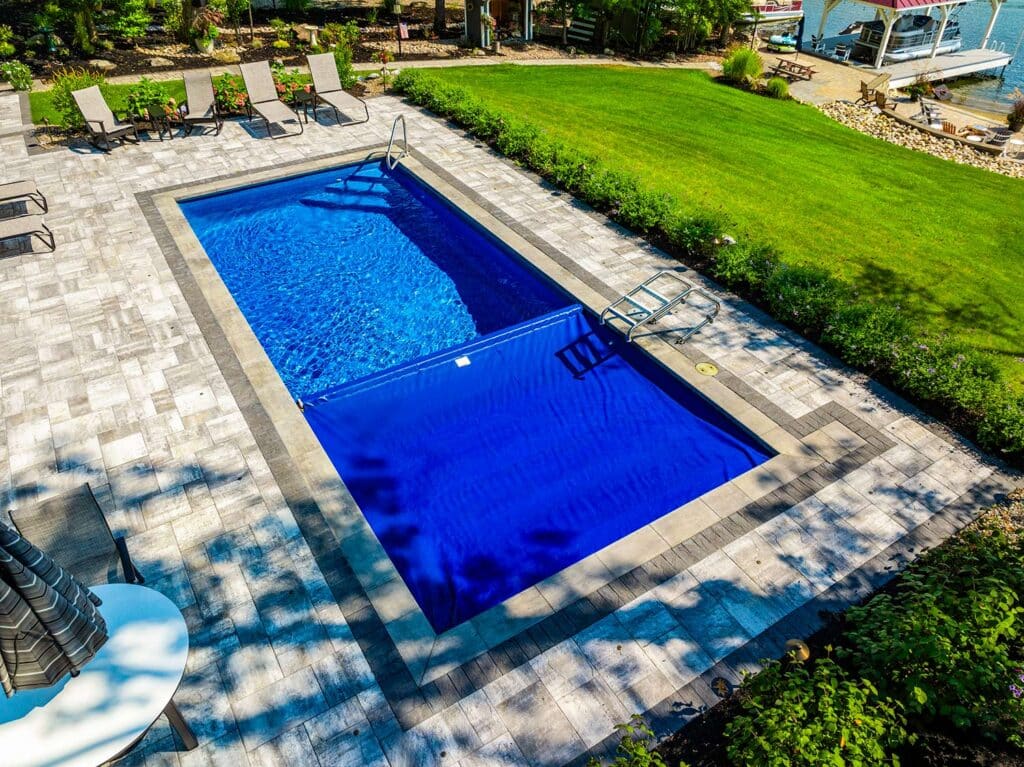
A sliding deck pool cover is a load-bearing deck surface that travels along a track system to slide over a pool, transforming the water space into a usable outdoor living area when closed. Unlike traditional pool covers that simply protect water from debris, sliding deck pool covers are engineered to support foot traffic and patio furniture, making them a functional piece of pool safety and a way to enjoy every inch of space in your backyard.
In this guide, we’ll explain the ins and outs of sliding deck covers, including how they work, pros and cons, estimated cost, and answers to our most frequently asked questions.
How sliding deck pool covers work
At its core, a sliding deck pool cover operates on the same principle as a sliding barn door, just built to handle the weight of a full outdoor deck. A system of hidden tracks, mounted flush along the pool’s edge, guides rigid deck panels as they glide open or closed over the surface of the water. Depending on the system you choose, that movement is either powered by a remote control-operated motor or driven manually by pushing the panels along the track by hand.
Both manual and automated systems follow the same mechanical sequence — tracks, moving panels, closed position — but they can differ significantly in cost, convenience, and the complexity of installation. Understanding those differences is the key to choosing the right pool cover sliding deck system for your backyard and budget.
Manual vs automatic sliding deck systems
Not every sliding deck cover for pools looks or operates the same way. Systems can range from simple hand-pushed panels to fully motorized platforms you control from your phone. The right choice depends on how often you use your pool, your safety requirements, and your budget. Here’s a breakdown of the main types:
- Manual Sliding Deck Covers: These systems range from basic push-pull systems — where panels are moved by hand and locked into place — to crank-operated setups that reduce physical effort without requiring any electrical infrastructure. Both are straightforward to maintain and carry a lower upfront cost, making them a practical choice for all budgets.
- Automatic Sliding Deck Covers: Automated sliding decks range from electric motor systems operated by a wall switch or remote to fully integrated smart-home setups (such as Latham’s The Attendant) that allow app control, scheduling, and real-time monitoring from anywhere. The smart-home systems are a great choice for homeowners who want a convenient option that can transform a pool cover into part of a connected outdoor living system.
Pros of sliding deck pool covers
Sliding deck pool covers do more than protect your pool. They also fundamentally change how your backyard functions. Whether you’re looking to maximize a smaller outdoor space, improve safety, or simply reduce maintenance time, these systems can deliver practical value while making your backyard look great.
PRO: Adds usable outdoor space
A sliding deck pool cover can transform the space your pool occupies into a functional patio surface whenever the cover is closed. For smaller yards, in particular, this effectively doubles the usable square footage of your outdoor area and gives you more opportunities to set up furniture, host gatherings, or simply give kids a safe area to play. A sliding pool deck cover can be one of the few pool upgrades that adds even more options to expand livable space.
PRO: Improves Pool Safety When Closed
When fully closed, a load-bearing sliding deck cover creates a solid, continuous surface over the water. This works to eliminate the open-water hazard rather than just covering it with a soft barrier.
This makes sliding deck covers one of the strongest passive safety options available for households with young children or pets. Unlike mesh or tarp-style covers that can sag or shift, a properly installed deck cover holds its position and supports weight if someone inadvertently steps onto it.
PRO: Creates a clean, integrated look
While a sliding deck cover’s frame is made from heavy-duty aluminum or steel to create a solid foundation, the panels that are overlaid are designed to match the materials of your surrounding deck, whether composite, timber, stone, or aluminum. This helps your sliding deck cover to effortlessly blend with your backyard aesthetic when closed.
There’s no rolled-up cover to store, no visible hardware cluttering the pool edge, and no visual interruption between the pool area and the rest of your outdoor space. For homeowners who’ve invested in landscaping or a cohesive outdoor design, this seamless finish is often the deciding factor.
PRO: Helps keep debris out of the pool
A solid deck surface over the pool means leaves, dust, insects, and windblown debris have nowhere to land. Less debris in the water means fewer hours spent skimming and vacuuming, less strain on the filtration system, and lower chemical usage over the course of a season. These maintenance savings can be especially valuable for pools in areas with heavy tree coverage or strong seasonal winds.
PRO: Can reduce heat and water loss
Covering the surface of the water limits evaporation, which is the primary driver of both water and heat loss in outdoor pools. A sliding deck cover — particularly one with a snug fit along the pool’s edge — can meaningfully reduce your heating costs and how often you need to top up the water level. Over a full season, that can add up to real savings on your energy bill and water usage.
Cons of sliding deck pool covers
A sliding deck pool cover can be one of the most functional upgrades you can make to your backyard. However, it isn’t always the right fit for every pool or every budget. Before committing to a system, it’s worth understanding the limitations, because the same features that make these covers impressive may also introduce real constraints around cost, space, and design.
CON: Higher cost than most pool covers
Sliding deck pool covers sit at the premium end of the pool cover market with their cost ultimately dependent on pool size, materials, and whether you choose a manual or automated system. These covers can be a more significant up-front investment compared to other safety covers, especially nets and manual covers.
CON: Space requirements for deck retraction
When the cover opens, the panels have to go somewhere — and that somewhere is alongside your pool. Depending on the system design, panels retract to one or both ends of the pool, requiring a dedicated clear zone, usually of roughly half the pool’s length, on at least one side. In smaller yards or heavily landscaped spaces, finding that clearance without reconfiguring the surrounding area can be a significant constraint.
CON: Design & pool compatibility limitations
Sliding deck systems are engineered around rectangular or geometric pool shapes, and the track-and-panel mechanism can be more difficult to adapt to the shape of freeform, kidney, or L-shaped pools. Material and color choices can also be constrained by what panel systems are available from a given manufacturer, which may not perfectly match an existing deck. This means you might find your sliding deck cover options limited if you have a highly customized design vision for your pool area.
CON: Installation complexity
Unlike a standard pool cover that can be retrofitted with minimal disruption, a sliding deck system typically requires significant groundwork. This can include installing tracks flush with the pool coping, electrical connections for automated systems, and precise structural preparation to ensure the panels sit level and move smoothly. Although it is possible to retrofit an existing pool with a sliding deck cover, you’ll often need to expect more concrete work, drainage adjustments, and potentially longer installation timelines than if it were being installed during the initial pool build.
CON: Not always practical for large or irregular pools
Beyond shape compatibility, very large pools can introduce their own challenges. Because the panels are much longer than standard-sized pools, they often need more structural support, heavier hardware, and more powerful drive systems, all of which can increase cost and complexity.
CON: Typically Not Considered For Barrier Adoptions
In many states, a sliding deck pool cover doesn’t satisfy the legal requirements for a pool safety barrier in the same way a compliant fence or automatic cover does. Before relying on a sliding deck cover as your primary safety measure, verify your local regulations. In most cases, you’ll still need a compliant barrier installed separately.
Sliding deck pool cover cost: what to expect
Sliding deck pool covers are a meaningful investment, and the final cost will depend on far more than the size of your pool. The table below breaks down the core cost factors — from the base system to permits and long-term maintenance — so you can build a realistic picture of total cost before you start getting quotes from builders.
Estimated cost breakdown
| Cost Factor | Typical Range | What This Means for Homeowners |
| Base Sliding Deck System | $25,000 – $60,000 | Entry-level sliding deck covers with basic materials and manual operation. |
| Mid-Range Sliding Deck Cover | $60,000 – $100,000 | Higher-end materials, smoother track systems, and optional automation. |
| Premium / Fully Custom Systems | $100,000 – $150,000+ | Fully automated, architecturally integrated decks designed for large or custom-shaped pools. |
| Automation & Controls | +$5,000 – $20,000 | Motorized operation, safety locks, and remote or smart controls. |
| Engineering & Structural Design | +$3,000 – $10,000 | Required for load calculations, custom spans, and code compliance. |
| Permits & Inspections | +$500 – $3,000 | Local permitting costs and requirements vary by municipality. |
| Maintenance Over Time | Ongoing | Deck refinishing, track cleaning, and mechanical upkeep. |
What impacts the cost of a sliding deck pool cover?
No two sliding deck pool cover cost estimates look the same because the variables that drive pricing are highly specific to your pool, your property, and the finish level you’re after. These are the factors that can have the biggest impact on your final cost:
- Pool Size and Shape: Larger pools require longer panel spans, heavier track systems, and more structural support, all of which add additional costs. Non-rectangular pools also often introduce custom engineering requirements that can significantly increase both fabrication and installation time.
- Deck Materials: The panels themselves can be built from composite decking, hardwood timber, aluminum, or stone-finish surfaces, and the price gap between entry-level and premium materials can be fairly substantial. However, your choice of material will also affect your long-term maintenance costs, so it’s worth thinking beyond the upfront price tag.
- Manual vs. Automated Operation: A hand-pushed or crank-operated system typically costs considerably less than a fully motorized setup. However, automation adds meaningful convenience, especially if you use your pool often or have small children and pets.
- Structural Engineering Needs: Most sliding deck systems need some level of engineering sign-off before they can be installed. If your pool has an unusual span (meaning it is particularly wide or the track system needs to cover a greater-than-normal distance), the surrounding yard is sloped, or you want the sliding deck to support heavier-than-average loads, you’ll need custom engineering work before installation can begin.
- Site Prep and Landscaping: Retrofitting a sliding deck cover onto an existing pool often requires concrete work, drainage adjustments, and clearing the retraction zone alongside the pool. If your yard needs significant reconfiguration to accommodate the track footprint, site prep costs can add up quickly before the cover itself is even installed.
Sliding deck pool covers vs automatic pool covers
Sliding deck pool covers and automatic pool covers are both premium options that go well beyond a basic tarp or safety cover. However, they serve different priorities, and the right choice often depends heavily on how you use your outdoor space. The comparison below breaks down how the two systems stack up across the factors that matter most to homeowners: cost, safety, aesthetics, maintenance, and practical fit for different pool types.
| Feature | Sliding Deck Pool Cover | Automatic Pool Cover |
| Primary Purpose | Creates usable deck space over the pool | Secures and protects the pool when not in use |
| Typical Cost Range | $25,000 – $150,000+ | $10,000 – $20,000 |
| Ease of Daily Use | Moderate — depends largely on whether you have a manual or automatic system | High — opens and closes at the push of a button |
| Safety | Depends on engineering and build quality | ASTM-certified options designed for child and pet safety |
| Usable Deck Space | Yes — functions as an outdoor living area | No — cover sits flush with the pool surface |
| Maintenance Needs | Higher — decking materials, tracks, and hardware require upkeep | Lower — sealed system with fewer exposed components |
| Installation Complexity | High — professional installation, custom engineering, and moderate to extensive structural work required | Moderate — professional installation with minimal structural changes |
| Pool Shape Compatibility | Custom builds often required for irregular shapes | Compatible with most rectangular and freeform pools |
| Long-Term Flexibility | Deck design is permanent | Pool remains fully accessible at any time |
| Best For | Homeowners prioritizing design and multi-use space | Homeowners prioritizing safety, convenience, and value |
Is a sliding deck pool cover worth it?
A sliding deck pool cover is an investment in the future of your entire backyard, and whether it’s worth it comes down to how well the system matches your specific backyard, lifestyle, and budget. For the right homeowner, sliding decks can deliver an ideal combination of safety, space, and aesthetics. For others, an automatic safety cover hits the practical sweet spot with its strengths in safety and maintenance, without the space requirements, structural complexity, or price tag that a sliding deck system demands.
A sliding deck pool cover makes sense when:
- You Want To Reclaim Usable Outdoor Space: If your yard is limited in size and the pool takes up a disproportionate amount of space, a sliding deck cover lets that footprint work harder. It allows your pool area to function as a patio, entertaining area, or play surface whenever the pool is closed.
- You Want The Cover To Disappear Into The Design: If your backyard design is a priority and you’ve invested in landscaping, outdoor living features, or premium deck materials, a sliding deck system blends into the surrounding surface in a way that keeps the space looking intentional and cohesive, whether the pool is open or closed.
- Your Pool Is A Standard Rectangular Or Geometric Shape: These systems are engineered for clean, consistent geometry. If your pool fits that profile, installation is straightforward, and the full range of system options is available to you.
An automatic pool cover may be a better fit when:
- You Need an Approved Safety Barrier: Not all states recognize sliding deck pool covers as permissible safety barriers. Even in states that do recognize them, they must meet strict guidelines, including a motor-driven element that reduces reliance on humans to manually close a cover. An automatic pool cover can be an ideal fit for pool owners who want an option that is compliant and convenient.
- Budget is a Primary Constraint: Automatic safety covers deliver strong safety, debris protection, and heat retention at a lower upfront cost compared to sliding deck covers.
- You Have A Freeform, Irregular, or Large Pool: Automatic covers can be engineered for a wider range of pool shapes and sizes than sliding deck systems. If your pool doesn’t fit a standard rectangular footprint, an automatic pool cover is often the more practical solution.
- You Need A Faster Installation Timeline: Automatic covers can typically be installed in days, while a sliding deck system involves structural prep, track installation, and possibly permitting — a process that can stretch across weeks or longer.
FAQs about sliding deck pool covers
Still have questions about sliding deck pool covers? Below are answers to the questions homeowners ask most often before making a decision.
How safe are sliding deck pool covers?
Sliding deck pool covers can be very safe when installed properly and correctly maintained. When fully closed, they create a solid, load-bearing surface that prevents direct access to the water. However, an individual sliding deck safety cover’s safety rating will ultimately be dependent on the quality of the materials, engineering, and installation, and unlike other safety covers, not all sliding deck systems are independently tested to the Advancing Standards Transforming Markets (ASTM) safety standards.
It is also recommended that winter covers are still used during the off-season, even if you have a sliding deck cover. This winter cover can protect the tracks and motor from damage due to harsh weather.
Can a sliding deck pool cover support furniture?
Many sliding decks are built to support the weight of people, furniture, and everyday use, although load limits may vary depending on the structural design, materials, and mechanical system. Homeowners should also confirm their sliding deck’s weight rating before placing heavy furniture or features on the deck surface.
Are sliding deck covers compatible with all pool shapes?
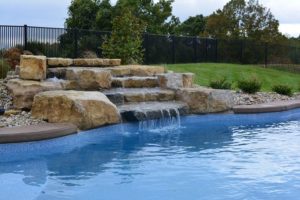
Yes, sliding decks can be customized to fit a variety of pool shapes, although irregular and custom shapes often require increased engineering complexity and overall cost. Pools with raised features, slides, or water elements — such as waterfalls or spas — may also result in design compromises.
Do sliding deck pool covers help reduce heating costs?
Yes, covering the pool helps reduce evaporation, which limits heat and water loss. Keeping debris out of the pool can also reduce cleaning time and chemical usage. Your individual energy savings can vary depending on how often the cover is used, as well as your local climate conditions, such as high winds and low humidity, which can increase heat loss and water evaporation.
Are sliding deck covers better than automatic pool covers?
Sliding deck covers and automatic safety covers both have their own unique benefits that will appeal to different homeowners’ needs. For example, sliding deck covers are ideal when homeowners want to reclaim deck space and prioritize aesthetics, while automatic pool covers are typically more affordable and easier to use on a daily basis.
For many homeowners, automatic covers typically offer a better balance of safety, convenience, and long-term value.
Choosing the right pool cover solution
Sliding deck pool covers can be an attractive, space-saving option that protects your pool while blending seamlessly with your surroundings. However, whether it’s the best option for your needs depends on a variety of factors, including available space, the size and shape of your pool, your budget, as well as how and how often you use your pool.
Regardless, safety is both a priority and responsibility as a pool owner. Automatic pool covers are a proven safety-first option that can protect your pool – and loved ones – as well as offer an attractive way to safeguard your pool from dirt and debris. No matter what option you choose, working with a knowledgeable builder can ensure the cover you choose is properly installed and meets state and local pool safety requirements.