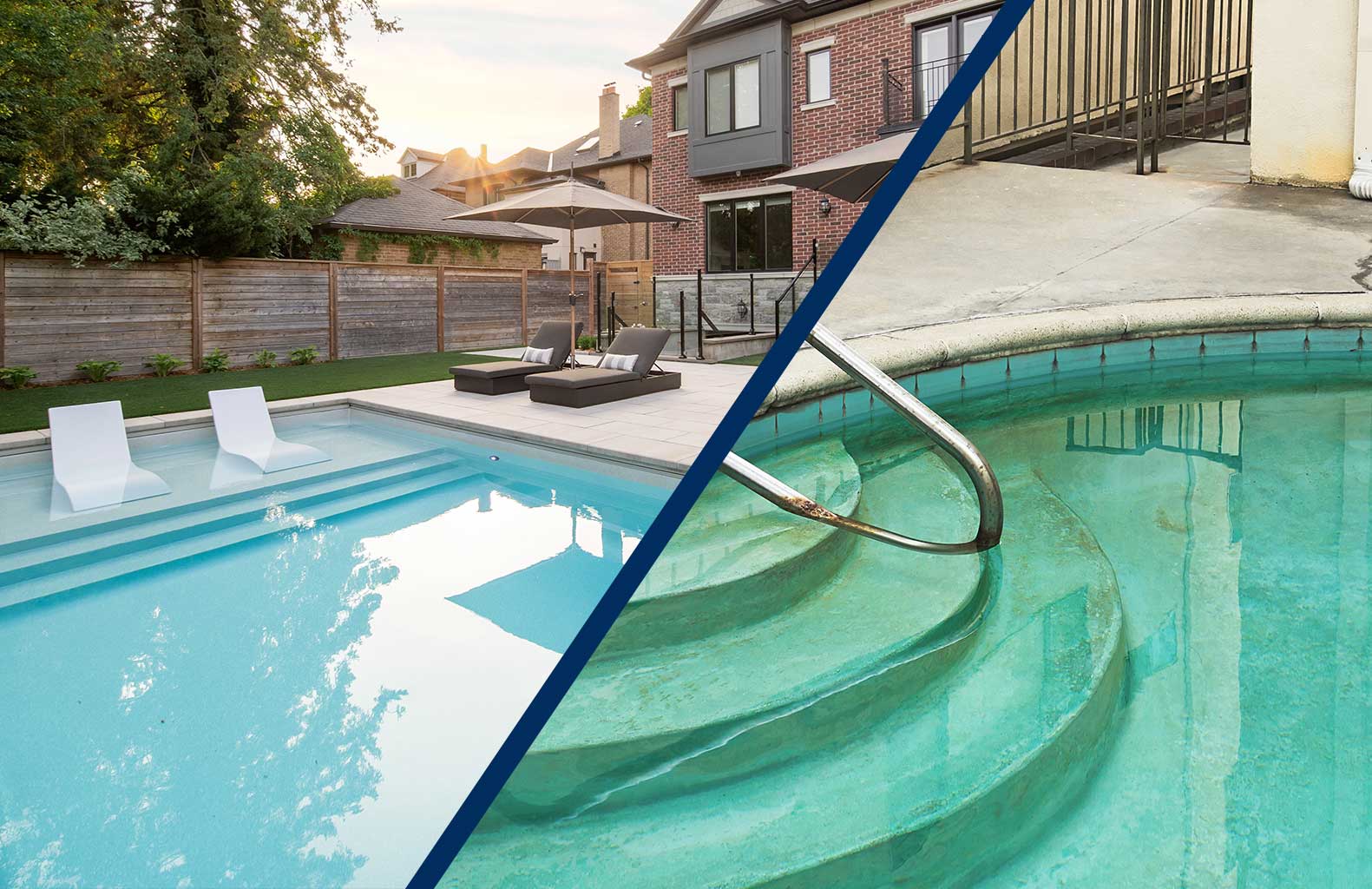
A little planning ahead can pave a smooth path to decades of poolside enjoyment. Choosing the right pool type and materials can help you create a pool that complements your lifestyle and backyard. To help you make the right choice, we’ll compare Latham fiberglass pools vs. concrete pools, examining factors like installation time, style, customization, cost, durability, and maintenance needs.
What Is The Best Type of Pool for You?
Both fiberglass pools and concrete (also referred to as “gunite” or “shotcrete”) are popular options for those dipping a toe in the waters of pool ownership. However, there are clear differences between the two.
Concrete pools have a long history as one of the earliest types of pools in existence, dating back to the late 1800s. While a well-maintained concrete pool can last for decades and offer a blank canvas for customization, they require consistent maintenance and costly resurfacing at least once every ten years.
By contrast, Latham fiberglass pools represent the height of modern innovation, combining a striking appearance alongside unparalleled durability and ease of maintenance. A fiberglass pool can also last for decades. However, fade-resistant, scratch-resistant construction and industry-leading warranties mean there’s considerably less upkeep involved to enjoy your fiberglass pool through the years compared to the constant and costly care required of a gunite pool.
Whether you’re considering a brand new fiberglass pool or want to revive an older gunite pool with concrete-compatible customizations, Latham can help you transform your backyard into a personal oasis that fits your vision.
Installation Time
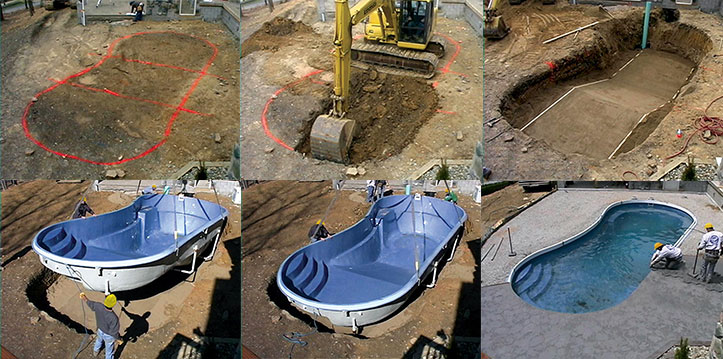
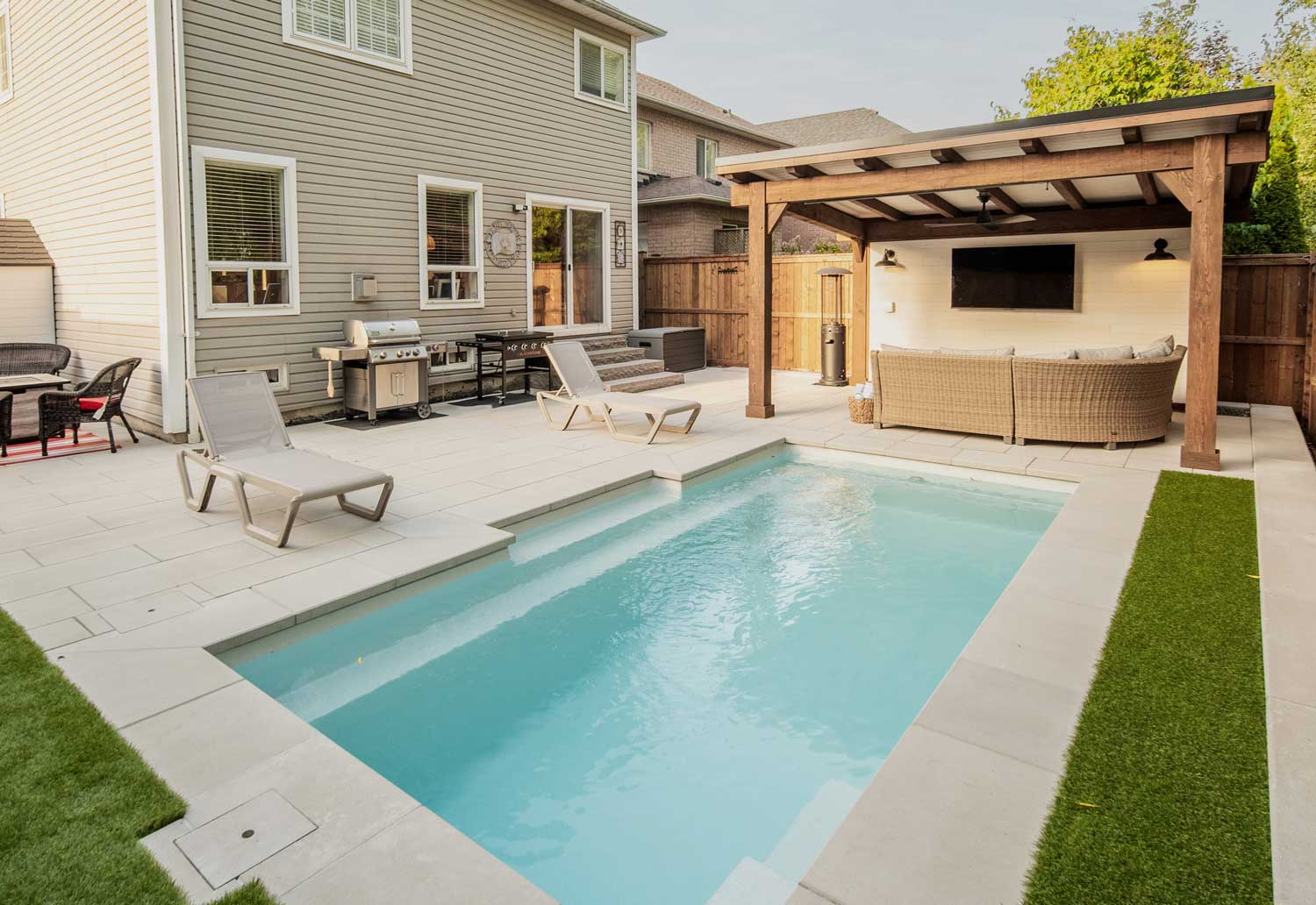
Fiberglass pools offer a faster path to installation. Fiberglass pool shells are hand-drafted in state-of-the-art manufacturing facilities, then transported to your backyard. This minimizes the time between excavation and installation, allowing you to enjoy your new pool sooner. You can start using your fiberglass pool as soon as a few days after delivery, whereas installing a concrete pool is an arduous, months-long process.
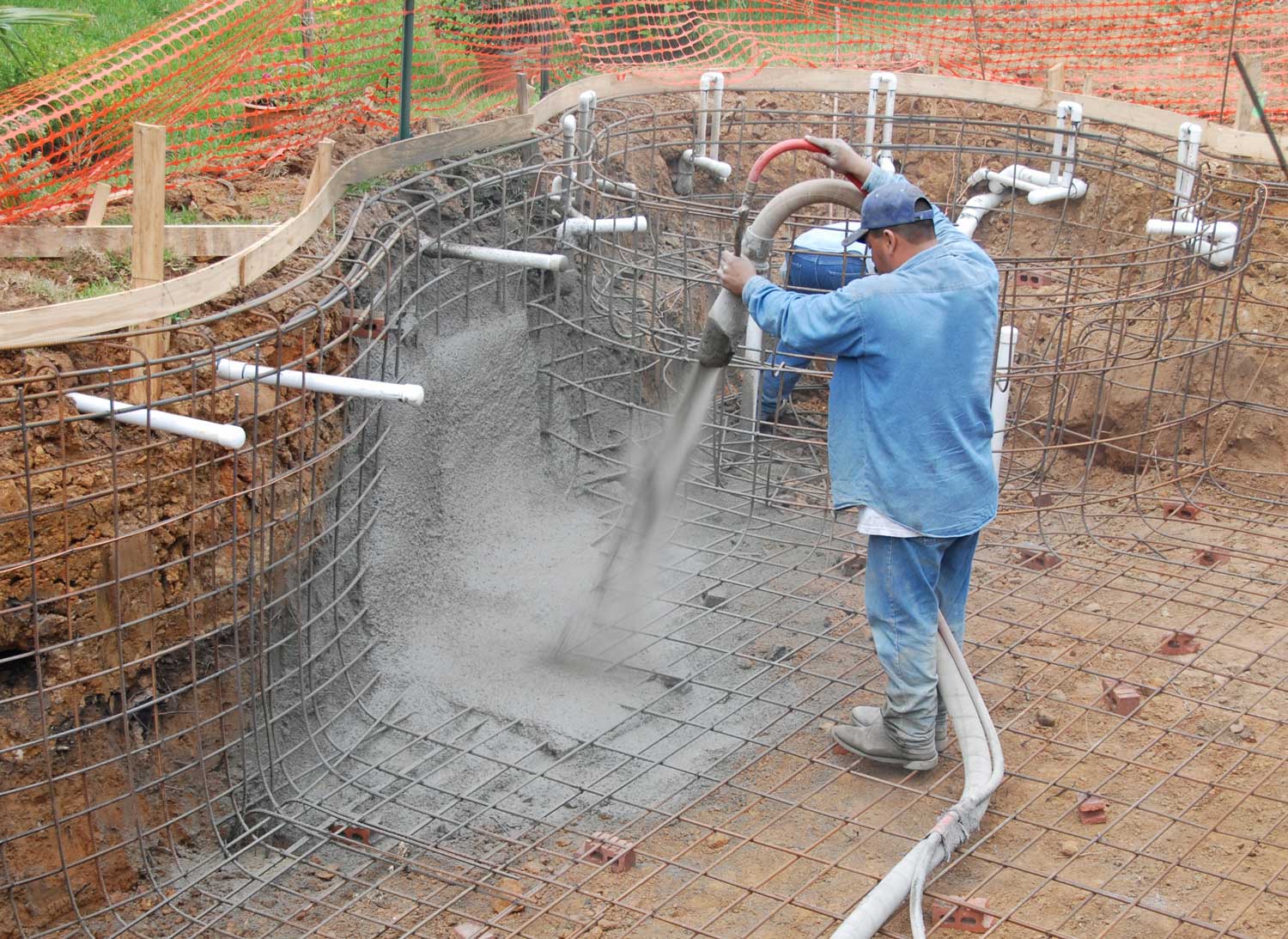
Many concrete pools are built using the gunite process. This requires digging a space in your backyard, then pouring concrete directly into the hole to shape your pool. Not only does this increase time to complete, but the process leaves your yard in disarray for a much longer period. One of the most time consuming parts of the concrete process is that it requires between 28 to 30 days for the material to cure. All-in, installing a concrete pool can take approximately three to six months – from the permit process to finishing touches like fence installation.
Cost Comparison
The cost of a brand new fiberglass pool begins at approximately $50,000 compared to a starting point of $60,000 and up for concrete pools. Not only do fiberglass pools cost less in terms of up-front costs, but they are also less expensive to maintain over a ten-year period.
The cost of maintaining a fiberglass pool is approximately $4,000 over the course of a decade. In comparison, the 10-year maintenance cost of a concrete pool ranges between $15,000 to $27,000. This is due to periodic resurfacing and higher chemical usage to maintain proper water chemistry.
Maintenance Needs
When comparing maintenance for fiberglass vs. concrete pools, fiberglass wins easily. Latham fiberglass pools are made with beauty, durability, and lower maintenance needs in mind. Latham’s Advanced Composite Technology resists fading, stains and scratches, while our Crystite Gel Coat creates a beautiful finish with added dimension. This smooth, durable gel coat also makes fiberglass easier to clean and helps control algae growth, allowing you to spend more time enjoying your pool and less time cleaning it.
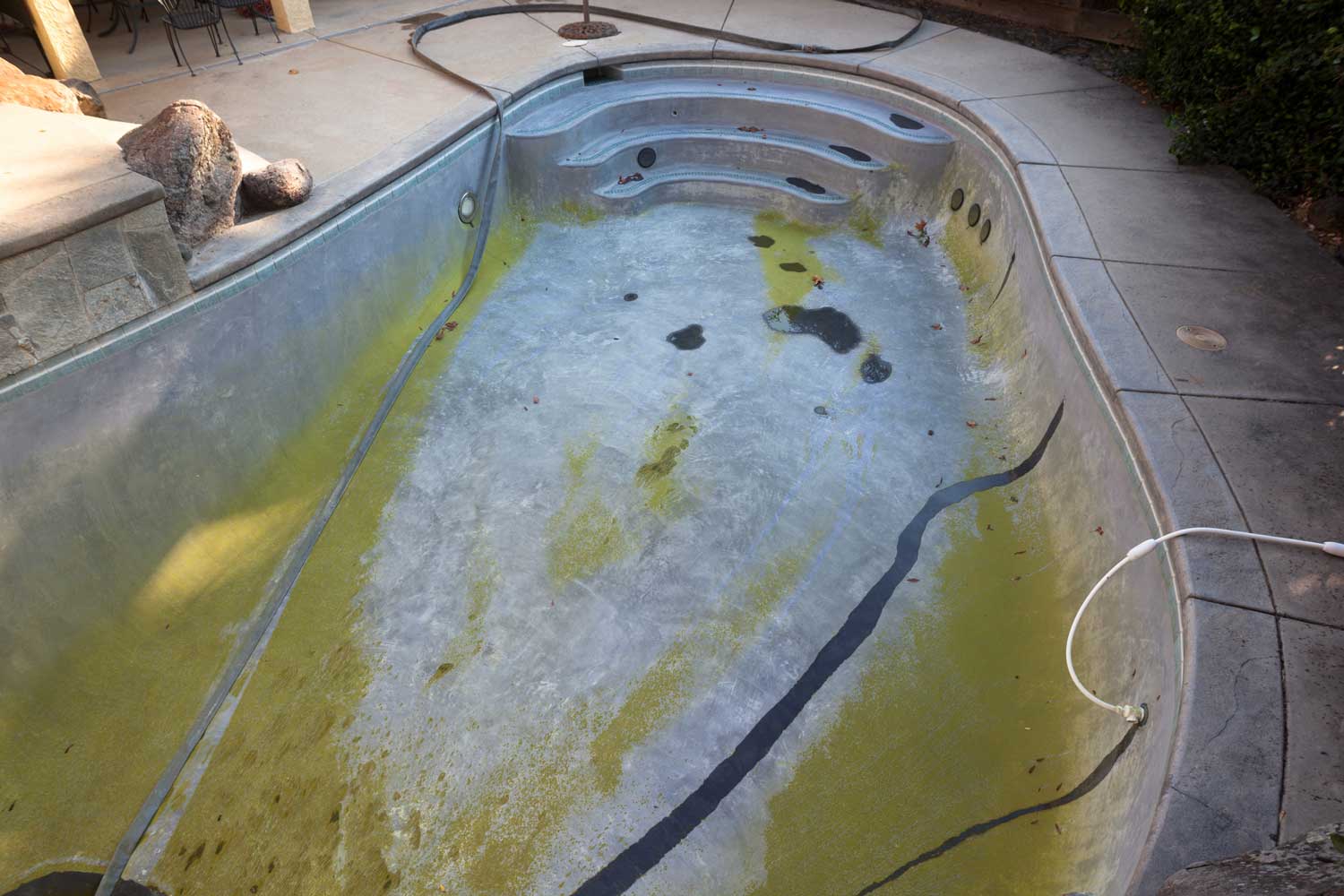
Due to its porous nature, concrete pools are more prone to algae clinging to its surface, requiring more frequent water rebalancing. Not only is this time-consuming, but the cost of pool chemicals can add up over time. When comparing fiberglass to concrete, fiberglass pools require 30% less chlorine than other pool types to keep clean.
Comfort, Durability & Water System Considerations
With proper maintenance, fiberglass pools can last the lifetime of the home it’s installed in. To put things in perspective, there are fiberglass pools still in the ground that were put in during the 1960s. Today, Latham’s carbon-infused technologies have superior compressive strength and a building process that provides industry-leading thickness and durability. In addition to exceptional strength and longevity, fiberglass pools offer a sleek, skin-friendly surface that makes them more comfortable underfoot – and won’t snag your swimsuit. Additionally, a fiberglass pool’s smooth, non-corrosive surface works beautifully with saltwater systems for owners who prefer a gentler alternative to chlorinating their pool.
Concrete pools have an average lifetime of roughly 30 years or more, if properly maintained. However, they need to be resurfaced approximately every 10 years. Their more porous surface requires added upkeep and can also feel rough and scratchy without regular care. Additionally, this porous surface makes concrete pools incompatible with saltwater systems, as salt water can be corrosive to concrete and impact its longevity.
Customization & Design Flexibility
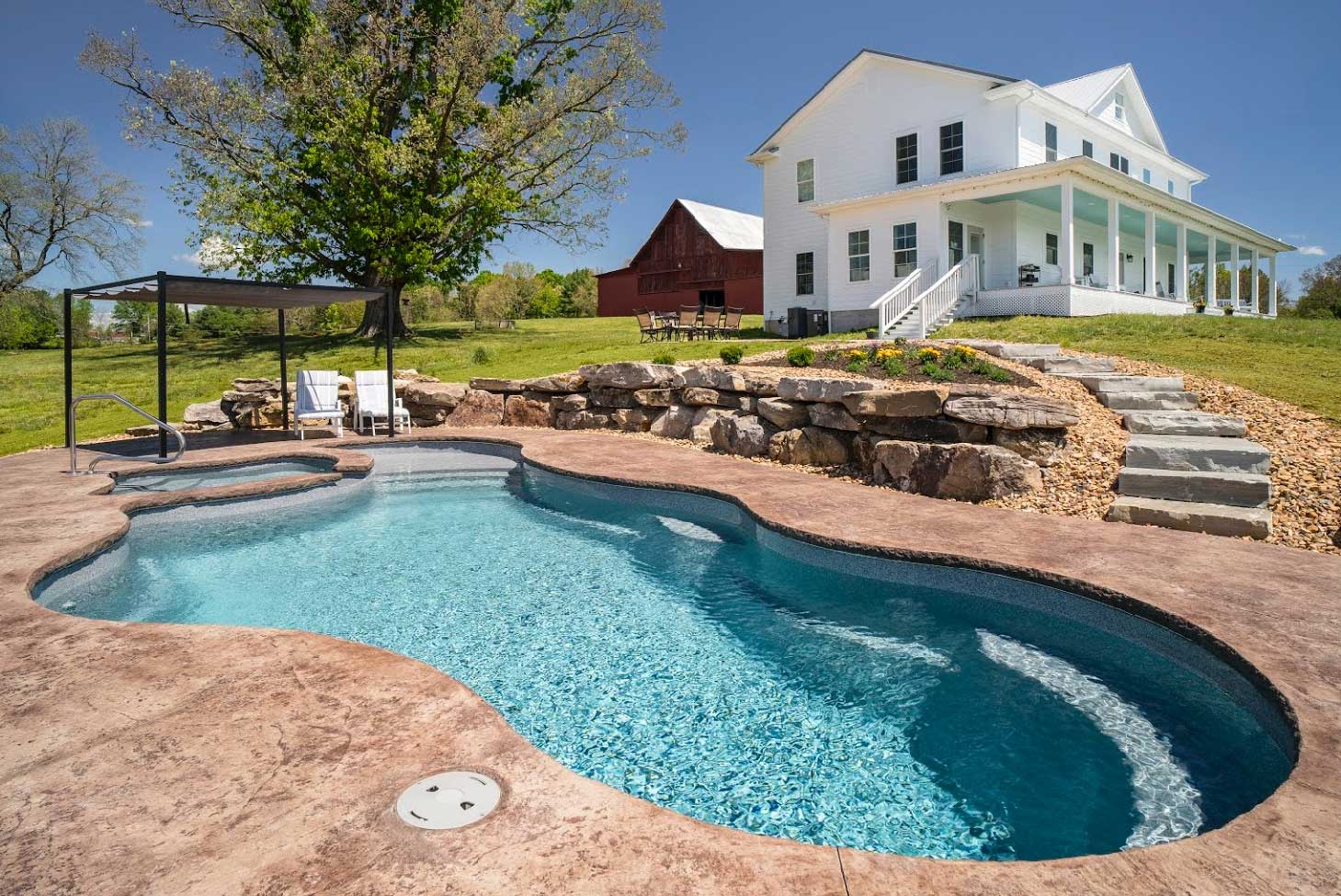
Both fiberglass and concrete pools can be customized to give you a pool that fits your lifestyle and vision for your backyard. Fiberglass pools give users the option to choose from a range of models in different shapes and sizes, with built-in features unique to each model. Swim-up seating, tanning ledges, spillover spas and more are incorporated directly into fiberglass models, making each one its own experience. That said, fiberglass still offers the ability to further personalize your pool with custom features like colorful pool lighting, water features, and more.
Concrete or gunite pools offer a range of customization options since their size and shape can be tailored to fit your design aesthetic, as well as conform to the size of your backyard. You can choose specific add-ons that can be worked into the design, such as tanning ledges, LED lighting, and more. Due to their highly customizable nature and the labor involved, concrete pools are often the most expensive of pool types – starting at $60, 000 or higher, depending on the degree of customization required.
Let’s explore the sizes, shapes, and customization potential for both concrete and fiberglass pools in greater detail.
Fiberglass Pools: Size, Shape and Customizations
- Sizes: Available in a wide variety of exquisitely-designed models with built-in features. Common sizes include:
- Plunge pools: 9 x 17 feet
- Small pools: 12 x 25 feet
- Medium pools: 14 x 30 feet
- Large pools: 16 x 35 feet
- Shape Options: Available in a variety of shapes, including:
- Rectangular
- Kidney-shaped
- Free form
- Customizable Add-Ons: Can add features to further customize, including tanning ledges, bubblers, LED lights, spillover spas, and inlaid tiles.
Concrete Pools: Size, Shape and Customization
- Sizes: Gunite pools can have custom sizes to fit any size backyard. However, some of the most commonly requested dimensions are:
- 10 x 20 feet
- 12 x 25 feet
- 14 x 28 feet
- 14 x 30 feet
- 15 x 30 feet
- 16 x 32 feet
- 16 x 36 feet
- 16 x 35 feet
- 18 x 36 feet
- 20 x 40 feet
- Shape Options: Gunite pools are available in a variety of shapes, including:
- Rectangular
- Freeform
- Kidney-shaped
- L-shaped
- Customizable Add-Ons: Common add-ons for a gunite pool include tanning ledges, decking, lighting, or water features.
Advantages of Fiberglass Pools
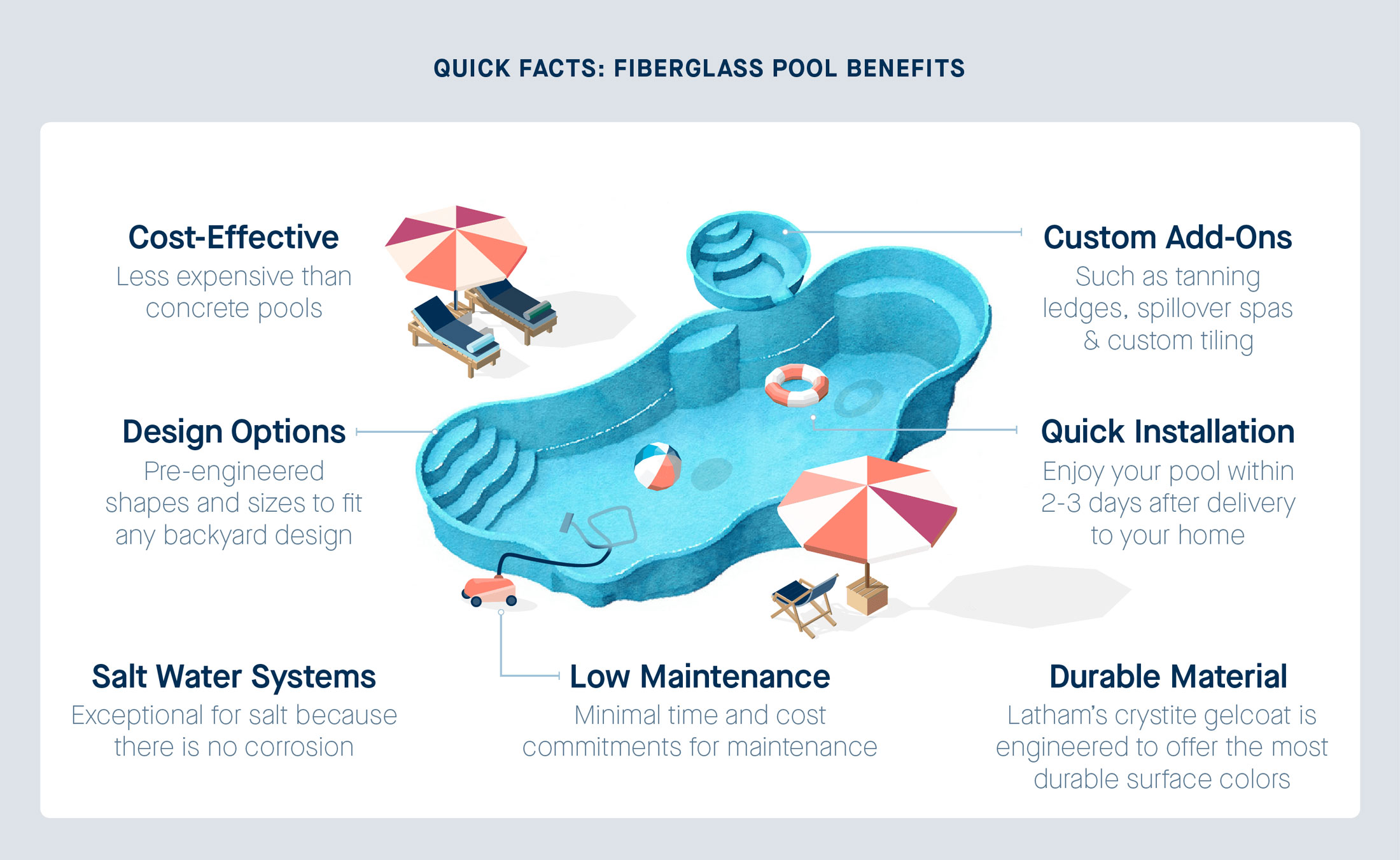
Fiberglass pools have a number of advantages when comparing them vs. concrete pools.
- Quick installation: Because fiberglass pools are hand-drafted in a quality-controlled manufacturing facility, the entire installation process can be completed in just a few weeks, from excavation to installation. While your fiberglass pool is being manufactured, your building team can concurrently begin breaking ground and getting ready for your pool to be delivered, installed, and enjoyed.
- Cost: The initial cost of a fiberglass pool typically starts at $50,000, making them potentially less expensive compared to concrete pools, which average upwards of $60,000. Learn more in our fiberglass pool pricing guide.
- Customization: Fiberglass pools come in a variety of shapes and sizes to suit any backyard. Depending on the model you choose, each has its own unique set of features already built-in, such as wading areas or spillover spas. However, you can add even more custom features to your fiberglass pool to further personalize it to your tastes – from tanning ledges to eye-catching LED lighting and more.
- How long do fiberglass pools last? A fiberglass pool can last for decades. Backed by industry-leading warranties, Latham durable fiberglass pools are built for both beauty and durability, giving them an advantage over concrete.
- Low-Maintenance: Fiberglass offers a smooth, sleek surface that resists algae growth and reduces the amount of time spent on pool maintenance.
- Lower Cost-of-Maintenance Over Time: Unlike concrete, fiberglass pools do not require expensive treatments like periodic acid washing or resurfacing to keep them looking their best. Fiberglass pools also require 30% less chlorine in terms of keeping water safe, sanitary, and swim-worthy.
- Saltwater Compatibility: Fiberglass pools are ideal for use with saltwater systems due to their non-corrosive surface.
Analyzing Concrete Pools (Gunite Pools)
Let’s take a closer look at concrete pools and the considerations involved.
- Longer installation times: A gunite pool needs to be done in stages and takes place entirely within your yard. Your pool installation team begins by digging and preparing the ground, then adding concrete to the space. It can take roughly 28 to 30 days for a gunite pool to cure before it can be filled and used. From end-to-end, the entire installation process for a gunite pool can take anywhere from three to six months.
- Cost: The initial cost of a concrete pool starts at around $60,000 and upwards, depending on the degree of customization involved.
- Customization: Concrete pools can be fully customized, giving you the flexibility to choose the size, shape, and features you want incorporated into your pool.
- How long do concrete pools last? Concrete pools have an average lifetime of roughly 30 years or more, if they are well-maintained. However, they do need to be resurfaced roughly every 10 years.
- More Frequent Maintenance: Concrete pools require regular upkeep, including weekly scrubbings and sweepings to keep algae at bay due to its more porous surface.
- Higher Cost of Maintenance: Concrete pools must be resurfaced once every decade. On average, the ten-year maintenance cost for a gunite pool can run between $15,000 and $27,000. This is substantially higher compared to the $4,000 cost to maintain a fiberglass pool over a decade. Additionally, the porous nature of concrete means you may spend more time and money on pool chemicals, battling stubborn algae that can cling to pool walls and wreak havoc on your water quality.
- Saltwater Compatibility: Gunite pools are not suited for use with salt water systems. Saltwater can be corrosive to the finish of your pool and impact its longevity. If you have your heart set on a salt water system, fiberglass is a safer bet.
- Susceptibility to concrete cancer: Concrete cancer, also known as alkali-silica reaction (ASR), is a real risk with concrete pools that causes concrete to expand and crack. If left unchecked, this process compromises the structural integrity of a concrete pool, requiring a complete replacement.
Fiberglass and Concrete Pool Takeaways: Which Is Better For You?
A pool can give you many years of enjoyment from the comfort of your own backyard. Choosing the type of pool that’s best for you depends on what matters most to you with your backyard pool experience. Comparing the pros and cons can help you find the best pool material to increase the recreation and relaxation that you’ll get from your pool in the long run.
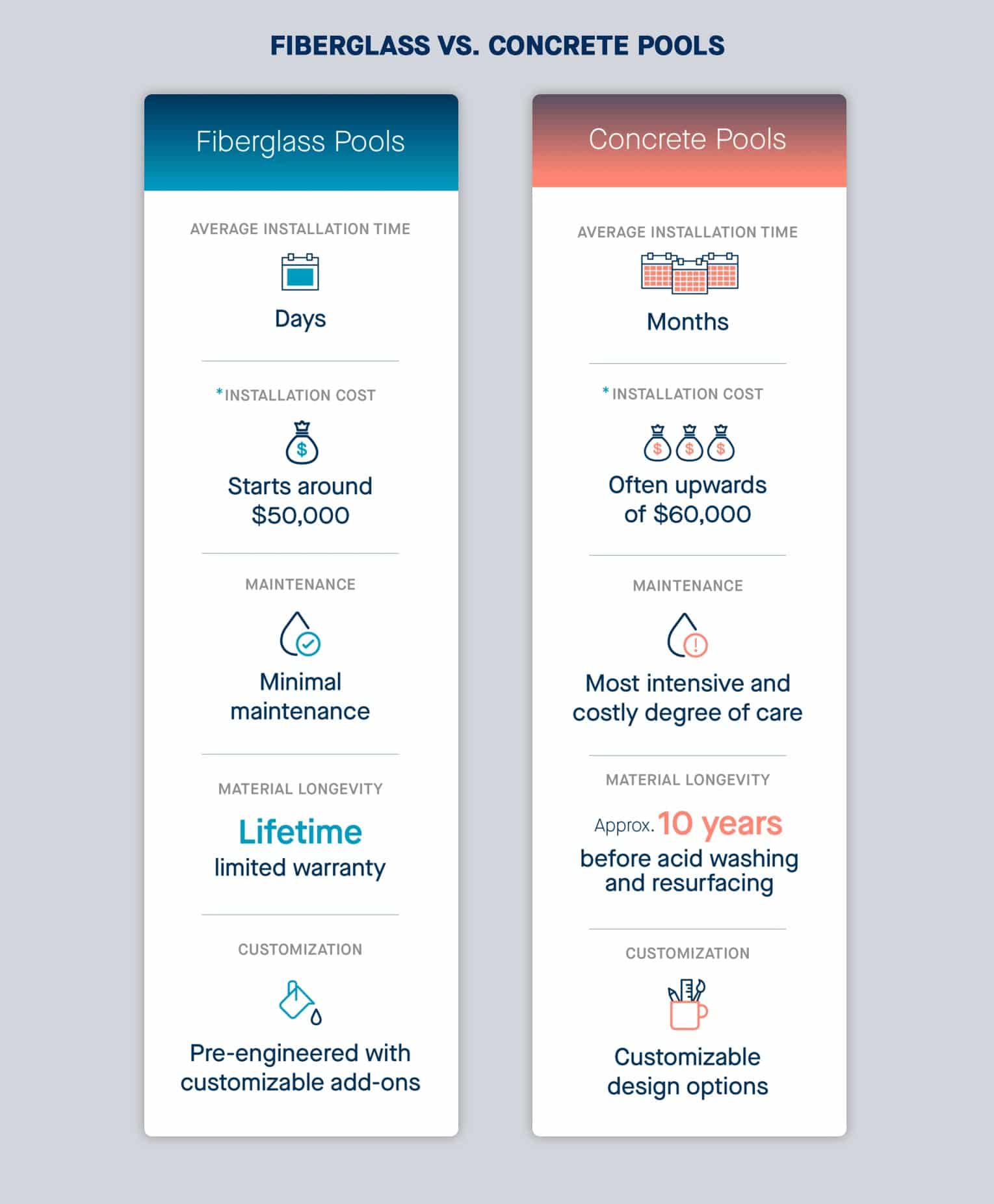
*Installation costs based on national average selling and installation pricing. Actual costs depend on various factors, including location of service, pool model and options selected. Please consult with a Latham Independent Builder for a customized estimate.
Find Your Dream Pool
Now that you understand a little more about the pros and cons of each pool type, you’ll be better prepared to make a decision that’s right for you.
Start shopping for your fiberglass or vinyl liner pool with Latham. Get in touch with our team of friendly, knowledgeable experts who can help you determine which options are the best for your tastes, budget and lifestyle.