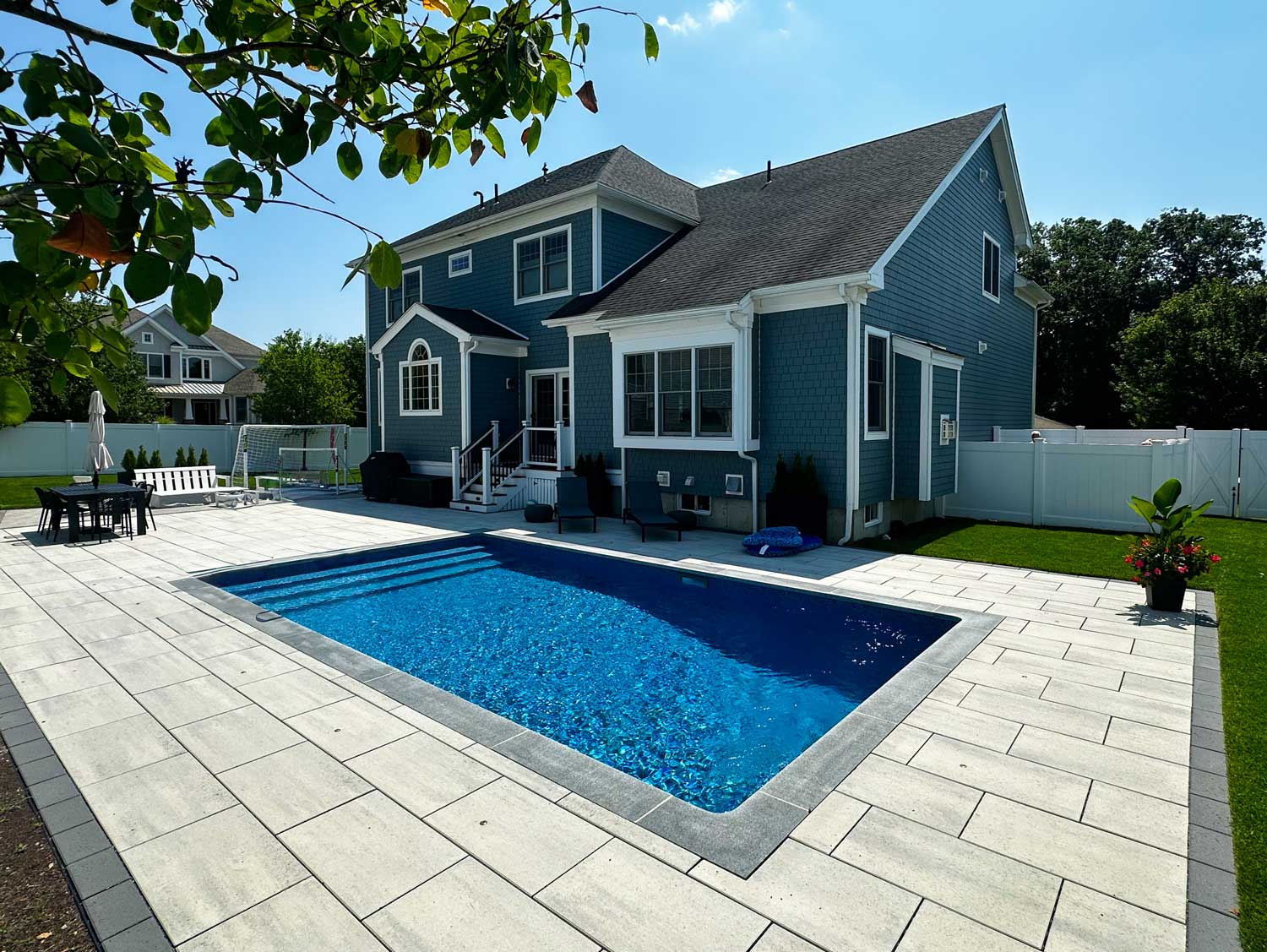
A pool is often an in-demand backyard feature when home buyers are looking at potential properties. And for good reason — pools offer premium lifestyle benefits when it comes to relaxation, entertaining, exercise, and overall aesthetics. If you’re thinking about buying a house with a pool, you’re likely already dreaming of sipping cold drinks with friends in the sun and swimming laps to relax after work.
However, it’s important to balance the everyday benefits of owning a pool with the responsibility of routine maintenance that comes with it. Otherwise, you could potentially end up viewing your pool as an ongoing chore instead of the beautiful and enjoyable investment it’s meant to be.
In this guide, we’ll help you weigh the benefits, costs, and considerations of buying a house with a pool so you can enter into your purchase with confidence.
Types of Pools You Might Encounter
Buying a house with a pool means you can skip the cost and potential backyard disruption that comes with installation. However, it also usually means that you’ll be somewhat bound by the previous owner’s choices. While you’ll have options to redesign aspects of your backyard and add features, especially if it is a fiberglass or vinyl liner pool, it’s important to walk into a sale understanding the broad types of pools you could encounter and their considerations.
The main types of pools you might see are: inground pools, above ground and semi-above ground pools, and older or filled-in pools.
Inground Pools
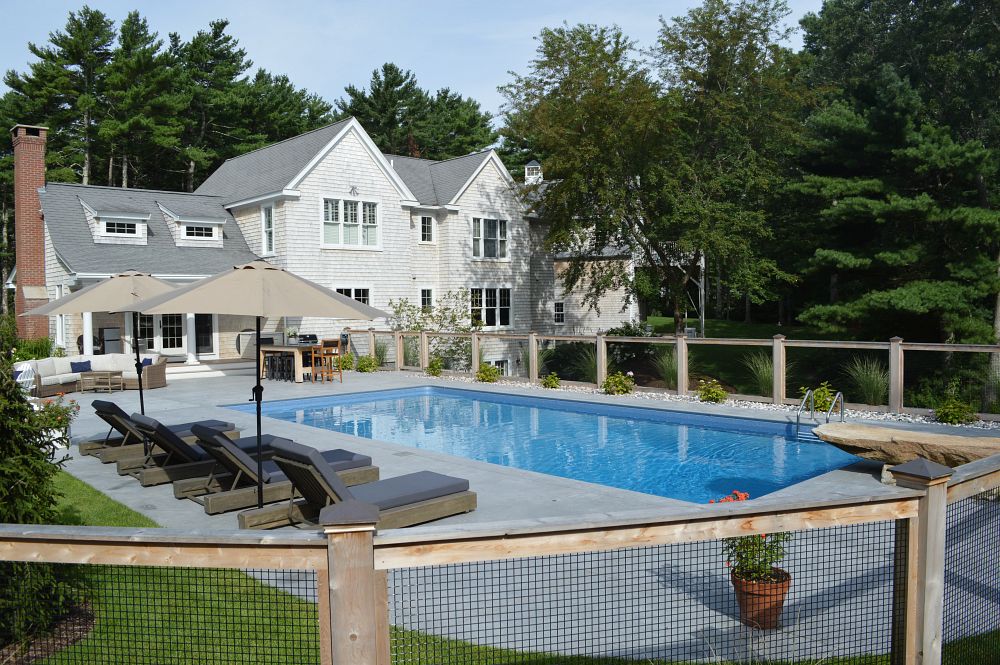
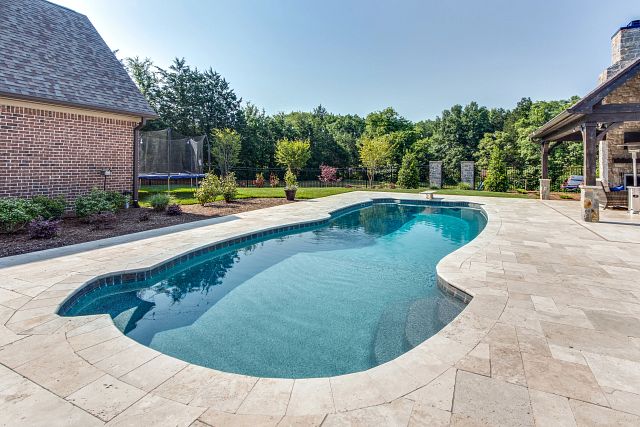
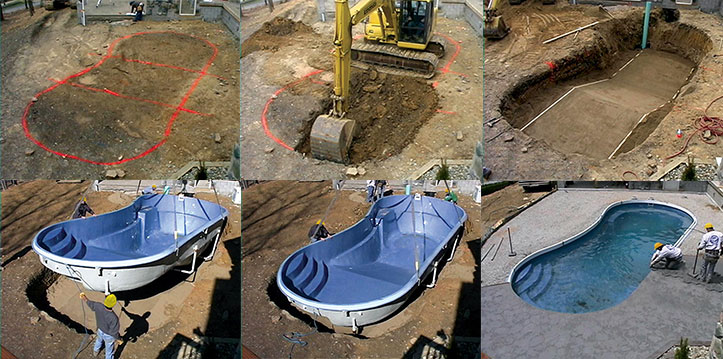
Inground pools are permanently installed directly into the ground, often coming flush with the patio or deck that surrounds them. Because these pools are permanent structures with greater complexity than above ground pools, they often require specialized professionals trained to perform certain structural and plumbing repairs.
While this means inground pools often have higher up-front and repair costs, these pools are designed with durability in mind, especially fiberglass and vinyl liner. Buying a house with an inground pool can be a solid investment in your home’s property value, as these pools can be a beautiful and functional part of your backyard for decades if cared for correctly.
Semi-Inground Pools & Above Ground Pools
Semi-inground pools (sometimes also called “semi-above ground pools”) offer a middle-ground price point, making them more accessible than full inground installations and more permanent than most above ground options. They are also often an ideal option for homeowners whose yards might be too rocky or uneven for a fully inground pool. That said, the materials used for semi-inground pools can vary from company to company, and you’ll need to do some research to ensure that the pool installed at the property is built with durability in mind.
For example, Latham semi-inground pools are made with our exclusive Radiant insulated panel systems, constructed from NASA-grade materials that are corrosion-resistant and extremely resilient against even the harshest conditions. These modular Radiant panels provide decades of longevity with near-endless design flexibility. However, if the semi-inground pool installed at the property you’re viewing is constructed with thinner walls and less durable materials, it could have a lifespan closer to only 7 to 15 years before structural components can begin to degrade.
Above ground pools are excellent options for homeowners who want to enjoy many of the benefits of pool ownership without fully committing to a permanent structure or in instances where the ground may be too rocky to install even a semi-inground pool. Above ground pools are often modular, and homeowners can DIY their own installation with the right site preparation. While these pools can be customized with vinyl liners and some premium features, many above ground pools are designed to last a few years before they need replacement or removal.
By contrast, Latham above ground pools are constructed by durable Radiant modular panels. This unique design feature offers longevity alongside the option to more easily remove your pool if you want to, or to experience the enjoyment of a pool – even on a sloped or rocky yard.
If you’re considering buying a house with an above ground pool, be sure to talk to the seller to understand whether they plan to remove the pool as part of the property closing.
Older Pools or Filled-in Pools
When buying a house with an old pool, understanding the hidden risks of aging infrastructure is critical before closing on the property. Depending on their installation and repair history, older pools can range in value from being gorgeous centerpieces of a yard to an investment in need of a lengthy rehab to get it back to shining. Older pools may have deteriorating plumbing, outdated electrical systems, or compromised structural shells that are not immediately visible during a casual walkthrough. For those made from concrete, resurfacing alone can cost upwards of $15,000 or more, depending on the pool’s size and condition, and that expense compounds quickly if the underlying plumbing or equipment also needs replacement.
You might also come across filled-in pools when shopping for homes. A filled-in pool may appear to be a non-issue at first glance, but the way it was decommissioned can have serious consequences for a future homeowner. When pools are improperly filled, contractors sometimes simply puncture the bottom and pour in dirt or debris rather than fully removing the shell. This can leave a hollow or unstable void beneath the surface that can shift, settle, or collapse over time. This kind of subsurface instability can damage foundations, crack patios or driveways, and create drainage problems that are difficult to diagnose without a professional and expensive to correct.
Before purchasing a home with an older or filled-in pool, schedule a professional pool evaluation to assess soil compaction, verify that any fill-in was performed correctly, and flag any liability issues.
What to Look for During an Inspection
While you’ll likely inspect the pool area yourself during any open houses or walk-throughs with your realtor, hiring a professional pool inspector is an essential step before committing to purchasing a house with a pool. These inspectors are experienced at looking out for details that could be difficult to spot with the naked eye — details that could signal that a pool is hiding structural or plumbing issues that mean costly repairs down the road.
An inspector and your realtor should also ask the seller questions about:
- Repair History: If a pool has had extensive repairs or the same issue has been addressed several times, it could signal a structural issue or problem with the initial installation. The repair history can tell an inspector where they should look more closely for potential challenges.
- Warranties: Checking the warranties on both the pool and any major equipment installed (heaters, filters, saltwater generators, etc.) can help you avoid high costs for unexpected repairs that could come if there is structural damage or equipment failure. Ask for documentation on all warranties before you buy, as some warranties could have expired or be non-transferable.
- Maintenance Practices: Understanding the previous owner’s maintenance practices is often the best way to gauge the pool’s overall health and prevent hidden costs later. A pool that has not been maintained can have severe issues such as failing pumps, cracked shells, stains, or leaky plumbing.
Safety Considerations
Safety features are crucial for keeping your pool safe and secure, especially for young children and pets. Most states require safety barriers, such as pool covers and fencing with self-latching gates that keep children from accidentally accessing the pool area without supervision. Many pool owners also install pool alarms as an additional layer of protection in case a fence doesn’t latch, or a manual pool net isn’t secured properly and is blown back by the wind.
If you’re thinking about buying a house with a pool, talk to your realtor to understand any local or state regulations around pool safety and what equipment has already been installed on your potential pool for compliance. If you buy a house with a pool that is missing any critical safety feature, you’ll need to install it yourself before opening your new pool. That way, you can fully enjoy your new home with peace of mind, knowing that you’ve done your due diligence to create a backyard that is as safe as it is enjoyable.
Costs of Pool Ownership
The costs of pool ownership can typically be broken down into two types: ongoing costs and annual or one-time expenses.
Ongoing costs can fluctuate based on usage, weather, and the pool type (such as a chlorinated pool vs. a saltwater system). This often includes factors like water usage, small repairs, utilities, and routine maintenance for water chemistry and cleaning.
Annual and one-time expenses are often dictated by season and the necessary, but less frequent, upkeep needed for pool longevity. This can include costs around opening or closing your pool, major equipment replacements, deep cleaning service for concrete pools, and long-term maintenance such as replacement liners or resurfacing for concrete pools.
Here’s a quick look at some common expenses around taking care of your pool:
| Expense Category | What’s Included | Typical Cost Range | Frequency |
| Routine Maintenance |
| $100–$200/month | Ongoing; weekly and monthly requirements |
| Seasonal Services |
| $300–$600 | Annual |
| Repairs & Upkeep |
| $1,000–$5,000+ | As needed (Most annual or one-time) |
| Utilities |
| $300–$400 | Annual |
| Insurance & Taxes |
| Varies widely ($200–$500+) | Annually (policy dependent) |
If you’re buying a house with a pool that you want to redesign, visit our pool renovation and remodel guide to start matching your new property to your aesthetic taste and personal needs.
Key Questions to Ask Before You Buy
If you’re thinking about buying a house with a pool, there are specific questions to ask that can help determine if it’s the right investment for you:
What is the age and condition of the pool?
The age and condition of the pool can determine much of your short and long-term costs when it comes to maintenance and overall home value. For example, an older pool that has been sporadically maintained over the years, or a newer one that has been neglected, will likely require higher up-front costs to revive its beauty and usability. This could include shock treatments to resolve algae growth, repairs to liners and pool walls, equipment replacement, or acid washing and resurfacing for concrete pools. These pools could also require more in-depth long-term maintenance, depending on how their condition does or doesn’t improve with initial steps.
In contrast, a pool that has been properly maintained by the seller is often ready to use as soon as the closing is complete. This means you can immediately celebrate with friends and family, start planning a poolside housewarming party, or simply relax in the moment of accomplishment after buying your new home.
A well-cared-for pool can also add to your property value, especially in areas with warm climates and future buyers who value the unique entertaining and lifestyle benefits of a house with a pool.
What warranties exist on the pool and equipment?
Warranties on pools and pool equipment will vary depending on the terms of the original installation and who the seller bought the equipment from. Always ask about warranties when discussing the property with the seller or your realtor, as the type and length of a warranty can indicate the build quality of the pool and help reduce financial risk after purchase.
Has the pool had any repairs, leaks, or resurfacing?
Understanding a pool’s maintenance history is key to assessing the return you can get on your investment and revealing any potential hidden issues with the pool’s health. For example, if a pool has had frequent repairs or resurfacing, it could signal that there are underlying structural or plumbing problems that can’t be solved with routine maintenance.
How energy-efficient is the current pool equipment?
Knowing the energy efficiency of the current pool equipment can help you plan for any ongoing operational costs. For instance, efficient pumps, heaters, and lighting help to lower utility bills and can make pool ownership more sustainable.
Who built or serviced it, and is the company reputable?
If the pool was built or serviced by a reputable builder or service provider, you can often feel more confident about the quality of the installation and proper maintenance practices. These are both extremely important factors that will ultimately dictate much of your ongoing costs when it comes to maintenance.
Is the pool equipped with modern safety features, or would upgrades be necessary?
Most states have compliance laws regarding pool safety features like fencing, covers, and alarms that your pool must meet. If your pool is not up-to-code, you can risk hefty fines or even mandatory closure. Before buying a house with a pool, work with your realtor to understand your area’s compliance requirements and understand if your potential new pool is outfitted with the appropriate equipment. If there is any area where a safety feature is lacking, you will need to budget for its installation before you can open the pool.
Steps to Take Before Closing
Taking a structured approach before purchasing a home with a pool can help you save thousands of dollars and prevent serious headaches down the road. Work through each of the following steps to make sure you go into your purchase with a full picture of what you’re buying:
- Gather Pool Documentation: Request all available records from the seller, including original installation permits, repair history, equipment warranties, and any previous inspection reports.
- Hire a Qualified Pool Inspector: Schedule time for a certified pool inspector to evaluate the pool shell, plumbing, electrical systems, and equipment to assess their current condition and understand where the setup stands with any legal compliance.
- Review Local Safety and Zoning Regulations: Check with your local municipality to confirm the pool meets current fencing, safety barrier, and safety equipment requirements, and verify that any modifications or fill-ins were properly permitted.
- Calculate Ownership Costs and Confirm Budget: Budget for any ongoing expenses such as chemicals, utilities, routine maintenance, insurance increases, and any near-term repairs or equipment replacements that came up during your inspection.
- Negotiate With Sellers If Repairs or Updates Are Needed: Use your pool inspector’s findings as leverage to request seller concessions, a price reduction, or escrow holdbacks that cover the cost of bringing the pool up to safety and aesthetic conditions before closing.
Is Buying a Home with a Pool Worth It?
Buying a home with a pool can be a genuinely rewarding decision, especially if you envision your backyard as a dedicated space for relaxation, entertaining guests, and staying active without leaving home. However, those benefits come with a meaningful set of responsibilities. Routine maintenance, chemical balancing, equipment upkeep, safety compliance, and increased insurance premiums are all part of pool ownership that you’ll need to factor into your decision.
Before committing, it’s worth taking time to reflect on the lifestyle factors and commitments that come with pool ownership, such as how you plan to secure your pool for children and pets, and whether your budget can comfortably absorb both the expected and unexpected costs of keeping the pool in good condition.
A house with a pool can absolutely be a worthwhile investment, especially if it aligns with your lifestyle, your finances, and the way you plan to live in your home.
Making the Right Choice When Buying a Home with a Pool
Buying a house with a pool doesn’t have to be an overwhelming decision. With the right information and the right professionals in your corner, it can be one of the most rewarding investments you make that contributes to your quality of life. The key is approaching the process with clear eyes: asking the right questions, reviewing documentation thoroughly, and leaning on certified inspectors and local experts who can surface issues before they become ongoing challenges.
If you’re considering installing a new pool, assessing one in your potential new backyard, or renovating one in a home you’ve recently bought, contact us for more information.