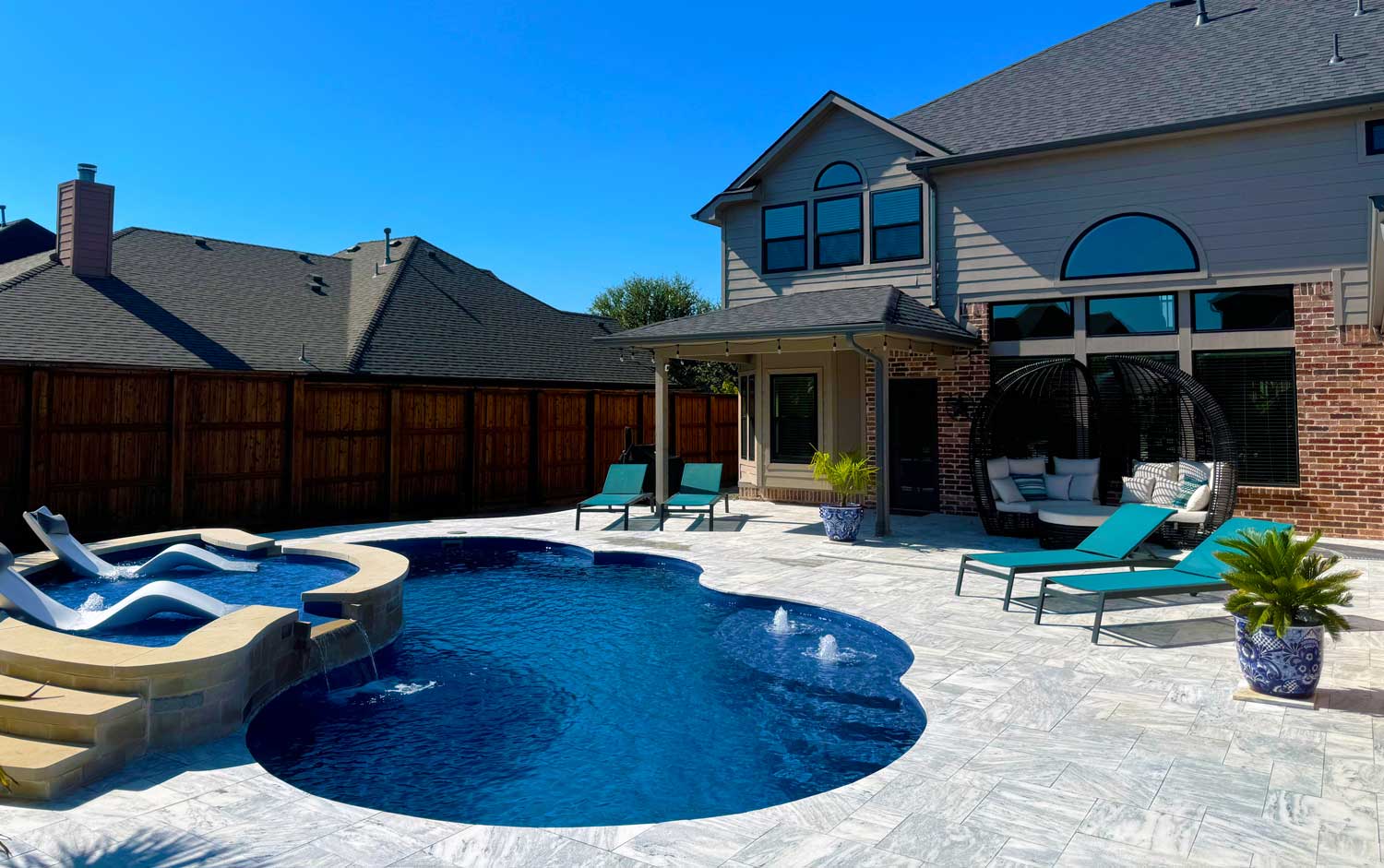
Whether it’s inground or above ground, a pool is more than a new addition to your backyard; it’s a gateway to a whole new lifestyle for your family. Soon, you’ll be doing laps in the quiet morning before breakfast, eating dinner al fresco under an umbrella and entertaining your friends and family poolside.
Putting in a new pool can feel intimidating at first, especially if it’s your first time navigating the installation process. It can be difficult to know what information is the most current and applicable to your needs, especially if you have friends and family offering their own “here’s what I wish I knew before building a pool” stories. That’s why we’re here to provide professional pool advice on the topics we see most often from new pool owners, such as:
- How to set and manage a realistic installation budget
- Finding the right contractor
- Picking the right pool for your backyard
- Navigating insurance and local permitting requirements
If you’ve already started creating your pool budget, you’re one step ahead! Let’s talk about some of the hidden costs of installing a pool to be sure that your plan is sustainable throughout delays and unexpected expenses.

Budget Beyond the Dig: What Costs Can Sneak Up on You
As you create your budget, it’s important to factor in more than just the cost of the installation and the pool itself. There are many hidden costs that can easily sneak up on first-time pool buyers, both during and after installation. Some of these costs you should consider include:
- Dirt and Debris Removal: Builders have to dig into the earth as part of the installation process, and all of that dirt and debris has to go somewhere. You should be factoring about $300-$900 into your budget for legal disposal.
- Retaining Walls: These are necessary structures that stabilize the soil in your backyard, prevent erosion and protect the structural integrity of your pool. Depending on construction materials and the degree of slope to your backyard, retaining walls could range from a couple of thousand dollars up to $20,000.
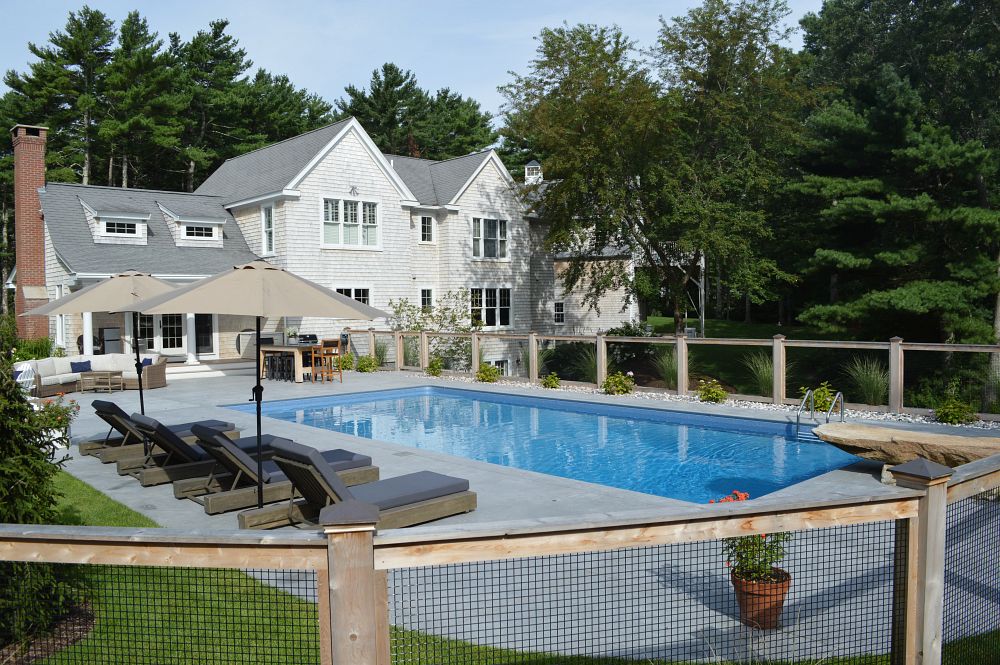
- Fencing: Depending on the size, shape and material used, plan to budget an average of $1,100 for fencing costs. (The good news: depending on your provider, you can actually lower your home insurance premiums when you install fencing around your pool!)
- Decking: A deck is more than a pretty add-on around your pool; it’s a highway that must withstand heavy foot-traffic, moisture, and natural elements to keep your pool free from debris and provide a safe and comfortable entertaining space. There are a wide variety of materials you can use for decking. Depending on which material you choose, the size of the area, and local building codes, you should budget for an average of between $4,700 and $13,500 for your deck.
It’s important to approach your pool’s design holistically, envisioning the look and feel of your entire space, not just the pool itself. This might mean an increase in your budget, but planning for these costs up-front will save you time, money, and peace of mind later.
Above ground vs. Inground Pools & What Often Surprises Owners
One of the biggest decisions when it comes to installing a pool is choosing between an inground or above-ground pool. Both options have their own unique benefits and trade-offs when it comes to cost, longevity, aesthetics and customization. To help you make the best decision for your space, we’ll share comprehensive tips and advice for choosing an above-ground or inground swimming pool.
Above-Ground Pools
Above-ground pools are a semi-permanent pool option known for their affordability and ease of installation, which is less invasive than an inground pool. However, they have a significantly shorter lifespan compared to inground options and are less aesthetically cohesive with backyard landscaping, which has caused some HOAs to ban them altogether.
If you’re balancing your goal of pool ownership with finding a cost-effective option that can be enjoyed for a few years and then removed, an above-ground pool is an excellent choice for your lifestyle.
Some additional above-ground pool advice: Your options for decking drops dramatically with an above-ground pool, so you’ll need to factor in the cost of a wooden deck into your budget if you choose this option.
Inground Pools
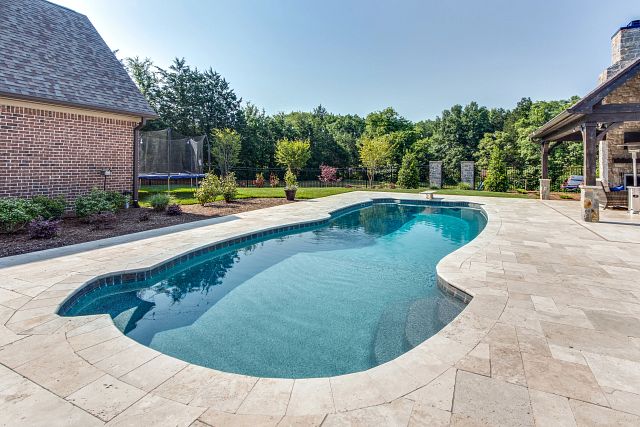
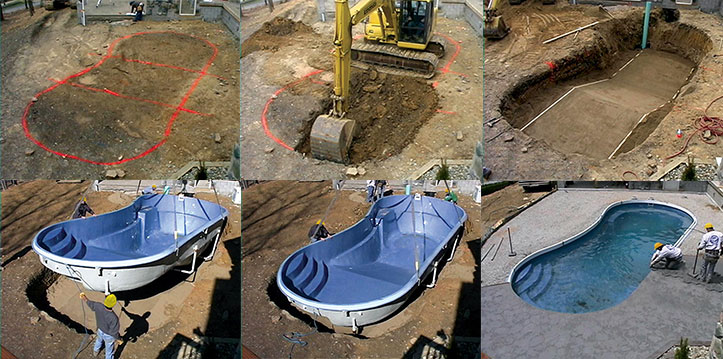
The most obvious characteristic of an inground pool is that it doesn’t stick up out of the lawn. Instead, a professional installation team will excavate a space in your backyard for your pool to be poured so that it sits flush with the rest of your landscaping. This allows your pool to seamlessly integrate with your backyard and become an extension of your home and lifestyle. Inground pools have a well-deserved reputation as an attainable luxury and provide years of reliable enjoyment.
While the up-front cost of an inground pool is higher than an above-ground pool, the long-term value difference is undeniable. Along with a longer pool lifespan, inground options are more durable against wear-and-tear, provide more flexibility for customization, have more options for custom decking, and offer an elevated look-and-feel to your entire backyard.
If you’re looking forward to a custom space that is as beautiful and calming when you’re sipping coffee as it is when you’re entertaining guests, an inground pool is going to be the best choice for you.
Whole-Backyard Design: Lock In Features Early
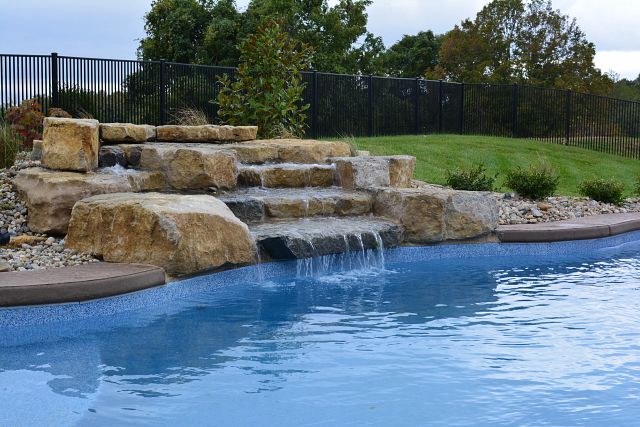
Once you’ve chosen your pool, it’s time to think about how it will fit into the beauty and functionality of your space as a whole. Popular additions like tanning ledges, spa spillovers, built-in firepits, and custom LED lights can be costly, or impossible, to retrofit in later, so you’ll want to lock in these features during the planning stage.
You’ll also want to consider design aspects like seating flow, shade, and the size of your patio or deck for furniture and foot traffic, not just the pool perimeter.
Excited to read by the pool with an ice-cold drink? Create shade by using landscaping or umbrellas that will keep you comfortable in the afternoon sun. Love to eat and entertain poolside? Work with your contractor to build an outdoor kitchen that will allow you to host instead of running between your house and the backyard.
Whether it’s a custom spa where you can give sore muscles a hot soak or a zen-like fire pit where you can warm up after a night swim, these additions to your space contribute more than just beauty to your backyard — they also complement your pool’s benefits to your physical wellbeing.

Permits, Safety & Insurance: Ensure Local Regulation Compliance from Day One
Before you start building, you need to be sure your plans are compliant with all local and state regulations. Your pool dealer should be familiar with the permit requirements in your specific neighborhood. They should be able to both explain which permits you’ll need before building a pool and walk you through the process of obtaining them.
Accommodating safety requirements should be baked into your plan and budget from day one. Be proactive about learning your state’s laws about pool fencing, door alarms, and pool cover specs, and contact your home insurer early to confirm coverage, liability, and ensure all necessary documentation is in order.
Before beginning pool design, call 811 or hire a private locator to be certain that all public and private underground utility lines have been marked. This will not only ensure that your builder can begin construction safely, it will also help avoid costly expenses and delays later.
Finding the Right Contractor & Timeline Expectations
You’ve created a realistic budget, designed your pool and surrounding space, chosen your must-have additions, as well as covered insurance, safety procedures, and your local building regulations. Now, it’s time to build your pool.
Here are some factors to consider when it’s time to choose a contractor and start excavation:
- Hire the Right Builder: It’s vital that you work with a qualified builder with true end-to-end scope, from excavation to landscaping. Take your time and check all references. Remember that researching and selecting the right contractor for your pool renovation can take time, however, it is nothing compared to the time you will spend resolving issues if you choose the wrong contractor.
- Ask For a Written, Itemized Estimate: After discussing your plan and budget with your builder, get a written, itemized estimate before moving ahead with installation. You’ll be able to see how the dealer arrived at the final price, and any changes that arise during installation can be concretely discussed using the estimate as a starting point.
- Create a Timeline: A timeline can help minimize delays and keep everything moving forward. It serves as an estimate, but it’s focused on the duration of the project instead of its finances. It should include a date to expect the project done by, provide checkpoints about finalizing install and making payments, and help hold people accountable for deadlines.
- Plan for Weather and Inspection Delays: Baking in additional time for unavoidable delays caused by weather, obtaining the necessary permits, and completing inspections will help keep your timeline and budget on track.
- Confirm Daily Access and Logistics: Coordinate with your builder and their team on how they can access the pool site every day. You’ll also want to plan for disruptions to your daily life that can occur during the installation process, such as considerations around noise, gates, pets, and driveway logistics.
The excavation process can feel overwhelming, but it’s important to remember that it’s only temporary. You’ll be enjoying the benefits of your new pool far longer than you’ll be inconvenienced by construction.

Swimming Pool Maintenance Advice: Filtration, Circulation & Weekly Routine
Congratulations — construction is over, and it’s time to start relaxing by your new pool! Between sessions of lounging in the sun, you’ll need to perform regular maintenance to keep your investment sparkling.
Weekly maintenance, especially in hotter months, is important for keeping your pool clean, safe and crystal clear. Proper water balance is the single most important factor to maximizing the life and appearance of any swimming pool. Regular maintenance includes monitoring:
- pH Levels: You’ll want to test your pool’s pH levels every 3-5 days to ensure it’s balanced. A normal range is between 7.2 and 7.8.
- Total Alkalinity: Proper alkalinity stabilizes the pH in your pool. Levels that are too low can cause corrosion of filters and screws, cracking of the pool surfaces, and staining on the pool walls. Alkalinity should be tested weekly for a normal range of 80 to 120 ppm.
- Calcium Hardness: When calcium hardness is too high, it can make your pool cloudy and cause a buildup of white scale on the water’s surface. If calcium hardness is too low, it can corrode tile grout, decking, and other vital parts of the pool’s structure. Calcium hardness should be tested monthly for a normal range of 180 to 220 ppm.
You can also turn regular, responsible aspects of maintenance into extended safety precautions and savings. Instead of cleaning leaves and debris out of your pool multiple times a week, use a pool cover. This, along with regulation fencing, adds another layer of protection for pets and children in your backyard. Switch from running your pool pump during the afternoon to off-peak hours, such as during the night or very early morning, to save money on your electric bill.
Visit our pool maintenance hub for more expert swimming pool maintenance advice.
Before You Dig: Pool FAQs
What Do Most People Wish They Knew Before Building a Pool?
Having as much information as possible up-front will help you set realistic budgeting expectations and create a sustainable construction timeline. Here are some things you should know before building a pool:
- Know the costs of building a pool. Costs for excavation, materials, the pool shell’s size and shape, and factors like landscaping, additional lighting and premium add-ons can add up quickly. Consult your builder when finalizing your budget to be sure it’s realistic for the scope of your plans.
- Understand maintenance requirements. Be prepared for weekly/monthly maintenance and the costs that are associated with purchasing filters, chemicals, and more.
- Know your state’s zoning laws and permit requirements. Each state and local community has specific requirements around pool construction and could require specific permits before you start building. Be sure to follow all state laws and obtain the necessary permits early to avoid costly delays later.
- Choose the right builder. Be sure you are hiring a reputable contractor who is equipped to complete the full scope of your process, from excavation to post-install landscaping.
When’s the best time of year to start a pool project?
Every season has its own advantages and drawbacks to building a pool. Here are a few at-a-glance points to consider when determining what time of year to start your project:
- Winter: Winter is typically the cheapest time of year to build a pool, plus the easiest time of year to schedule a contractor due to lack of seasonal demand. However, if you live in a cold climate, ice, snow, or freezing temperatures could interfere with construction.
- Spring: Spring typically brings favorable weather for construction, but contractors tend to be busy and charge higher prices at this time of year, since spring is also the lead-up to peak pool season.
- Summer: Prices peak in summer and contractors are already heavily booked, but the long days and clear weather support fast construction.
- Fall: Fall is an affordable time of year to build, and also gives your landscaping time to recover. However, your project could be delayed by early frosts and cold, hard ground depending on your location.
To learn more about the pros and cons of building a pool in each season, visit our Best Time of the Year to Build a Pool page.
What should I check with my HOA before I design anything?
Many HOAs have banned above-ground pools, and they often have predetermined restrictions on inground pools when it comes to size, shape, landscaping, aesthetic additions, and safety features. It is also common for HOAs to have strict rules around construction, such as the time of day when your contractor and their crew are allowed to excavate.
You will likely be required to submit your design plans and construction timeline to your HOA for approval. Be sure to do this as soon as possible, both to avoid install delays and to ensure continued goodwill between yourself, your neighbors, and your HOA.
What financing options (HELOC, unsecured loan, builder financing) are common for pool projects?
While a pool gives you a space to create family memories and decades of enjoyment, there’s no denying that it can be a costly undertaking. However, financing a pool puts the dream of owning a pool within reach for many homeowners. Common financing options can include:
- In-House Pool Loans: Work with your pool dealer to secure a pool loan through one of their preferred lenders. Because your pool deal can speak to information required and help answer your questions, the process can often be expedited and increase the chances of your loan being approved.
- Home Equity Loans: These loans offer fixed interest rates over a fixed loan term and usually have lower interest rates. However, because your house is used as collateral, it’s important to stay up-to-date on your payments.
- Home Equity Line of Credit (HELOC): HELOCs offer a line of credit based on the value of your home. These loans often offer lower rates, but interest rates can vary, making it more difficult to predict what you’ll owe.
- Personal Loans: These are typically unsecured loans obtained from a financial institution or online lender that can be used for a wide range of purposes, including a new pool. They can be more flexible and acquired quickly, but they typically have higher interest rates than other types of loans.
What site grading issues surprise new owners?
Site grading is the practice of evening out your lawn to create a flat surface. Lawns are seldom completely flat, which means that some amount of leveling is usually needed.
Prospective pool owners are often surprised by the hidden costs that can come with site grading issues, including:
- Additional excavation necessary for leveling
- Limitations uneven ground can pose for heavy machinery used during construction
- Issues with rainfall run-off, which can can contaminate pool water and increase maintenance commitments and costs
The good news is that inground pools can be successfully installed in sloped yards. With a little bit of thoughtful design and careful planning, a pool builder can actually use your lawn’s natural slopes or hills to your advantage, leveraging the landscape to help create a custom design.
How do I plan for accessibility (entry steps, handrails) for kids, older adults, or pets?
A pool is an investment you’ll be enjoying for many years to come, and you’ll want to build it with every member of your family’s comfort and safety in mind. Talk to your builder about how to infuse accessibility into every aspect of your pool’s design. Perhaps you want to include a sloped entrance, which can make it easier for seniors and children to enter and exit the pool, or opt for deck materials that have better anti-slip capabilities to keep guests and pets safe from falls.
Before You Break Ground: Final Notes
A pool is the epicenter of your backyard. It’s where you can relax in the morning before the hustle of the day begins, where you can both nurture your body with rigorous exercise and heal it with tranquil movement, and where you can make memories with loved ones that will last a lifetime.
Finding an experienced contractor you trust is one of the most vital steps to building your dream pool. They can be your best resource for navigating the process end-to-end, from helping with pre-and post- construction design to understanding permitting, creating a sustainable timeline and budget and submitting HOA plans. Remember to call 811 to mark all underground utility lines before beginning any excavation projects.
Create a budget and timeline that satisfies your vision for your backyard while remaining realistic and sustainable throughout the process. Remember to factor in features like LED lighting and custom spas early since many premium add-ons can’t be retrofitted to your pool after installation is complete. It’s also a good idea to bake an extra 20-30% buffer into your timeline from the start — anticipating delays early helps prevent burnout from what can feel like an overwhelming construction process.
Your new pool is almost here. Now that you’re equipped with knowledge of the most important things to know about owning a pool, you can enter the design and construction processes with confidence and concentrate on the memories you’re most excited to make once your investment is complete.