
“Cold weather is coming…can my fiberglass pool handle it?” This is a question we frequently get from potential and existing pool owners. The simple answer is: yes, fiberglass pools can handle winter weather with ease, especially if you take proactive steps to winterize your pool at the beginning of the season.
How Fiberglass Pools Hold Up in Cold Weather
Winter weather often brings freezing rain, snow, and ice – all of which can add to a phenomenon called the freeze-thaw cycle. This is when water seeps into porous surfaces and freezes when temperatures drop below 32℉ (0℃). When temperatures rise and the ice melts, cracks can form where the water expanded as it froze. This process can put immense pressure on the surface of a pool, especially if it encounters several freeze-thaw cycles in a row. This can lead to severe structural damage over time.
So, how do fiberglass pools hold up in the winter? These pools are uniquely designed with a non-porous gel coating that helps prevent water from absorbing into the surface. Likewise, vinyl liner pools are made with flexible steel or polymer wall panels that are less vulnerable to the expansion caused by freezing and thawing. Concrete, however, is extremely porous. Like your sidewalks and driveway, concrete pools readily absorb water, and cracks are a common result after a hard freeze.
All inground pools are somewhat susceptible to the effects of freeze-thaw cycles. However, with proper winterization, fiberglass and vinyl liner pools are less vulnerable to the effects of winter weather that can otherwise cause expensive damage to concrete.
How Fiberglass Pools Perform During Frost Heaves
This cycle of freezing and thawing isn’t limited to the water that is absorbed into a pool’s physical surface. It can also affect the ground around a pool in a process called “frost heave.” This is when groundwater in the soil freezes when temperatures drop, expanding and pushing upwards, which exerts hydrostatic pressure on the surface of the pool. In simpler terms, the frozen, waterlogged soil around a pool expands, putting added pressure on the shell of your pool where it’s situated in the ground.
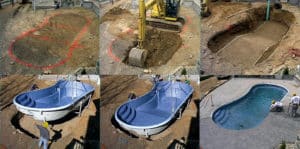
Proper installation methods are key to preventing much of the soil expansion and underground pressure that happens during frost heaves. When an inground pool is installed, a contractor has to backfill the space between the exterior of the pool shell and the walls of the excavated hole. Using crushed stone as the backfill material not only helps create a stable foundation for the pool but also has some of the best drainage capabilities. When groundwater can efficiently drain through the crushed stone, it lessens the chances of hydrostatic pressure from forming.
Even with excellent drainage, there will still be some shifting that occurs when the soil expands during a freeze. Fiberglass pools are made with flexible materials that can accommodate this movement in the ground, not fight against it. By contrast, concrete pools are more rigid and unyielding against this groundwater expansion. This means their surfaces are more susceptible to cracks because it has significantly less elasticity than fiberglass.
Fiberglass: Unfazed by Winter
Cold temperature extremes aren’t a problem for fiberglass pools. With proper care, they can withstand season after season of winter weather with minimal signs of wear. Take a look at some of the unique qualities of fiberglass pools that make them an excellent choice if you live in a cold climate:
- Naturally Insulating Material: Fiberglass is a natural insulator and retains more heat than vinyl liner or concrete. This helps your pool stay warmer through the winter and reduces the risk of cracks that can occur because of freeze-thaw cycles.
- Minimal Winter Maintenance Needs: Fiberglass pools don’t require additional calcium or “shocking” in the winter like concrete pools. As long as water chemistry is maintained, fiberglass also doesn’t need additional chlorine before closing your pool for the winter..
- Designed to Handle Common Winter Conditions: The natural flexibility of fiberglass makes these pools particularly suited to stand up to freeze-thaw cycles and frost heaves that occur in cold-weather climates.
- Faster, Easier Springtime Openings: The non-porous gel coating of a fiberglass pool makes it harder for algae to grow during non-use over winter. This smooth surface also makes water chemistry easier to manage without shock treatments, making spring opening faster and lower-maintenance.
How to Winterize a Fiberglass Pool (The Right Way)
While fiberglass pools are less vulnerable to winter conditions by design, properly winterizing your pool is a crucial step to ensure your investment is as well protected as possible.
Winterizing isn’t quite the same as closing a pool, which refers to putting the cover on. You might close your pool at the end of the day after a nightcap at your swim-up bar, or when you want to ensure the area is secure when there are young children and pets in your backyard. Winterizing your pool is a more thorough process of protecting your pool from damage during freezing conditions by turning off equipment, balancing the water, or removing water from lines and vessels.
If you live in a colder climate where temperatures can drop between 20 and 50 degrees, you’ll need to take some extra steps to prepare your fiberglass pool for winter care. If done incorrectly, you can do more harm than good to your pool – and potentially void its warranty. To make sure it’s done properly, contact a pool professional who can help you winterize your pool and ensure a smooth opening when spring arrives.
Proven to Perform: Fiberglass Pools in Cold-Weather States and Canada
If ever there was a great testing ground for the cold-weather resiliency of fiberglass pools, it’s the northern U.S. and Canada. Although notorious for their brutal winters, Canada and cold-weather states like Minnesota and Wisconsin have an abundance of homeowners who enjoy their fiberglass pool for decades without worrying about damage in extreme winter weather.
With plumbing that has been properly winterized, these pools emerge undamaged at the start of every spring, ready for homeowners to immediately enjoy at the start of the season. This proves that not only do the physical properties of fiberglass suggest it can survive freezing temperatures, but real-world “stress testing” confirms it.
[Testimonial]
Comparing Pool Types in Cold Weather
Different pool types will respond to winter weather in distinct ways because they’re built from a variety of materials. For instance, a fiberglass pool’s non-porous gelcoat and flexible, pre-engineered shell make it more resistant to freeze-thaw cycles and changes in the surrounding soil because of temperature drops. Vinyl liner pools often require more winter maintenance to prevent shrinking and wrinkling, but their steel and polymer wall panels stand up well to freezing temperatures. However, concrete’s natural porousness and rigidity mean it’s susceptible to water expansion that can cause cracks and structural damage without considerable ongoing maintenance.
Here’s a look at how fiberglass, vinyl liner, and concrete pools hold up in winter weather conditions:
| Factor | Fiberglass | Vinyl Liner | Concrete (Gunite) |
| Freeze Resistance | Excellent. Flexible shell absorbs ground movement; non-porous gelcoat prevents water absorption and cracking. | Good. Liners perform well in cold climates with proper winterization; careful maintenance can help prevent shrinking or wrinkling. | Fair. Liners can shrink or wrinkle in freezing temps; walls are prone to water expansion and rely on structural support to prevent cracks. |
| Winter Maintenance Needs | Low. Smooth gelcoat resists algae, staining, and chemical fluctuations during winter dormancy, especially when combined with an autocover. | Moderate. Maintaining balanced water chemistry and protecting the liner during winter helps preserve long-term performance. | High. Porous surface can erode or discolor; concrete often needs more chemical balancing and resurfacing over time. |
| Risk in Frost Heave Conditions | Very Low. Flexible shell protects walls from hydrostatic pressure when professionally installed with proper backfill and drainage. | Moderate. Structural panels and liners generally hold up well but benefit from proper installation and seasonal maintenance in shifting soils. | High. Rigid walls have little give against soil expansion, which can crack or shift the shell. |
| Overall Cold-Climate Performance | Excellent. Durable, flexible, and stable in northern climates. | Good. Reliable performance with proper winter care and liner maintenance. | Fair. Needs heavy attention to winter and long-term maintenance. |
Can You Install a Fiberglass Pool in Fall or Winter?
Fall is an ideal time to install your fiberglass pool because it puts your installation timeline just after peak season. This can often mean shorter waitlists for in-demand contractors and more ideal soil setting conditions because the ground is generally drier and firmer than in the spring. Even if air temperatures drop, installation can continue safely until the ground freezes, depending on individual factors of each site.
Ready to Learn More about Fiberglass Pools?
Fall and winter are great times to do your fiberglass pool research to prepare for building your dream pool the next spring. After you learn all about the great qualities of the material, you can start checking out the many beautiful designs that are available. Then, when you’re ready to move ahead, request more information to get expert guidance on making your perfect pool a reality.
From there, it’s just kick back, fantasize about your summer pool days, and wait for the warm weather to arrive.
Frequently Asked Questions About Fiberglass Pools in Cold Weather
Fiberglass pools are an excellent choice if you live in a colder climate, but still want to enjoy all the benefits of a backyard oasis during warm months. Check out our answers to some of the most frequently asked questions about owning and installing fiberglass pools in cold weather.
Does freezing weather change the water chemistry needs of a fiberglass pool?
Yes, freezing weather and winter conditions can affect the water balance of a fiberglass pool if it is not properly winterized. Cold temperatures can cause pH levels and alkalinity to shift. However, an automatic pool cover with a solid surface can help keep ice and debris from collecting in the pool, as well as prevent evaporation and help maintain water balance.
Is there a recommended water level to maintain throughout the entire winter season?
The recommended water level for winter conditions will depend on the type of cover you’re using to protect your pool. If you are using a solid cover, the water should remain 4-6 inches below the skimmer to prevent it from freezing when temperatures drop. If you’re using a mesh cover, the water should remain around 12-18 inches below the skimmer to protect it from freezing while accommodating any melted ice or snow that collects in your pool. If you’re unsure of how to properly lower your water level, consult with a pool professional to ensure your process stays compliant with your manufacturer warranty.
Never fully drain your pool, as it can create costly structural damage. If you are using a solid cover that prevents visual monitoring of the water level, add a routine level check to your weekly maintenance schedule. Innovative technology like The Attendant by Latham makes it easy to monitor water levels automatically, all from your smartphone, even when your pool is closed for the season.
How does winter impact fiberglass pool equipment like heaters, pumps, and automation systems?
While a fiberglass pool’s flexible shell is less vulnerable to cold weather, equipment such as pipes, pumps, and filters can be damaged by freezing conditions if not properly winterized. Any pumps, filters, or heaters should be drained, and their lines should be blown out with an air compressor to remove as much water as possible.
Are there specific winter safety precautions for families with pets or children around a closed fiberglass pool?
Although a high-quality automatic pool cover can typically support the weight of children or pets who accidentally wander across it, strict supervision is still the best way to ensure safety in a pool area. During winter months, patios, decks, and covers should be promptly cleared of ice and debris to lower the risk of slip-hazards and keep your pool cover as taut as possible.