If you’re dreaming of morning laps and poolside cocktails — but are worried that installing a pool could hurt your home’s resale value — you’ll need to consider factors like your area’s climate, potential buyer profiles, the norms of other homes in your neighborhood, and more.
In this guide, we’ll walk you through the most important considerations for how a pool affects home value, the pool features that can add the most value to your home, and when a pool might not be the right investment.
How Much Value Can a Swimming Pool Add to Your Home?
The exact amount of resale value a pool can add to your home will fluctuate depending on the size, shape, design, and condition of your pool, as well as the demand in your local market. However, based on 2025 statistics noted by real estate platform Redfin, most homeowners can expect to see approximately a 7% increase in their home’s value after installing a pool. For example, if your property is worth $500,000, you can expect a roughly $35,000 bump in your value after installing a pool.
However, while your property value has gone up, it’s important to distinguish this number from the financial return on investment (ROI) when it comes to recouping the installation cost. Your installation price will vary depending on the design of your pool and the contractor you choose for the work. If your pool is designed well, has premium features that are attractive to buyers, and is well-maintained, your pool could add even more value than expected. This can offset more of the up-front costs and give you a better ROI. Conversely, if your pool is poorly designed for the space or needs repairs at the time of sale, you’ll likely see a lower ROI.
4 Situations Where a Pool Consistently Boosts Home Value
So, when does a pool increase home value? Let’s look at some examples of factors that will weigh heavily on resale value and what it could mean for your backyard:
Climate and Geography: The Most Important Factor
While fiberglass pools can absolutely be a solid investment for summer enjoyment in cold climate areas, it’s undeniable that warm and humid climates turn pools from a luxury into an in-demand feature. Areas like the Southeastern and Southwestern U.S. can have warm temperatures year-round, making pools an attractive prospect for beating the brutal heat that can come in summer and early fall.
For instance, Phoenix, Arizona is largely considered the hottest city in the United States with an average summer temperature of 93.7℉ and an annual average temperature of 75.4℉. In 2024, Phoenix experienced an unprecedented 113 consecutive days with temperatures of at least 100 degrees — and it’s only getting warmer. However, this means that pools are extremely alluring to home buyers. In fact, as many as 32.7% of all homes in Phoenix, AZ have a pool in the backyard, proving that the climate can be a significant factor in how a pool affects home value.
Neighborhood Norms: Is a Pool Expected?
Think about what the norms are when it comes to pools in your neighborhood, aligning your vision for your backyard with future buyer expectations. For example, if you live in a high-end neighborhood where pools are seen as an expected luxury feature, not having one can be a disadvantage because it doesn’t match what the market typically expects.
However, this doesn’t mean that pools are only valuable in high-end neighborhoods where most houses have pools installed. In neighborhoods where pools are less common, having one can be a differentiator between your home and competitors in the area.
Home Buyer Profiles
A pool’s value will be weighted heavily on the target buyer demographic in your market. Different buyer profiles will see the same features differently. One set of buyers could see a pool as the perfect place to relax after a hard day, envisioning laps in the pool in lieu of the gym and throwing parties to meet their new neighbors. However, another set of buyers could see the same pool as another chore to take care of, weighing the costs and time commitment of maintaining it more heavily than the benefits.
Your home’s value with a pool will be different to both potential groups, so it’s important that you partner with a real estate agent who knows how to market your pool to the right buyer profile.
High Demand in the Local Market
Much of your home’s overall resale value is dictated by the local market, and buyer demand will change how features like pools are viewed. In a seller’s market, pools can often be seen as a desirable feature that brings a feeling of luxury to a home, especially in areas where buyers have fewer available choices. In a buyer’s market, where there is more choice for properties and neighborhoods, sellers will often need to strategically position their homes for buyers by looking at the lifestyle expectations that come with owning a pool.
Pool Features That Help Maximize Resale Value
While the influences above play a factor in how a swimming pool impacts home resale value, there are other elements to consider that can help maximize your return. A well-maintained pool with careful design considerations will be seen as significantly different from one that was incorrectly installed or experienced a lapse in care.
Here are some of the pool features that can add the most value to your home:
Inground vs. Above-Ground Pools
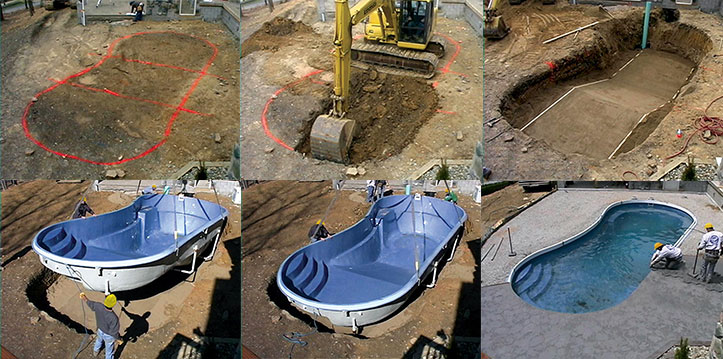
Inground and semi-inground pools are the only pool types that add significant value to a home, and are typically the only pools included in appraisals. This is because above-ground pools are generally considered temporary structures, and many buyers even expect them to be removed before closing.
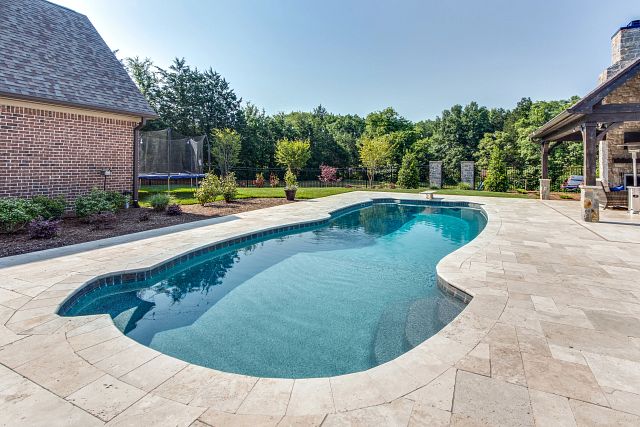
Fiberglass and vinyl liner pools are often more attractive to buyers than those made from concrete because of their lower maintenance commitments, which can significantly lower their long-term costs. Unlike concrete, fiberglass and vinyl liner pools don’t need expensive resurfacing, and their flexible materials and non-porous surfaces make them more resistant to algae growth and groundwater retention that can lead to costly repair work.
Condition and Maintenance are Critical
The condition of your pool and its surrounding area is critical for your home’s resale value. Having a well-maintained pool with clear, sparkling water and beautiful landscaping can create a valuable first impression on buyers and make it easy for them to envision themselves enjoying your backyard as their own. However, a neglected pool can be seen as a liability instead of an investment. Buyers can be more likely to imagine repair costs and hours spent on maintenance instead of relaxing poolside.
It can’t be overstated how critical a clean and well-maintained pool is for resale value. You could install a beautifully designed pool with the most sought-after features, and it could actually lower your home’s value if the water is full of debris or green with algae.
Aesthetic Appeal and Backyard Balance
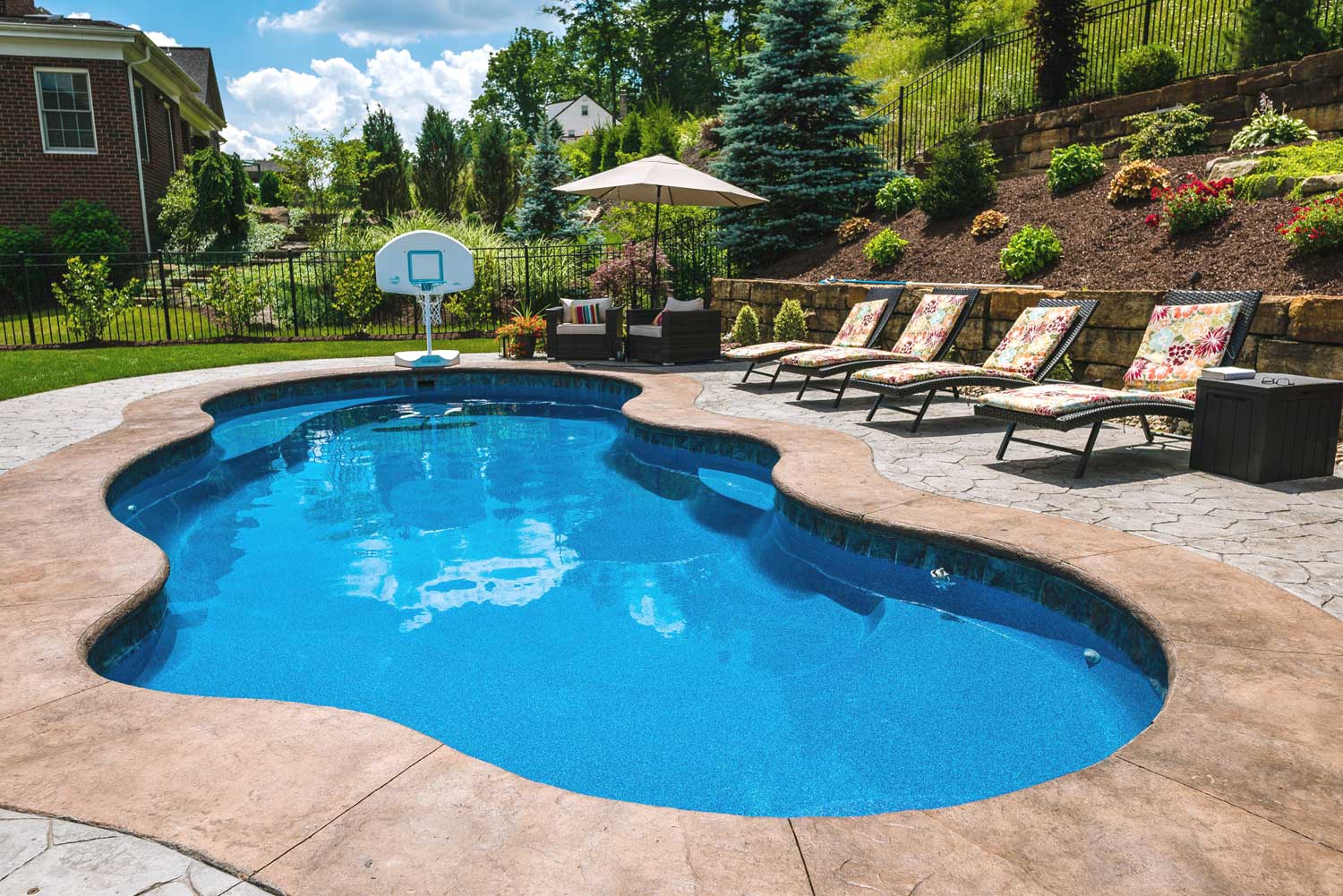
A pool is just one part of your backyard. Having an overall space that is aesthetically pleasing and proportional will increase your property value more than simply having a pool.
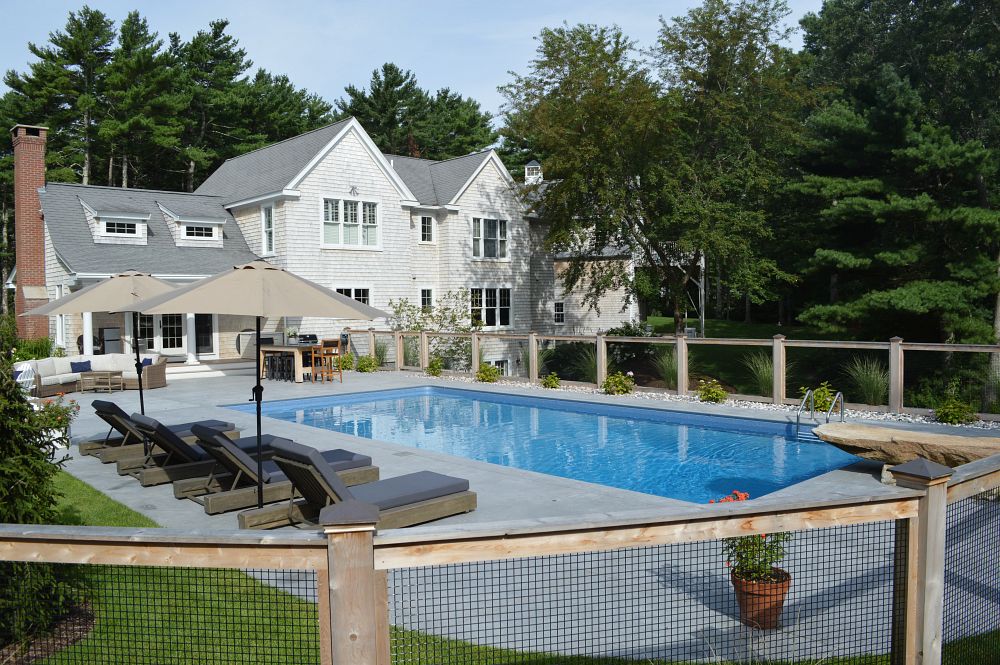
A pool that is integrated seamlessly with the rest of the backyard will create a space where buyers can imagine options for themselves. For instance, a buyer might see a pool with an attached kitchen and think about how they could host guests without running back and forth from the rest of the house. Or, they could notice a well-proportioned backyard and get excited at the possibility of having enough room for cocktails by the pool while children play on the rest of the lawn.
When a Pool Can Hurt Your Home’s Value
Although there are many pros to owning a pool, there are some instances where it can hurt your property value. Let’s go over some of the reasons why a buyer could see a pool as a burden, not a benefit:
The Liability and Expense Deterrent
Potential buyers can come to a showing pre-disposed to high-cost concerns when it comes to pools. Although fiberglass and vinyl liner pools require significantly less maintenance than concrete, they still require regular maintenance to look and perform their best. This can be a cost that some buyers simply don’t want to take on, despite the exercise and lifestyle benefits a pool can offer.
Pools also often cause higher homeowner insurance premiums due to the potential liability concerns. Pools are considered an “attractive nuisance” by the insurance industry, which is anything that might attract a child and pose a danger to an unsupervised child, such as trampolines, treehouses, and power tools.
Market and Buyer Resistance
Certain buyers and markets have more resistance to pools than others. This often includes young families with small children who might try to avoid pools due to safety concerns. There will also likely be fewer buyers in northern areas and cold climates where pools are closed for longer periods during the year.
Preparing Your Pool Home for Resale
If you’re getting ready to put your home on the market, you’ll want to make sure your pool area is clean and presentable to be attractive to potential buyers. Here are some steps you can take to prepare your backyard for when you’re ready to sell your home:
- Clean Your Pool Area Thoroughly: Remove any debris from the water, scrub the pool walls, and treat your water so it’s clear and sparkling when buyers come to tour the space. You should also clean all equipment and the surrounding areas, like the deck and patio.
- Be Proactive With Safety Measures: Some buyers’ skepticism of pools is rooted in safety concerns, especially among young families with children. You can proactively head off those worries by updating your pool with fencing, self-latching gates, safety barriers, and alarms that serve as layers of protection for the pool area and maintain compliance with state and local pool laws.
- Update Landscaping: Trim hedges and tree limbs, replace struggling or dead potted plants, and be sure all lawn equipment is properly stored to keep the space looking organized. Think about adding colorful tropical plants that create a vacation vibe, such as potted palms, banana trees, and birds of paradise.
- Stage Your “Backyard Paradise”: You want to make the surrounding area look as inviting as possible so potential buyers see themselves enjoying the space as their own. Stage the pool area with loungers, chaises, and comfortable patio furniture that lends itself to entertaining and relaxation.
- Hire the Right Realtor: Your realtor is your home’s spokesperson and biggest cheerleader. Look for someone with experience marketing homes with pools who knows how to sell their benefits.
The Final Verdict on Pool Resale Value
The total impact of a swimming pool on home resale value often comes with a complex answer. A pool is largely a lifestyle investment, not a guaranteed financial one. Much of a pool’s contribution to your home’s value is determined by factors that are largely outside of your control, such as the local market and individual buyer opinions and preconceptions about pool ownership.
Instead of focusing primarily on what your pool will eventually bring to someone else who buys your home in the future, think about what makes you excited about enjoying a pool today. While it’s responsible to keep your property value in mind, it’s equally important that you enjoy your backyard to the fullest, whether it’s a space for you to unwind and meditate, or one where you plan to spend time with the people you love most.
If you want to talk about the potential for your backyard, contact us today to speak to a Latham pool dealer.
Frequently Asked Questions
If you’re thinking about installing a pool and have questions about how it will affect your home’s value, check out these frequently asked questions:
Do homes with pools generally sell faster than those without?
It depends! Homes with pools in areas with warm climates are often in demand year-round because they provide comfort, fun, and a reprieve from hot and humid weather. However, many factors come into play that can affect the sale of a house, including local market changes, buyer preferences, and neighborhood norms.
What is the typical return on investment (ROI) for a new pool installation?
While a pool can increase the value of your home, you might not see a 100% ROI on the cost of your pool. Pools can have higher up-front costs than other projects, and they come with ongoing maintenance needs. However, they can add a lifestyle ROI that can’t be beaten, especially for families with children who want to make core memories and those who value impressive, design-forward additions to their homes.
Does removing an old, broken pool decrease property value?
Removing an old, broken pool can actually increase your property value, especially if removal is completed by a reputable professional and you take care to update your yard with landscaping after.
How does the size or shape of a pool affect its impact on home value?
A pool that is well-proportioned for its space can increase your home’s value because it balances form with functionality. Potential buyers often look at the backyard as a whole, not just at the pool itself. A pool that is too large for the space can make your yard feel cramped instead of luxurious.
How much does homeowner’s insurance typically increase with the addition of a pool?
The exact amount a pool will raise your homeowner’s insurance will depend on your carrier and coverage plan. It’s possible that your current policy already includes provisions for the personal property and liability increases that typically come with