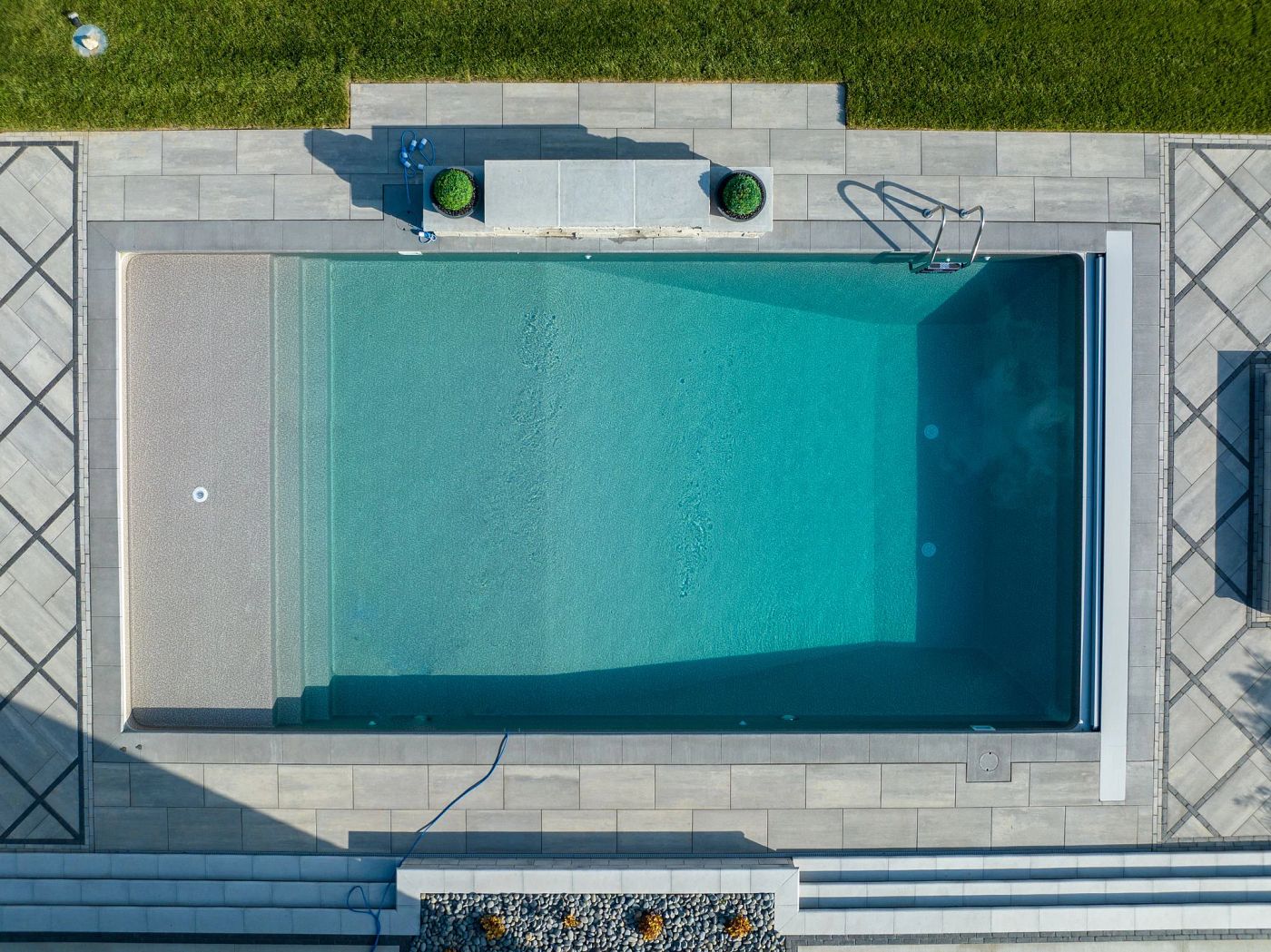
Vinyl liner pools are known for their durability and endless design possibilities. Modular walls constructed of non-corrosive polymer or steel provide a framework for your pool that is then overlaid with a vinyl liner. Your liner is what gives your pool its color and character. If your liner becomes wrinkled, it can not only disrupt your pool’s aesthetics and your enjoyment while using it – but can also be an indicator of a bigger problem that needs to be addressed.
Learn more about vinyl liner wrinkles, what causes them, how to prevent them, and when to call in a professional to smooth them out.
Is It Bad to Have Wrinkles in a Pool Liner?
A wrinkled pool liner detracts from the beauty of your pool’s appearance in several ways. Beyond making your pool look shabby, dirt and debris can accumulate inside those folds and wrinkles. This can make it more difficult to clean your pool. If left untreated, dirt and algae can cling to wrinkled areas and permanently stain your liner.
Liner wrinkles can also increase the risk of damage to your liner, causing you to have to replace it sooner. For instance, if you’re running a pool vacuum or accidentally snag a liner wrinkle with your toe while wading, it can cause your liner to tear – or even leak.
What Causes Wrinkles in a Vinyl Pool Liner?
Temperature fluctuations, unbalanced water chemistry, and water levels can cause wrinkles in your pool liner over time. Although these factors can contribute to liner wrinkles, improper installation or an incorrectly sized liner can cause your liner to crease, too.
Improper Installation
Although liner wrinkling can happen over time due to the elements and water conditions, it’s possible to see wrinkles in your liner due to errors in the installation process or a liner that’s incorrectly sized. A properly installed liner should fit flush against the walls of your pool with no visible creases. An experienced pool builder can recognize conditions that can cause liner wrinkling at various stages. Innovative tools like Measure by Latham give pool professionals even more tools in their arsenal to properly measure a new vinyl liner for a perfect fit.
Chemical Imbalance
Maintaining proper water chemistry can help you safely get more enjoyment out of your pool, reducing algae bloom and unsafe conditions that can cause skin irritation to swimmers. Your water chemistry also impacts the longevity of your liner. Unbalanced pool chemistry – particularly low pH levels and higher calcium hardness levels – can cause liner wrinkles. Undissolved chlorine or pool shock that settles to the bottom of your pool can also degrade your liner, causing it to shrink and pucker.
Water Table Fluctuations
Changes in your water table due to torrential rain or flooding can also cause liner wrinkles. If water gets trapped beneath your liner, it can cause your liner to swell outwards. When that excess water evaporates or recedes, your liner will attempt to shrink back and wrinkle in the process.
Temperature Changes
Fluctuating temperatures can cause your liner to wrinkle. Your liner can shrink in cold weather and expand when it’s extremely hot out. Over time, shrinking and expansion due to weather changes can create permanent wrinkles. Maintaining consistent water temperatures can help prolong the lifetime of your liner and reduce wrinkling. While you can’t control the weather, an automatic pool cover can help you maintain more consistent water temperatures and reduce evaporation that can contribute to liner wrinkles or premature wear.
Pool Draining or Leaks
Draining your pool or an undetected leak can cause your liner to wrinkle. Water is what helps keep your vinyl liner securely in place and wrinkle-free. When your water levels change – either due to a leak or intentional drainage, it exposes your liner to the elements. This can cause your liner to dry out, shrink, and develop wrinkles.
It bears repeating: A vinyl liner pool should never be completely drained, as its water volume helps keep your liner properly in place and wrinkle-free. If you do have to drain your pool for any reason, never remove more than half your pool’s total water volume.
How to Prevent Pool Liner Wrinkles
An ounce of prevention is worth a pound of cure when it comes to liner wrinkles. Sticking to a regular pool maintenance schedule for your pool can help you proactively spot problems that can cause your liner to wrinkle. Make sure your water’s pH levels are in the 7.4 to 7.6 range. Similarly, your water’s calcium hardness levels can impact your liner’s long-term health. The ideal calcium hardness range sits between 200 and 300 ppm (parts per million). Higher calcium hardness can take a toll on your liner, so keep it in check!
Beyond balancing your pool’s water chemistry, keeping stable water levels can also help prevent liner wrinkles. An automatic pool safety cover can help reduce water evaporation and – even more importantly – create an extra layer of protection to keep loved ones safer when your pool is not in use.
Checking your pool each month for any small liner tears or leaks can also help you prevent wrinkling or premature liner replacement. When it’s time to close your pool for the season, following best practices or hiring a professional to help can also extend the life of your liner – and make reopening next season much smoother.
Myths Around How to Remove Wrinkles from a Pool Liner
From using a toilet plunger to suction away wrinkles to using boiled water to gently stretch away creases, you’ve probably heard of several DIY ways to attempt to repair a wrinkled liner. At best, these methods are only a temporary solution. At worst, you can risk damaging your liner and void its warranty.
A wrinkled liner may be due to natural wear, unbalanced water chemistry, or even a faulty initial installation or incorrect liner size. Even with consistent care, pool owners might not be aware of less-obvious telltale signs of an issue that’s causing their liner to pucker. Enlisting the aid of a pool professional can help you quickly and confidently address liner wrinkles and get your pool back in the swim of things.
When to Call in the Pros
Unraveling the mystery behind why your liner has wrinkles is the first step to solving the problem. A qualified pool professional can help diagnose whether it’s a simple fix or if larger issues – such as deep creases and bulging or flagging liners – are at play. In some instances, a few small adjustments can remove wrinkles. In other cases, a professional may recommend that it’s time to replace your liner. Working with a knowledgeable builder can help you make an informed decision and revive your pool’s appearance.
Keep Your Pool Smooth & Swim-Ready
Consistent water chemistry, temperatures, and levels can help keep your liner wrinkle-free. Staying on top of regular pool maintenance can help you pinpoint new wrinkles and address them sooner, preserving the life and beauty of your vinyl liner. If you’ve spotted a wrinkle in your pool – or are just thinking about giving it a “facelift,” – consult an independent Latham builder today.