
Pool Water 101: Chemicals, Testing & Balancing
Testing Your Pool Water
Proper water balance is the single most important factor to maximizing the life and appearance of any swimming pool. Frequently checking your pool water levels will help ensure proper maintenance.
It’s always a good idea to have a professional pool expert assess your water levels once per month to help you keep your water chemistry at an optimal level.
What Chemicals Do You Need for a Pool?
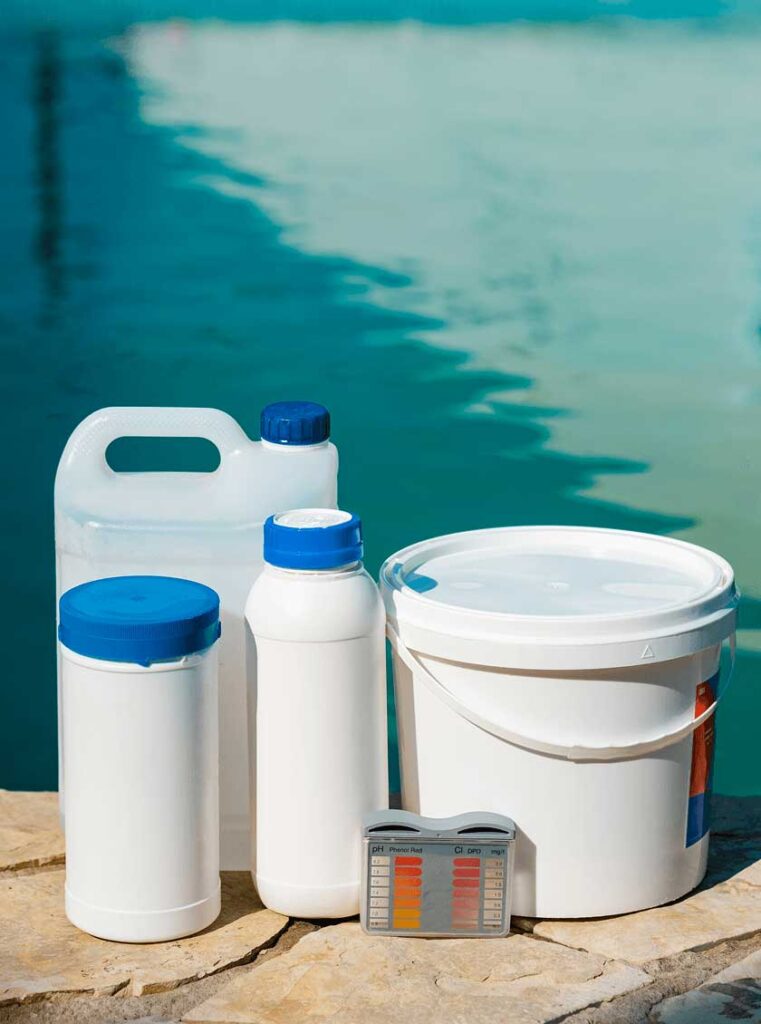
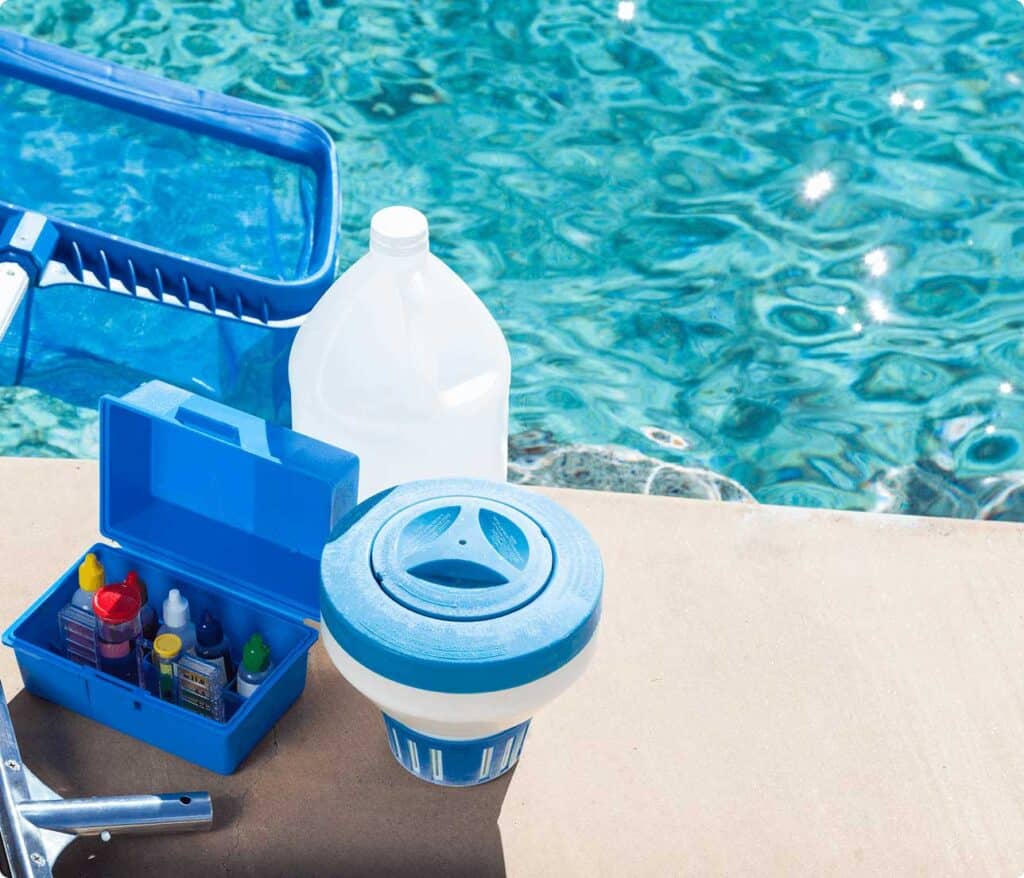
Most pool chemicals fall into sanitizers, water balancers, oxidizers, or niche-purpose categories.
Most pool chemicals fall into one of the following categories:
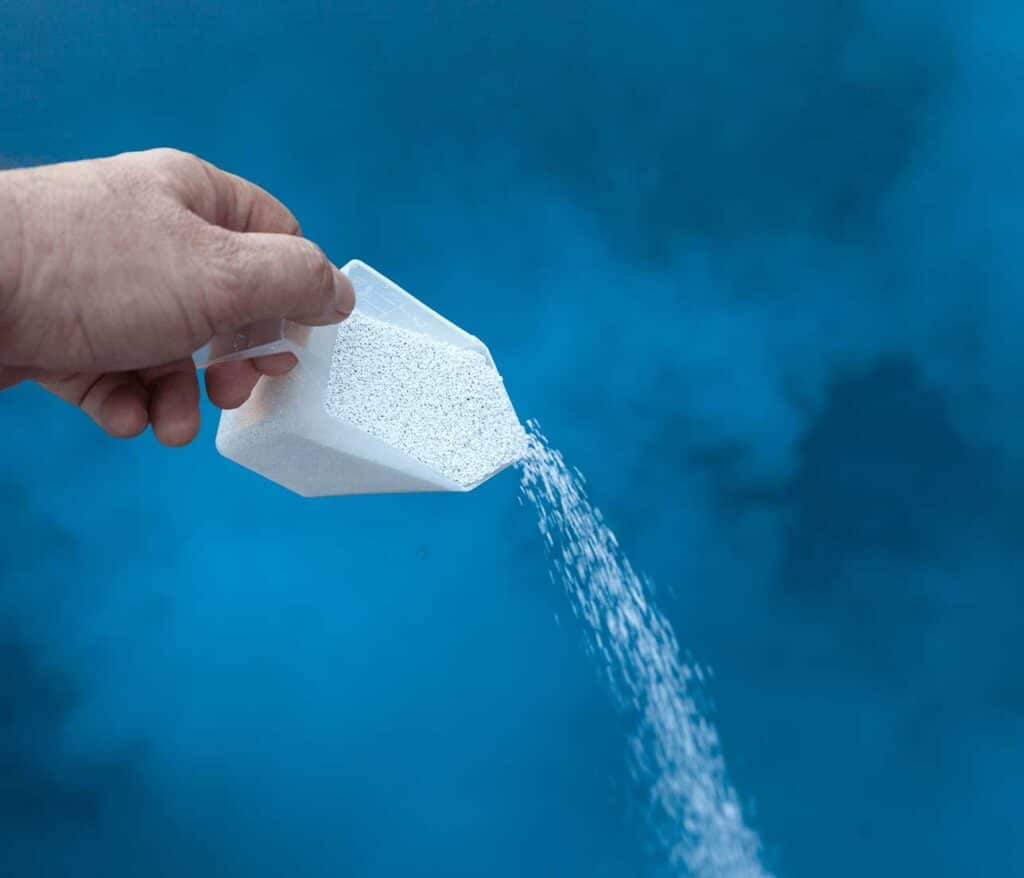
Pool shock chemicals are used to sanitize pool water that has been contaminated due to algae overgrowth, after heavy use, or after a storm that may have deposited debris into your pool.
There are two types of pool shock chemicals:
- Chlorine-Based Pool Shock: This category includes cal hypo and di-chlor. Unlike cal hypo, di-chlor is stabilized with cyanuric acid (CYA), which helps protect chlorine against the sun.
- Chlorine-Free Pool Shock: This category includes oxidizers like potassium monopersulfate, which helps sanitize pool water by preventing chloramines (combined chlorine) from forming.
Balancers are used to adjust pH, alkalinity, calcium hardness, and chlorine levels:
- Alkalinity Increasers: Sodium bicarbonate (better known as baking soda) will boost your pool’s alkalinity levels while reducing the water’s acidity.
- Calcium Hardness Increasers: These chemicals are designed to raise your pool’s level of calcium hardness. Consider using a calcium hardness increaser, such as calcium chloride, if your measurements drop below 150 parts per million (ppm).
- Chlorine Neutralizers: According to the CDC, excessive chlorine can irritate your skin, eyes and lungs. It can also corrode pool equipment, potentially leading to costly damage. Chlorine neutralizers reduce the level of free chlorine in the water, helping pool owners avoid these problems.
- pH Adjusters: You can raise or lower your pool’s pH levels by adding appropriate measurements of sodium carbonate (soda ash), sodium bisulphate (dry acid) or muriatic acid.
Algae growth doesn’t just make your pool water look unappealing – it poses several serious hazards. Algae can make surfaces slippery, increasing risks of slips or falls. It can also clog your pool’s filtration system and create a harmful environment, brimming with bacteria like E. coli. Damp, humid conditions – like a pool on a hot summer day – provide a prime breeding ground for algae, making it important to keep algae at bay. There are certain pool chemicals that can help you keep algae under control:
- Phosphate Removers: Phosphate removers destroy phosphates, depriving algae of a critical food source.
- Algaecides: Algaecides can help prevent algae from growing on pool surfaces.
Depending on the type of pool you own, there are other types of cleaning agents you may want to keep on-hand to keep your pool looking its best.
- Filter Cleaners: Keep your pool filters clean and functional by using filter cleaners as necessary. These products break down oil, grime, and other obstructions.
- Tile and Vinyl Cleaners: If you own a tile or vinyl liner swimming pool, you may want to look into cleaners to help maintain that day-one shine.

How to Test Pool Water Chemicals
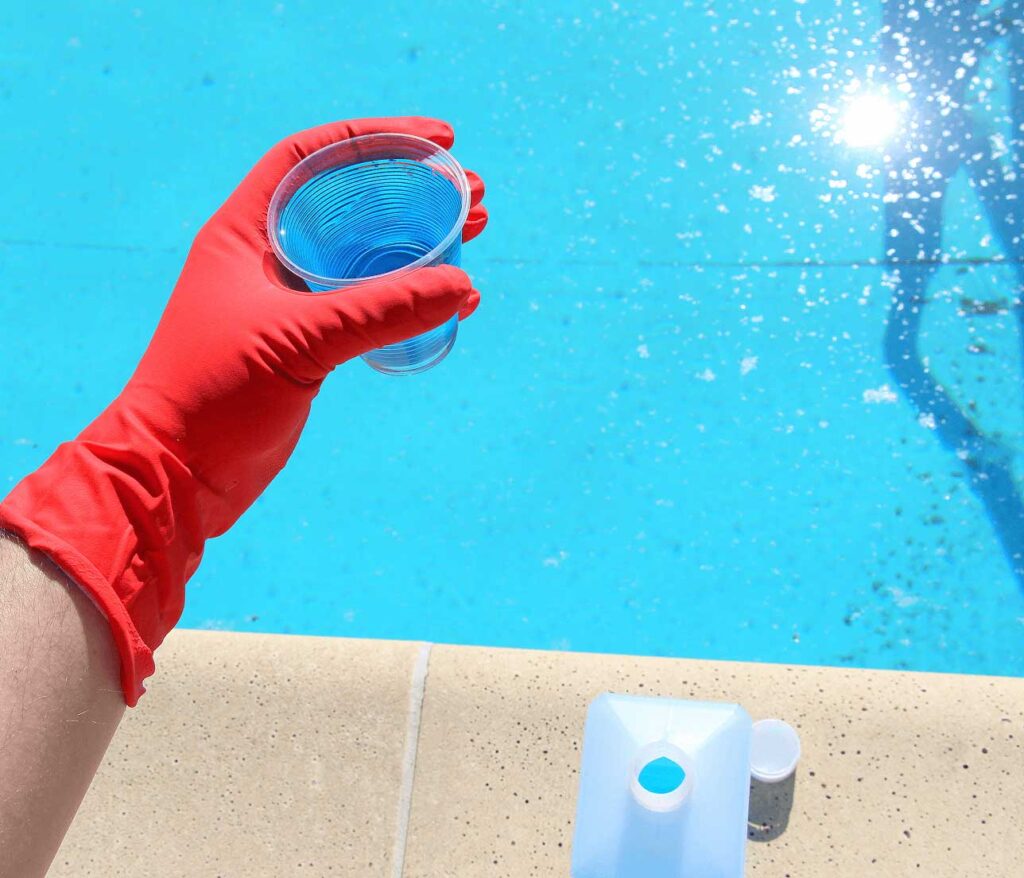
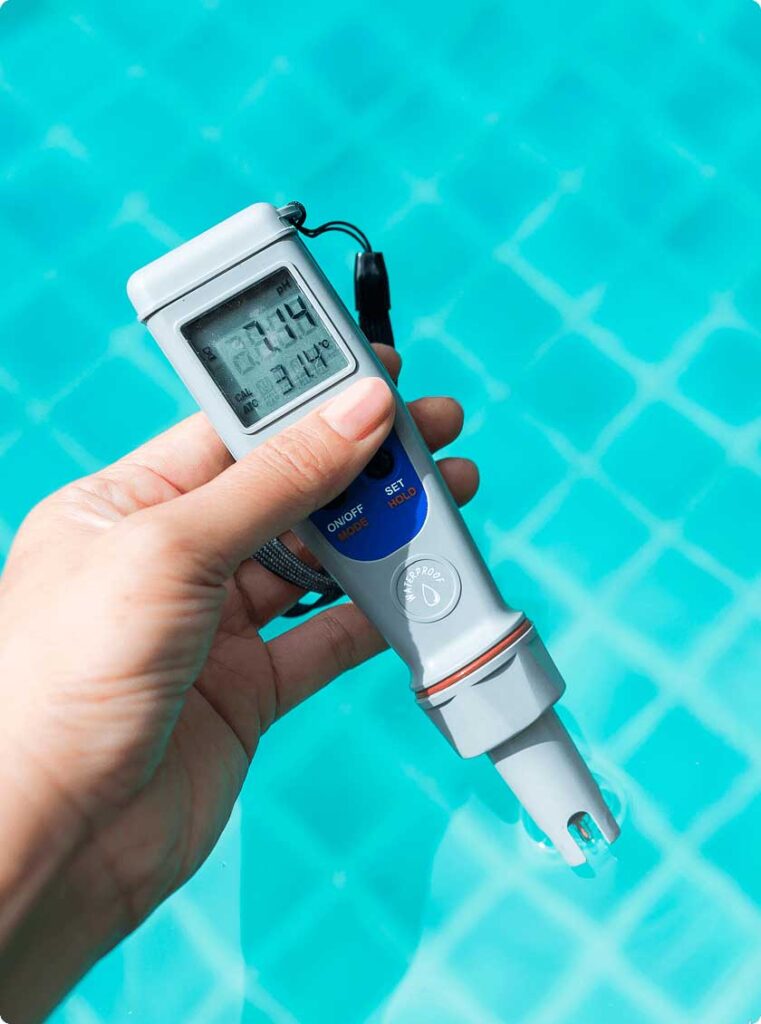
There are three different ways you can test your pool water chemistry with pros and cons for each method.
“Maintaining the proper chemical balance in your pool water not only keeps the water sparkling clean, but it also helps protect your heater, pump, and other system components from damage.”
How to Balance Your Pool
Testing your water is just the first step—you’ll also have to balance it to prevent corrosion, avoid skin and eye irritation, and protect your pool from damage.
To chemically balance your swimming pool water, follow these 7 steps:
Step One: Adjust Alkalinity
A pool with low alkalinity has high acidity. If your swimming pool has alkaline levels below 80 ppm, it’s at risk of corrosion and damage — and worse, it’s unsafe for swimming. Fortunately, you can correct this problem by raising the alkalinity until it measures between 80 and 150 ppm, though some experts recommend a range of 80 to 120 ppm. To increase your swimming pool’s alkalinity, simply add the recommended amount of diluted sodium bicarbonate (baking soda). To lower the alkalinity, add dry or muriatic acid.
Step Two: Adjust pH Levels
If the pH levels are too low, the lining of your pool can become damaged, brittle, or stained. On the other hand, pH levels that are too high can cause cloudy water — and painful skin rashes. To avoid these issues, you need to balance your pool’s pH levels. You can raise your pool’s pH level by adding soda ash to the water. To lower your pool’s pH level, carefully add dry or muriatic acid while wearing protective gear over your eyes and hands. The best pH level for a pool ranges from 7.4 to 7.6.
Step Three: Balance Calcium Hardness
Most experts recommend using a calcium hardness increaser, such as calcium chloride, if your water’s calcium hardness levels fall below 200 or 150 ppm. If calcium hardness levels exceed 400 ppm, you can solve the problem by partially or completely draining and refilling the water. Anywhere from 200 ppm to 300 ppm is a good range to aim for.
Step Four: Sanitize
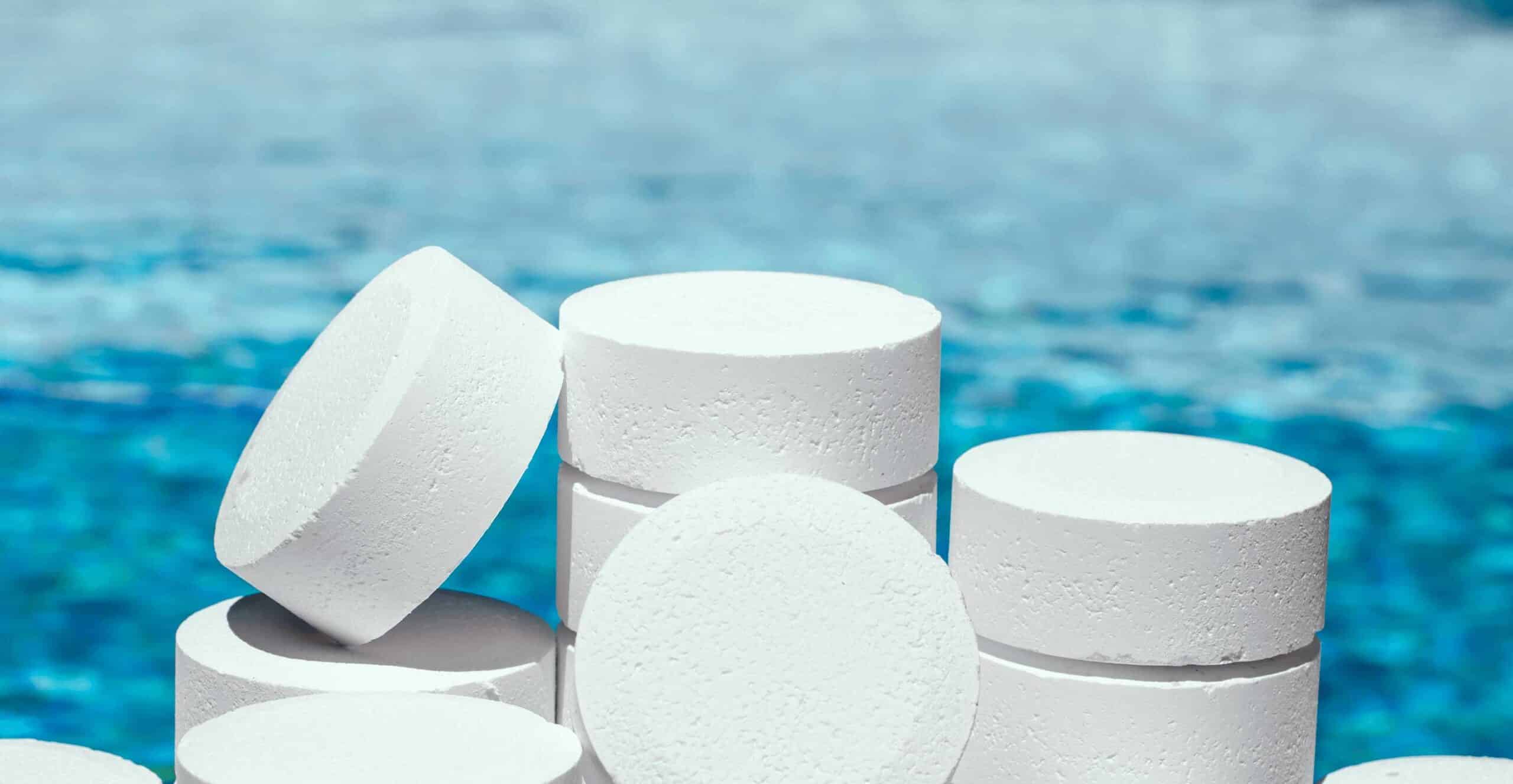
You can sanitize pool water with chlorine tablets, liquid or powdered chlorine, or even a salt chlorine generator. If the contamination is severe, you may need to shock the pool, which we’ll describe a little later. Ultimately, you are aiming for chlorine levels of 1 to 3 ppm, per current CDC recommendations.
Step Five: Measure Cyanuric Acid (CYA) Levels & Dissolved Solids
CYA is a stabilizer that gets added to certain pool shocking chemicals, such as di-chlor. Its purpose is to prevent ultraviolet (UV) rays from burning off free chlorine, making sanitization more efficient — especially on hot, sunny days. The ideal CYA measurement for your swimming pool is between 35 and 60 ppm, unless you have a saltwater pool. In that case, aim for 60 to 80 ppm.
Total dissolved solids (TDS) measure how many solids – such as grime, salt, or algaecide – have dissolved in your pool water. Most experts recommend keeping your TDS levels below 1,500 ppm, or even below 1,200 ppm. If the TDS level is too high, you will need to fully or partially drain and replace the water.
Step Six: Shock
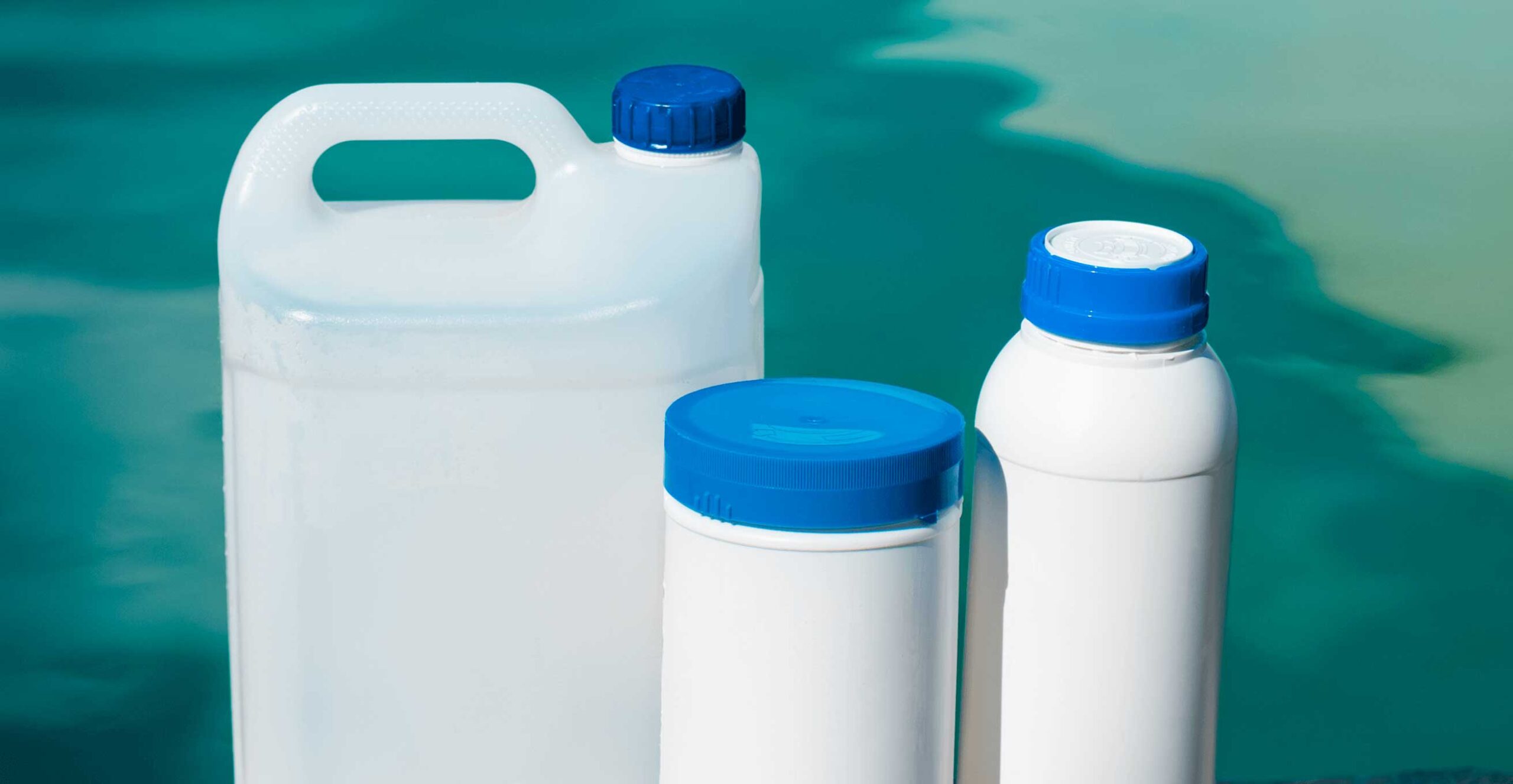
Shocking your pool significantly increases the amount of free chlorine that’s available to destroy bacteria, algae, and chloramines. A weekly or biweekly shock helps to keep the water sanitized. Again, the optimal level of free chlorine is 1 to 3 ppm.
Step Seven: Test
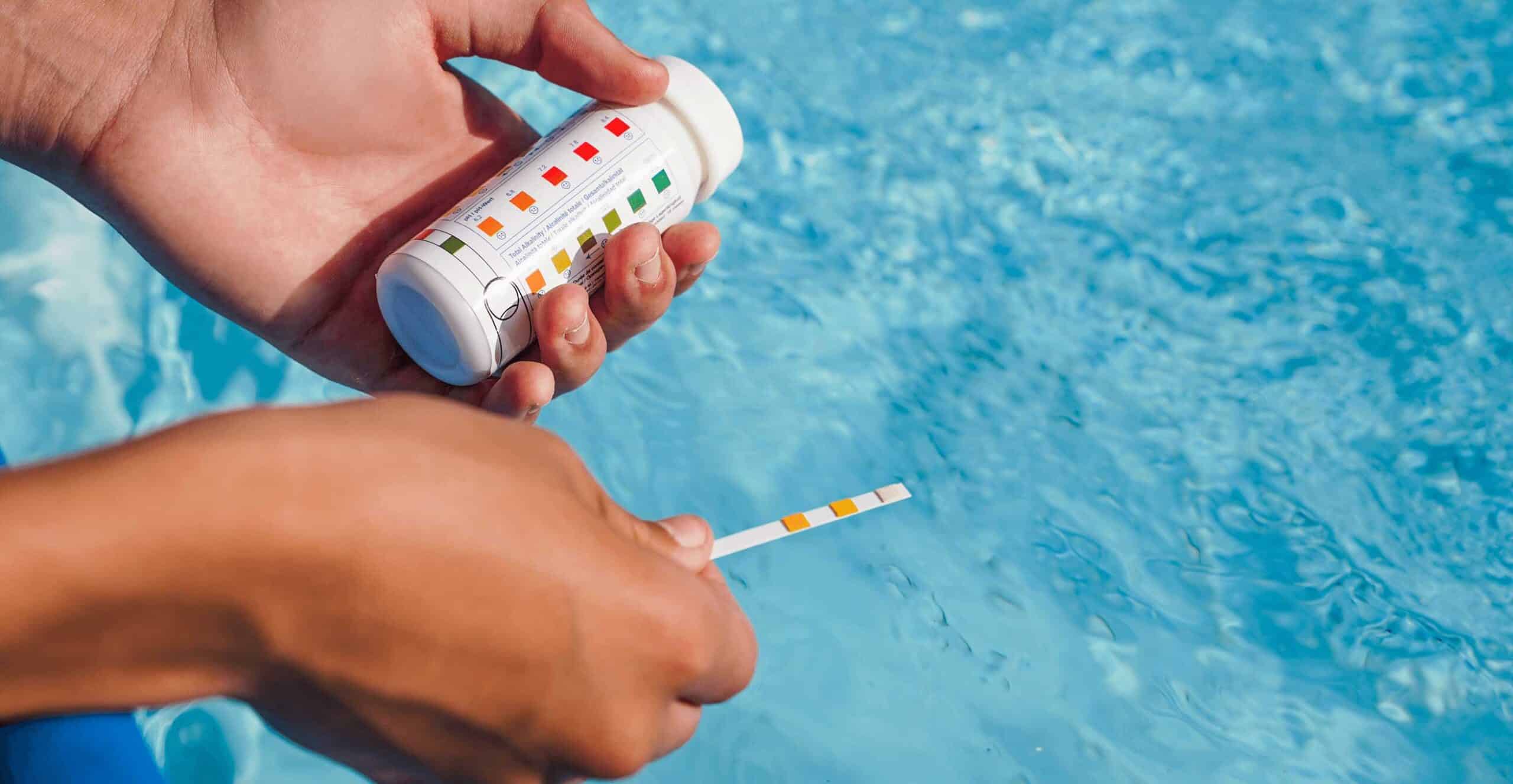
Check your work by retesting the water, ensuring that alkalinity, pH, calcium hardness, and other measurements are within the acceptable range.
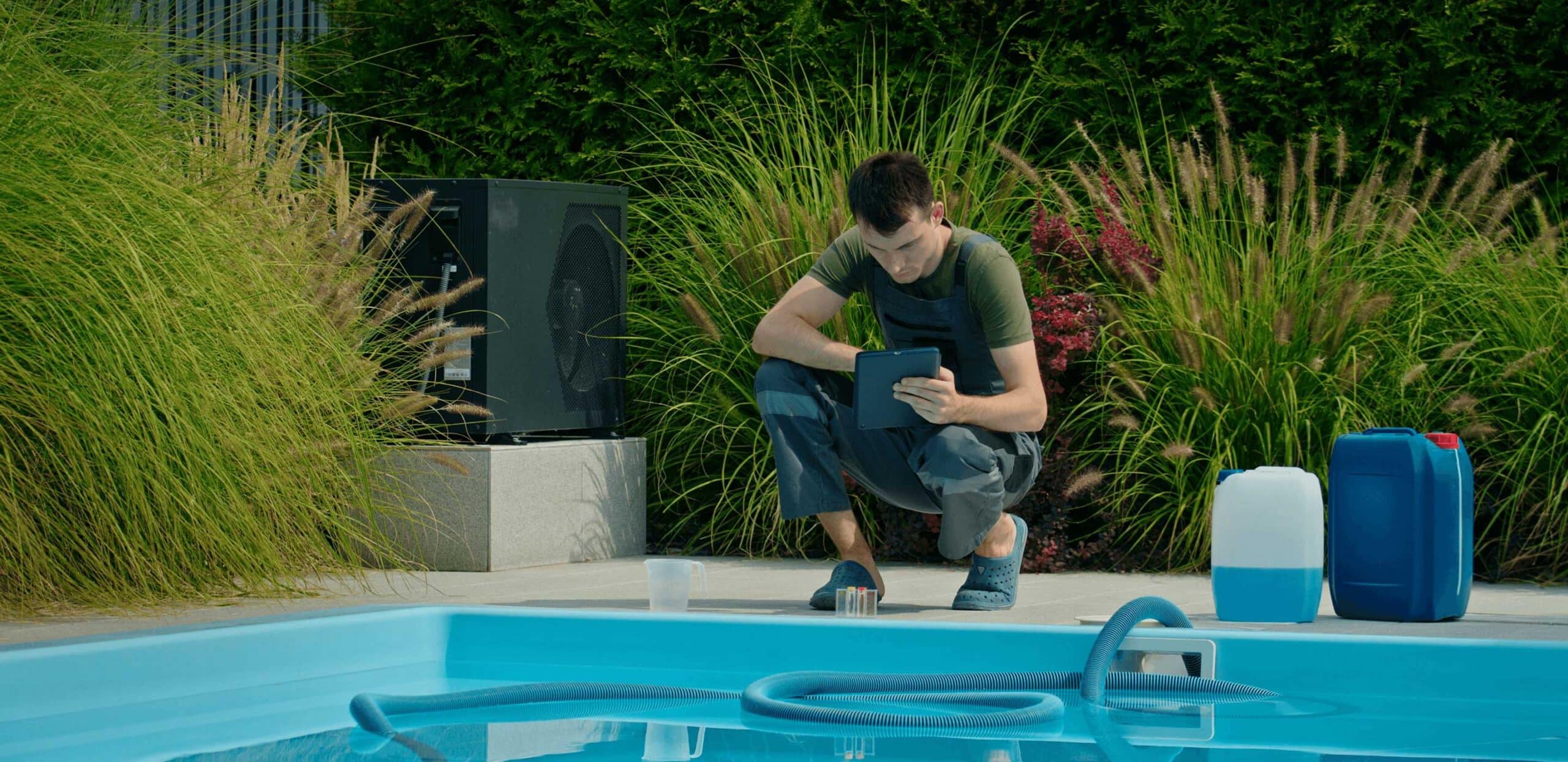
Contact a Trusted Pool Professional
Ensure your backyard investment gets the care and protection it deserves.
Pool Water Chemistry Checklist
Download our free maintenance checklist to get step-by-step instructions for testing your pool water chemistry and balancing your pool water.
Pool Water Chemistry FAQs
The order you balance your chemicals in is just as important as the quantities you use. For safe and accurate results, you should always test in the following order:
- Start by testing alkalinity and making adjustments as needed
- Next, test and adjust pH levels as needed
- Third, test and adjust calcium hardness as needed
After taking these three steps, you can add sanitizer, test CYA levels, measure TDS levels, and shock the pool, as described above.
It may take up to 24 hours to balance pool chemicals properly. The time required can increase or decrease depending on factors like the size and volume of the pool, the quality and condition of the water, whether you’re shocking the pool and how many adjustments need to be made using chemicals like sodium bisulfate or calcium chloride. For instance, if you raise the pool’s alkalinity by adding baking soda, you should wait a minimum of six hours before retesting alkalinity levels.
Whether you’re using your swimming pool for the very first time, or opening up for the season, you’ll need to take some extra precautions to ensure that you’re balancing pool chemicals correctly. For example, if your pool has been closed since winter, you might encounter thick algae on reopening day, which could require treatment with double or even triple the normal amount of pool shock.
If you’re opening a new or seasonal pool, we recommend consulting a pool dealer for assistance testing and balancing your water, which can be a tricky process even for experienced pool owners.
Failing to test (and balance) your water can lead to a host of problems. From skin rashes caused by excessive chlorination, to cloudy water caused by high pH or alkaline levels, to low alkalinity causing your pH levels to fluctuate or “bounce” unpredictably, to low calcium hardness corroding your valuable pool equipment, there are numerous issues that you can avoid simply by testing and adjusting your water. All it takes is a pack of pool strips, a few pool balancing chemicals like muriatic acid, and maybe a little help from your pool dealer.
Want to dig deeper into water chemistry? Learn more about why correct pool chemistry is important, then contact your local Latham Independent Builder for assistance. With thousands of premium quality, American-made pools and pool products to choose from, Latham is ready to meet all of your indoor, outdoor, inground, vinyl and fiberglass pool needs.
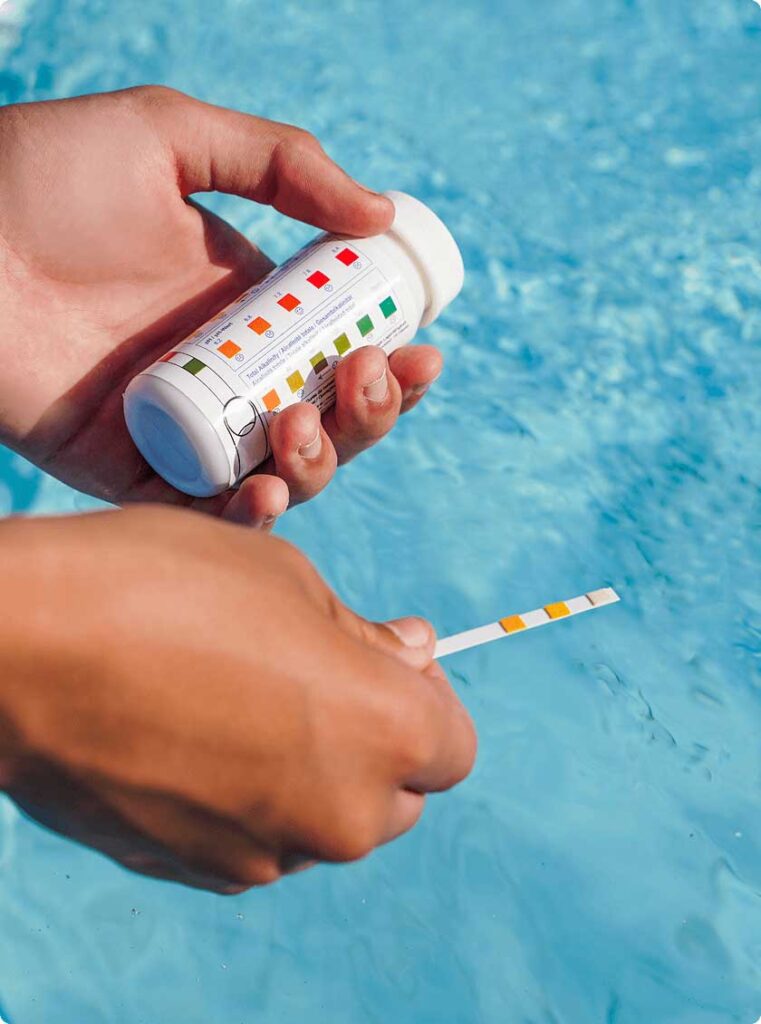
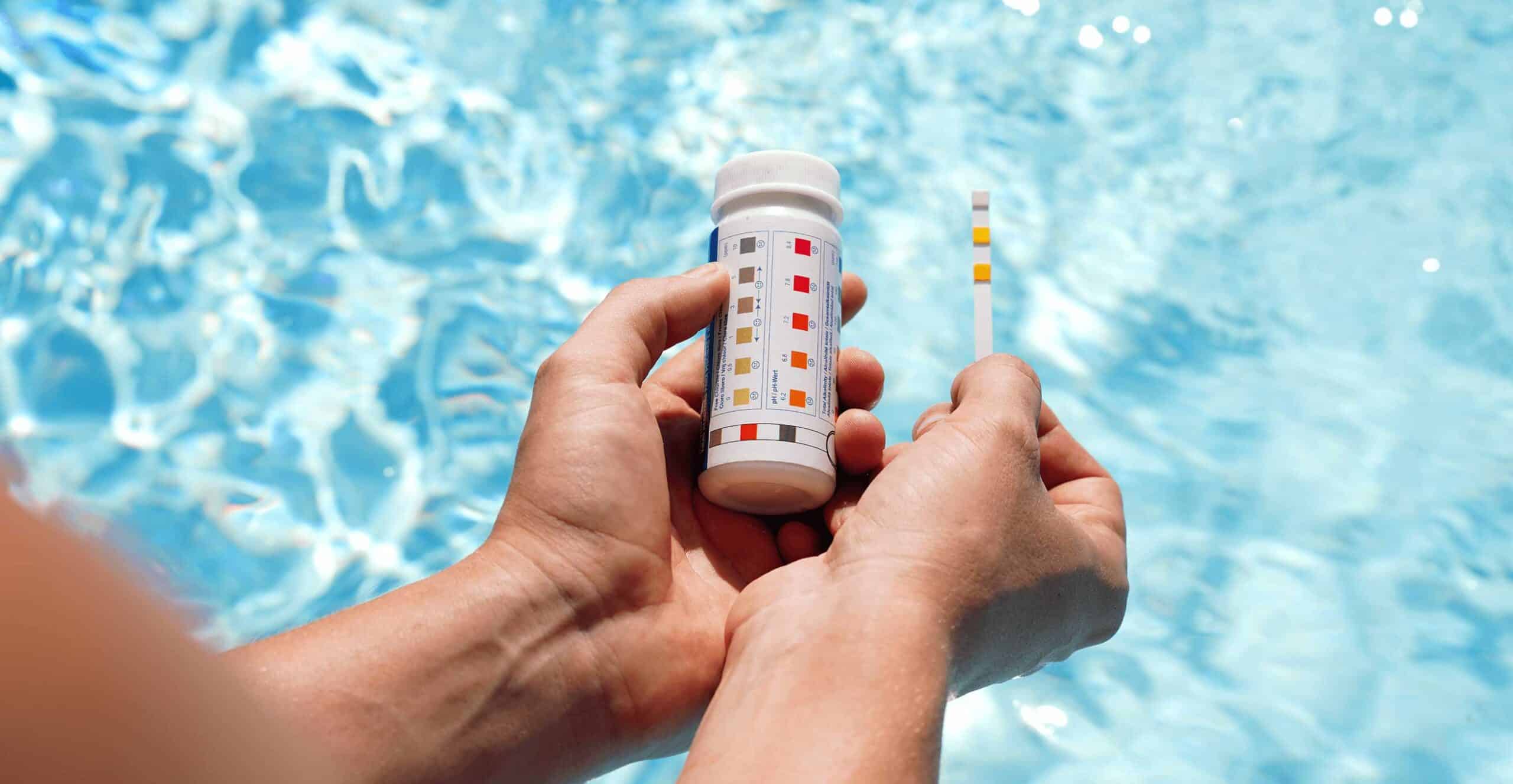
Commercially available pool test strips offer an easy way to regularly test your water chemistry.
- Hold the strip underwater for 2 to 3 seconds
- Remove the testing strip from the water, be careful to keep the padded side facing up
- Wait 15 seconds. Do not shake any excess water from the strip, as this may interfere with accurate results
- Compare your strip against the label on the package until you find the closest match. You may need to adjust pH or other levels, which we explain below
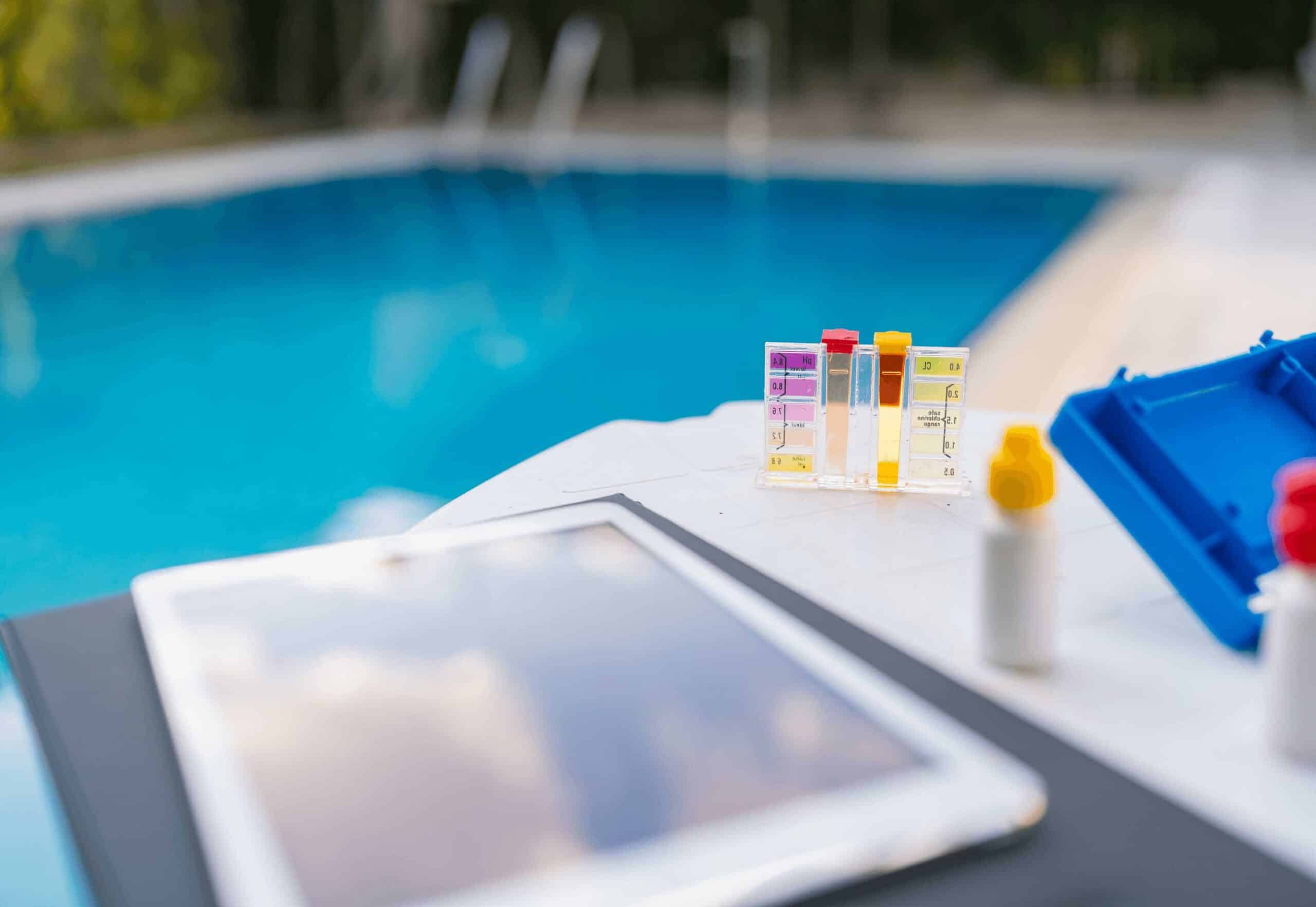
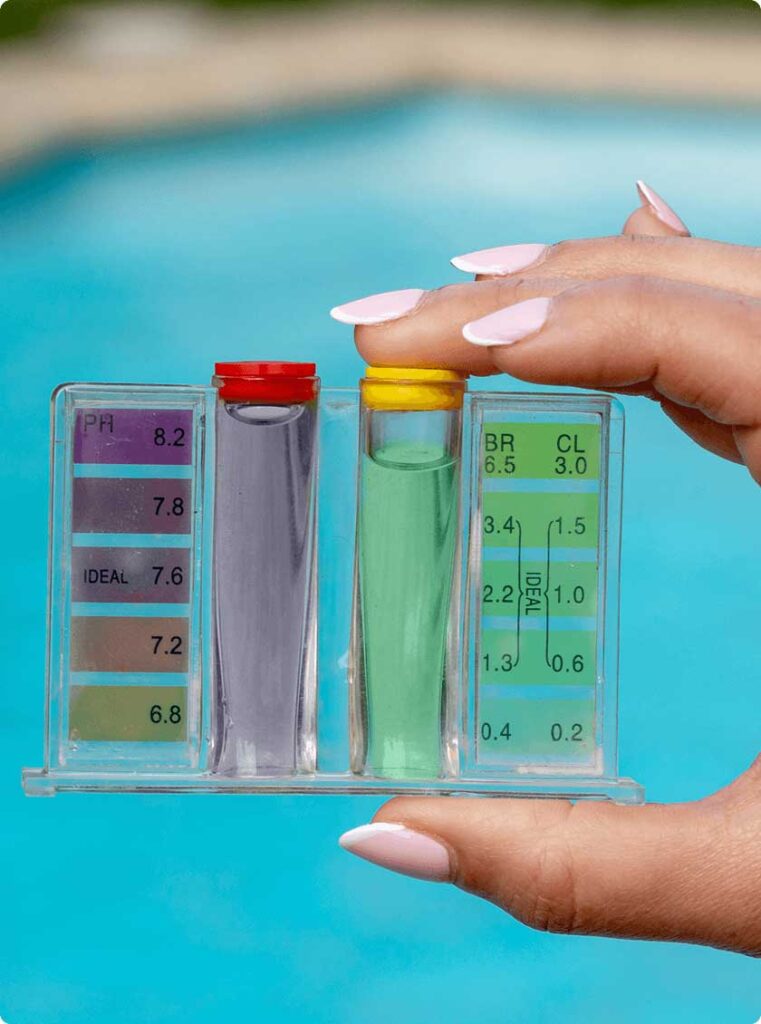
A pool test kit involves collecting a small sample of water from your pool. The color of your sample will change color depending on alkalinity, pH, and chlorine levels when mixed with a reagent.
- Collect a water sample from at least 18” beneath the surface of your swimming pool
- Measuring as precisely as possible, fill the test vials according to the kit’s instructions. Be sure to rinse out each test cell with pool water before using
- Add the correct amount of reagent to each tube, following the kit’s directions carefully. You may need to gently shake the sample once it has been sealed shut
- Compare the sample colors against the label on the testing kit, looking for the closest match
Many pool cleaning products contain chemicals that can be hazardous or even deadly if stored improperly. As the Environmental Protection Agency (EPA) points out, various pool chemicals “can potentially be highly reactive and capable of generating high temperatures, as well as releasing toxic vapors if improperly handled or stored.”
Avoid fumes, fires, chemical reactions, and other hazards by following the storage instructions on each cleaner carefully. The ideal storage space should be well ventilated, clearly organized, free of leaks or spills, and protected from excessive heat or sunlight.
Learn More About Pool Maintenance